Minister discloses plans to end energy deficit by 2030
Energy Minister JEAN MATHANGA says Malawi is pursuing an ambitious shift from biomass to cleaner energy while expanding electricity generation to support economic transformation. In this interview with our Staff Writer EPHRAIM MUNTHALI, the minister outlines plans to transition 75 percent of households to clean cooking by 2030, including through LPG and electric stoves. She … The post Minister discloses plans to end energy deficit by 2030 appeared first on Nation Online.
 Black News
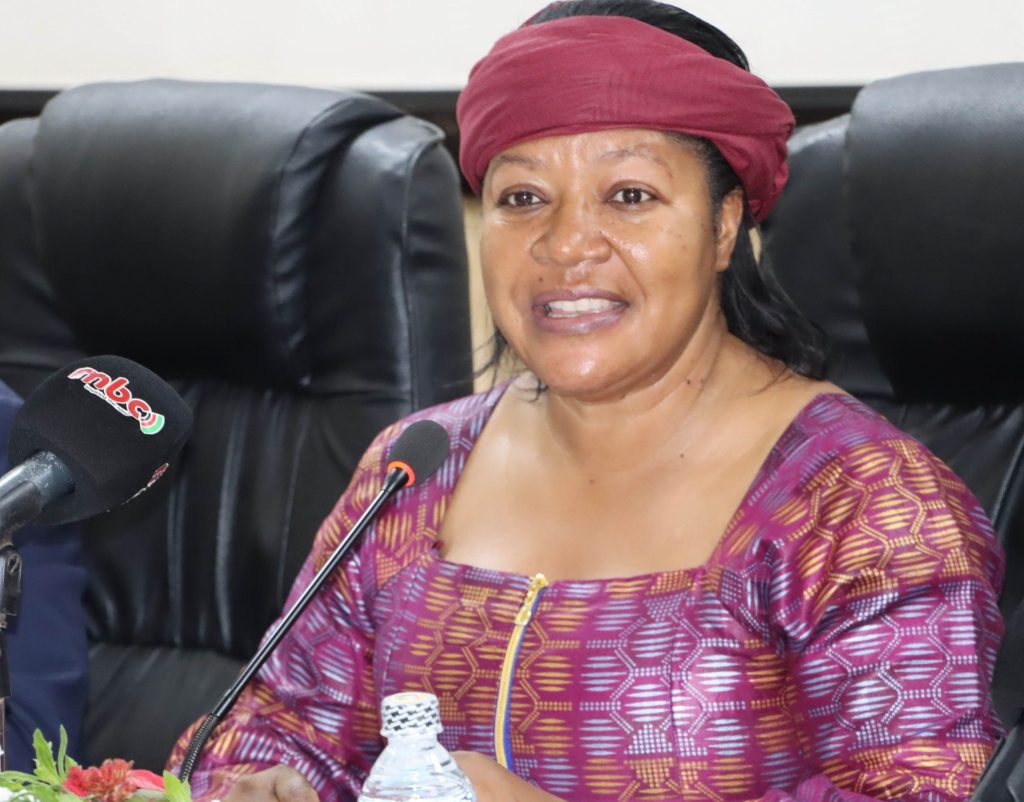
Energy Minister JEAN MATHANGA says Malawi is pursuing an ambitious shift from biomass to cleaner energy while expanding electricity generation to support economic transformation. In this interview with our Staff Writer EPHRAIM MUNTHALI, the minister outlines plans to transition 75 percent of households to clean cooking by 2030, including through LPG and electric stoves. She also gives timelines for restoring troubled hydro units at Nkula, Tedzani and Kapichira, and explains when Malawi expects to start importing 50MW from Mozambique. Excerpts.
Malawi’s energy mix comprises 86 percent biomass, 10 percent petroleum, three percent electricity and one percent coal. Households use 81 percent of all energy. What is your plan to reduce reliance on biomass?
This is one of Malawi’s most important energy challenges. Our dependence on biomass, particularly firewood and charcoal, is not sustainable. Our approach is not simply to tell people to stop using them, but to provide affordable and reliable alternatives. The Ministry developed the National Energy Compact, a strategic document for 2025 to 2030. Through it, we aim to transition 75 percent of households to clean cooking using different technologies. By 2030, we need to deploy 117 000 LPG cookstoves and 53 000 electric cookstoves. Through World Bank funding, the Ministry has the Ascent project, which will facilitate the distribution of 150 000 clean cooking solutions by 2030 through loans to the private sector. Apart from government, private-sector players and development partners are also supporting e-cooking.
Malawi has installed generation capacity of about 564MW, including 401MW from hydro, 51MW from diesel and 111MW from solar. With Nkula A, Tedzani and Kapichira operating below capacity, how much power is the country generating against demand, and when will all the machines be back online?
We indeed have a constrained generation situation. Some generating units have been operating below their rated capacity because of technical problems and the unavailability of spare parts. As of August 22, Nkula B Unit 6, with a capacity of 20MW, was out of service, while units at Nkula A, Tedzani and Kapichira were operating below capacity. However, government and Egenco are actively addressing these challenges. If all goes according to plan, Nkula B Unit 6 is expected back in service in the first week of October 2026, while Nkula A should return to full capacity by the end of September. Work to restore Tedzani Units 5 and 6 is expected to be completed by December 2026. Kapichira Unit 3 requires a new transformer and is expected to be fully restored by December 2027.
The Mozambique-Malawi (Moma) 400kV line is live, with Phase 1 providing 50MW. When will electricity from Mozambique reach homes and businesses?
We reached a significant milestone with the Moma project following successful hot commissioning on August 8 2026. On the Malawian side, construction was completed by February, but our counterparts were delayed after works were suspended following a fatal accident. What remains is a high-level discussion on commercial terms. We want to ensure that when commercial imports commence, the system is operated safely, reliably, sustainably and affordably. Our focus is on completing the remaining requirements so Malawians can begin receiving the full benefit of the investment. The most challenging part—the construction—is already complete.
By 2027, how many megawatts from Egenco hydro, new solar IPPs, the Southern African Power Pool and thermal generation do you expect to have?
From Moma, we expect to receive 50MW. We have also signed five power purchase agreements with independent power producers planning projects using gas, hydro and solar technologies, which will bring 337MW. However, these projects may only come online by 2028. You may have heard that we commissioned a 10MW plant for Egenco a few weeks ago. The site has capacity to develop up to 50MW, so construction will continue.
If we remain on this path—with 86 percent of energy coming from biomass, a 130MW electricity deficit and a forex crisis—which MW2063 pillar is most at risk: industrialisation, food security or urbanisation? When do we pass the point of no return?
We envision that by 2030 we will generate more electricity than we can consume if all the planned generation projects come to fruition. Energy is the foundation on which industrialisation, food security and urbanisation depend, as recognised in MW2063. If we do not solve the energy challenge, all three are compromised. Rather than asking which MW2063 pillar will fail, our responsibility is to ensure that energy becomes an enabler of all three. That is why government is accelerating investments in generation, transmission, distribution, regional interconnection and clean cooking.
Agriculture Minister Roza Fatch Mbilizi recently asked investors to put $2.4 billion into 470 000 hectares of irrigation. That will require significant electricity for pumping water. Have you discussed how this will be achieved?
Irrigation can use decentralised systems such as solar. This is something our Ministry is encouraging under what we call productive use of renewable energy. If Malawi is to move towards large-scale irrigation, commercial agriculture and agro-processing, electricity infrastructure must be developed alongside those investments. Irrigation will require power for water pumping, processing, cold storage, milling and other productive uses. The Ministry is engaging other sectors to ensure the energy requirements of major economic projects are incorporated into generation and transmission planning. Our ambition is to make electricity an enabler of agricultural transformation rather than a constraint.
The post Minister discloses plans to end energy deficit by 2030 appeared first on Nation Online.