
IOC eases restrictions on Russians before 2028 LA Games as anthem, flag ban remains
More than four years after the Russian invasion of Ukraine, the International Olympic Committee (IOC) on Tuesday lifted some restrictions allowing their athletes compete in team events and qualifying competitions for the 2028 Olympic Games in Los Angeles. “We made it clear that we wanted to ensure all athletes have the possibility to compete at […] The post IOC eases restrictions on Russians before 2028 LA Games as anthem, flag ban remains appeared first on The Namibian.
 Black News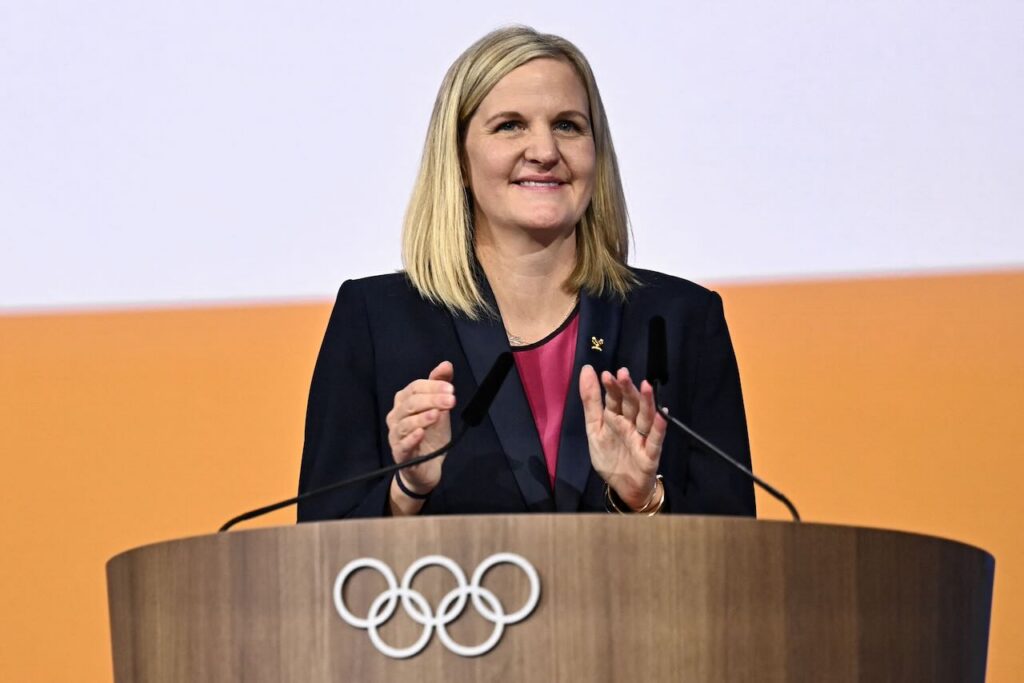
More than four years after the Russian invasion of Ukraine, the International Olympic Committee (IOC) on Tuesday lifted some restrictions allowing their athletes compete in team events and qualifying competitions for the 2028 Olympic Games in Los Angeles.
“We made it clear that we wanted to ensure all athletes have the possibility to compete at the Olympic Games and not be held responsible for their government’s actions,” IOC president Kirsty Coventry said at a meeting in Lausanne.
However, the IOC kept in place the ban on the Russian national anthem being played and the flag being displayed, for the time being, but stipulated returning Russian athletes would have to pass “multiple” doping tests before being allowed to participate.
The accompanying statement, laying out a host of conditions, said individual sports could decide whether to allow the flag and anthem at their own events or stage competitions in Russia.
As for the Games, with the Los Angeles Olympics two years away, the IOC said it “will take a decision in relation to the display of the Russian flag, anthem, colours or any identifications for the Olympic Games at the appropriate time”.
Russia welcomed the decision.
“The IOC is sending a clear signal: the Olympic movement must remain free from politics,” Russian sports minister Mikhail Degtyarev said on Telegram, adding Russia planned to participate in qualifiers for the Los Angeles Games.
Russia’s return remains more limited than that of Belarus, which was allowed back by the IOC in early May without any restrictions on national anthem or colours.
The IOC said to address “the lack of confidence” after a series of Russian doping scandals, “all athletes newly coming back to international competition must have been tested multiple times prior to their return”.
The ban was imposed in October 2023, more than 18 months after the invasion of Ukraine, when the Russian Olympic Committee (ROC) decided to include sports organisations in annexed territories as members.
“The ROC confirmed that it does not, and will not, conduct any activities in these territories,” said the IOC statement adding it will “closely monitor the situation”.
The statement added: “The IOC condemns wars, armed conflicts and violence that cause human suffering wherever they occur.”
World Athletics inflexible
However, IOC Sports Director Pierre Ducrey warned that the return of Russians to the global sports fold will take place within a “fractured landscape” that varies by discipline.
On Friday, World Athletics maintained the total exclusion of Russian and Belarusian athletes, noting no “tangible movement towards peace negotiations having materialised”.
The global governing bodies for judo and swimming did not wait for the IOC’s green light to fully reinstate athletes from both countries in November and April respectively, like the International Paralympic Committee had done for the Milan-Cortina Games.
A major sporting nation, Russia has been barred from competing under its national colours in the Olympic arena since 2016 — initially due to a state-sponsored doping scandal.
Just after the Beijing Winter Olympics concluded in February 2022 the Russian army invaded Ukraine with the support of Belarus, triggering a wave of sports sanctions.
Following a period of total exclusion, the IOC had gradually begun reintegrating athletes starting in March 2023 under a neutral banner, subject to strict conditions, and excluding team events, specifically for the Paris 2024 and Milan-Cortina Games.
For several months, Coventry had hinted at a more complete reintegration, emphasising the importance of “keeping sport a neutral ground. A place where every athlete can compete freely, without being held back by the politics or divisions of their governments”.
In late June, during the IOC’s 146th session in Lausanne, this principle was further enshrined in the Olympic Charter that the organisation’s role was “to apply neutrality at all times, free from governmental, cultural, societal or economic pressure”.
Furthermore, the IOC Executive Board had last December recommended the return of Russian and Belarusian athletes to junior competitions, including team sports, under their national flags and anthems.
The post IOC eases restrictions on Russians before 2028 LA Games as anthem, flag ban remains appeared first on The Namibian.