International crackdown on India-based organized crime gangs nets 24 arrests in U.S., Canada, Europe
Indo-Canadian Voice International crackdown on India-based organized crime gangs nets 24 arrests in U.S., Canada, Europe posted by: Rattan MallAssassination of political figure in Canada among crimes alleged; 3 defendants arrested in Canada LAW enforcement in the United States, Canada, and Europe have arrested 24 defendants – 11 of them in California – connected to three India-based transnational organized crime groups charged with a litany of criminal acts, including the assassination in Canada […] The post International crackdown on India-based organized crime gangs nets 24 arrests in U.S., Canada, Europe first appeared on Indo-Canadian Voice.Indo-Canadian Voice
 Black News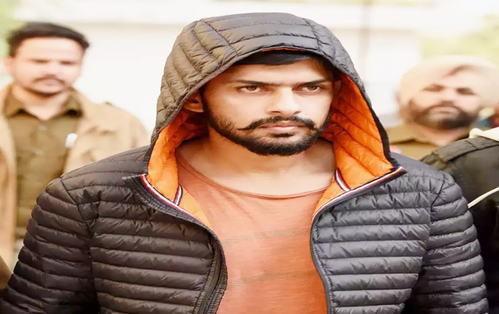

Assassination of political figure in Canada among crimes alleged; 3 defendants arrested in Canada
LAW enforcement in the United States, Canada, and Europe have arrested 24 defendants – 11 of them in California – connected to three India-based transnational organized crime groups charged with a litany of criminal acts, including the assassination in Canada in 2023 of a prominent Indian political and religious figure, the U.S. Justice Department announced today.
This law enforcement action – “Operation Hard Ball” – is the result of a years-long federal investigation into Indian crime syndicates that engage in racketeering, targeted killings, shootings, extortion, the trafficking of bulk quantities of narcotics across international borders, and other crimes around the world whose impact is especially felt in the Indian diaspora, according to a news release by the U.S. Attorney’s Office of the Central District of California.
In total, 37 defendants – including two defendants who ran their global criminal syndicates while imprisoned in India – are charged across three indictments unsealed on Tuesday, July 7. Those arrested in the United States – 11 in California, one in Indiana, and one in Georgia – are expected to make their initial appearances on Tuesday in federal court.
Three defendants have been arrested in Canada, one defendant was arrested in Spain, and seven defendants already were in custody prior to Tuesday’s law enforcement operation.
Law enforcement is looking for 10 fugitives – seven in the United States, two in India, and one in Europe.
As part of this investigation, law enforcement has seized approximately 1,000 kilograms of cocaine and 1 kilogram of heroin along with $40,000 in cash and a dozen firearms. A total of 23 search warrants have been executed in the Sacramento area and 11 warrants have been executed in the Los Angeles area.
“Transnational criminal gangs who spread fear, drugs, and violence will face the full force of justice and the weight of the federal government,” said First Assistant United States Attorney Bill Essayli. “Working together, law enforcement in the U.S., Canada, Europe, and Asia are determined to target and dismantle these criminal organizations wherever they operate. There is no safe harbor for these thugs.”
“Today’s coordinated operation strikes at the heart of three brutal transnational organizations that have terrorized families, exploited communities, and stolen lives through ruthless acts of violence in the U.S. and abroad,” said Patrick Grandy, Assistant Director in Charge of the FBI’s Los Angeles Field Office. “We, alongside our partners, remain steadfast in our commitment to identifying these violent organizations, disrupting their activities, and ensuring they face the justice they deserve.”
“The true measure of this operation isn’t found in the arrests or the seizures alone,” said Los Angeles Police Chief Jim McDonnell. “It’s found in what they represent: a united commitment between the LAPD and our federal and international partners to relentlessly pursue those who threaten our communities. Together, we are dismantling organized crime, removing dangerous offenders from our streets, and making Los Angeles a safer city.”
“The most effective way to combat transnational crime is for multiple law enforcement partners to team up and target criminals where they operate,” said RCMP Commissioner Mike Duheme. “Together, we disrupted the operations of organized criminals who used murder, cruelty and fear to extort and control people in both Canada and the United States. We won’t pause for long to reflect on the work it took to get this job done – we’ll keep doing what we do best to preserve public safety in Canada, in the United States, and around the world.”
United States v. Bishnoi, et al.
Lawrence Bishnoi, 33, of Punjab, India, a gangster long imprisoned in India, was a self-styled university student leader before tiring of politics and turning himself and his followers to crime, according to a nine-count indictment that a federal grand jury returned on July 1.
In public, Bishnoi projected an image of himself as a “patriot,” “nationalist,” and deeply religious individual through social media posts and interviews with news organizations and used this public image to recruit members and associates to his crime syndicate in India, the United States, and elsewhere.
In private, Bishnoi presided over a sweeping criminal enterprise that spanned multiple continents. Using contraband cellphones and other voice-over internet protocol devices smuggled into his jail cell, Bishnoi personally directed political assassinations, murders, shootings, extortions, kidnappings, drug trafficking, human smuggling, and other crimes committed by members and associates of the Bishnoi enterprise worldwide.
The Canadian government in September 2025 designated the Bishnoi enterprise as a terrorist entity.
To help manage the enterprise’s day-to-day operations, Bishnoi delegated control to trusted lieutenants and regional leaders of the enterprise. These lieutenants and regional leaders included Satinderjeet Singh, 32, a.k.a. “Goldy Brar”, of Punjab, India, the North American leader of the Bishnoi enterprise, Rohit Godara, 37, of Rajasthan, India, the European leader of the Bishnoi enterprise, and Sukhraj Singh Kang, 58, of Punjab, India. According to the indictment, both Brar and Godara effectively spoke for Bishnoi and helped direct the actions of members and associates of the Bishnoi enterprise worldwide, including acts of violence committed by the gang’s members and associates in the United States, Canada, and elsewhere.
This criminal gang engaged in violent activity in each country in which it operated, including the United States, and used violence to cultivate a climate of fear, in particular in India and among Indian diaspora communities worldwide. The gang exploited this fear to extort its victims, hyping their violence and criminality through online videos and internet posts.
Among the crimes alleged in the indictment is the assassination of a prominent political and religious leader – identified in court documents as “H.S.N.” – from India’s Punjab state and who was living in Canada at the time of his death. Bishnoi and Brar are charged with ordering this assassination, which occurred when two gunmen shot and killed H.S.N. as he left a Sikh temple in Surrey, British Columbia on June 18, 2023.
According to the indictment, the enterprise routinely targeted prominent religious, social, and political leaders with violence, and used these high-profile acts to terrorize and extort members of the community. For instance, in November 2023, Bishnoi claimed responsibility for a separate shooting that occurred at the Vancouver, Canada residence of a prominent Indian actor and singer, and warned in the Punjabi language in a Facebook post, “no one can save you from us.”
Bishnoi, Brar, Godara, and others extorted victims via WhatsApp and other encrypted messaging applications by threatening violence against the victims or the victims’ families. For example, Bishnoi, Brar, Godara, and other defendants attempted to extort victims in Los Angeles and Thousand Oaks, demanding in December 2025 and January 2026 that the latter victim make a $5 million payment.
In addition to these extortion schemes, the Bishnoi enterprise helped fund its activities through international drug trafficking and stealing drug shipments from rival gangs. For example, in November 2024, Bishnoi and Brar oversaw the transportation of 49 kilograms (108 pounds) of cocaine that was intercepted in Redlands and was intended for shipment via long-haul semi-trucks from the U.S. to Canada.
From March 2024 to July 2025, the Bishnoi enterprise stole a total of approximately 520 kilograms (1,146.4 pounds) of cocaine in the greater Los Angeles area from rival drug trafficking gangs.
The indictment charges Bishnoi, Brar, Godara, and six other defendants with one count of racketeering conspiracy, one count of conspiracy to interfere with commerce by extortion (Hobbs Act), six counts of attempted Hobbs Act extortion, and one count of conspiracy to distribute controlled substances, namely cocaine and methamphetamine.
United States v. Bhagwanpuria, et al.
A seven-count federal grand jury indictment returned June 25 charges 17 defendants with operating a criminal enterprise that engaged in murder-for-hire, drug trafficking, kidnappings, extortions, weapons trafficking, and other crimes around the world, including in the United States and Canada.
Jaggu Bhagwanpuria, 38, of Punjab, India, a gangster imprisoned in India, is an associate-turned-rival of Bishnoi, and founded his own criminal enterprise in India’s Punjab state.
The Bhagwanpuria gang operates as a transnational criminal syndicate headquartered in India with members across the United States, Canada, the United Kingdom, Europe, Australia, and New Zealand. This group includes more than 1,000 members and associates worldwide, and more than 100 members and associates in the United States.
To expand its power, this group corrupted law enforcement officers in India and partnered with corrupt government officials, including to assist in extortion schemes. It also provided false information to law enforcement officers in India regarding alleged crimes. The Bhagwanpuria group used this false information to target perceived rivals and individuals that members or associates believed were cooperating with law enforcement, often triggering baseless criminal proceedings and extortion plots by corrupt Indian law enforcement officers against perceived rivals.
According to the indictment, in April 2026, Gurlal Singh, 22, of Stockton, California, a member of the Bhagwanpuria syndicate who is an illegal alien from India, threatened a victim and then provided the victim’s name to a corrupt law enforcement officer in India’s Punjab state. This ultimately led to the victim, the victim’s father, and the victim’s sister being falsely accused of the January 2026 murder of a victim in India identified in court documents as “B.S.” It also led to the corrupt law enforcement officer in India extorting the victim and the victim’s father in connection with that pending murder case. A separate member of the Bhagwanpuria syndicate, Gurdev Singh, 26, is alleged to have attempted to extort a family living in Ohio while he was being held in ICE custody, including by threatening to “put [] bullets in your kids.”
The group funded its activities through drug trafficking, including through drug transportation sub-networks in Los Angeles and the Inland Empire, as well as through illegal firearms dealing.
Garinder Deo, 40, a.k.a. “Doctor, “Rocket,” and “Ritz Carlton,” of Vancouver, Canada, though not charged as a member or associate of this criminal group, allegedly helped enrich the group by purchasing bulk quantities of cocaine and heroin that were to be shipped from Southern California to the eastern United States with the assistance of members and associates of the Bhagwanpuria enterprise. This included the attempted shipment in June 2025 of 99.2 kilograms (218.7 pounds) of cocaine and one kilogram (2.2 pounds) of heroin that law enforcement ultimately intercepted.
The indictment charges one count of racketeering conspiracy, one count of attempted Hobbs Act extortion, two counts of conspiracy to distribute and possess with intent to distribute controlled substances, one count of distribution of cocaine, one count of conspiracy to engage in the business of dealing in firearms without a license, and one count of possession of a machine gun.
United States v. Dhanda, et al.
Ravinder Singh Dhanda, 57, a.k.a. “Randy,” “Rolex,” and “John Wick,” of Vancouver, Canada, Jaskarn Baghri, 50, a.k.a. “Baba,” of Surrey, British Columbia, Canada, Gurtej Singh Smagh, 43, a.k.a. “Simba,” of Creston, British Columbia, Canada, and eight other defendants are charged in an eight-count indictment returned June 23 alleging they transported, smuggled, and distributed hundreds of kilograms of cocaine and methamphetamine each week from the U.S. into Canda.
According to the indictment, Dhanda operated a drug distribution network that provided international smuggling services for bulk quantities of cocaine and methamphetamine to drug trafficking organizations (DTOs) in the U.S., Canada, and Mexico. He negotiated transportation rates and logistics with these DTOs and subcontracted the storage and transportation of these drugs.
The cocaine and methamphetamine were concealed and transported on long-haul semi-trucks from the greater Los Angeles area – including Los Angeles, West Covina, Ontario, Fontana, and Perris – to the U.S.-Canada border. Sometimes, farm trucks from working farms were used to hide the narcotics en route to Canada.
The indictment specifically alleges the shipment of 430.1 kilograms (948.2 pounds) of cocaine from July 2023 to November 2024.
The indictment charges one count of conspiracy to distribute and possess with intent to distribute controlled substances, one count of conspiracy to export controlled substances, one count of operating a continuing criminal enterprise, and five counts of possession with intent to distribute cocaine.
An indictment is merely an allegation. All defendants are presumed innocent until proven guilty beyond a reasonable doubt in a court of law.
If convicted, many of the defendants would face a mandatory minimum prison sentence between 10 years in federal prison and life imprisonment, and a statutory maximum sentence of life in federal prison.
The FBI; the Los Angeles Police Department; the Royal Canadian Mounted Police (RCMP); and United States Customs and Border Protection’s Buffalo Field Office are investigating these matters. RCMP is conducting a parallel investigation into South Asian organized crime.
Assistance was provided by Unidad Central Operativa de la Guardia Civil (Spain); Homeland Security Investigations Los Angeles; the Drug Enforcement Administration’s Los Angeles Division; the Regional Narcotics Suppression Program, a specialized multi-agency task force that targets high-level drug trafficking and money laundering organizations operating in Southern California and managed by the Orange County Sheriff’s Department; the Brownsburg (Indiana) Police Department; the Pennsylvania State Police; the Bureau of Alcohol, Tobacco and Firearms (ATF) Philadelphia Field Division; the FBI’s field offices in Buffalo, Sacramento, and San Francisco; and the FBI’s Legal Attaché offices in New Delhi, Mexico City, Madrid, and Ottawa.
This case is part of the Homeland Security Task Force (HSTF) initiative established by Executive Order 14159, Protecting the American People Against Invasion. HSTF is a whole-of-government partnership dedicated to eliminating criminal cartels, foreign gangs, transnational criminal organizations, and human smuggling and trafficking rings operating in the United States and abroad. Through historic interagency collaboration, the HSTF directs the full might of United States law enforcement towards identifying, investigating, and prosecuting the full spectrum of crimes committed by these organizations, which have long fueled violence and instability within our borders.
The post International crackdown on India-based organized crime gangs nets 24 arrests in U.S., Canada, Europe first appeared on Indo-Canadian Voice.Indo-Canadian Voice