In photos: Electric nights in ’70s Japan
Tokyo–Koza — Keizō Kitajima’s new photobook explores the explosion of party culture of Tokyo and Okinawa during an era of rapid change in the country, as well as its stranger turns.
 Black News

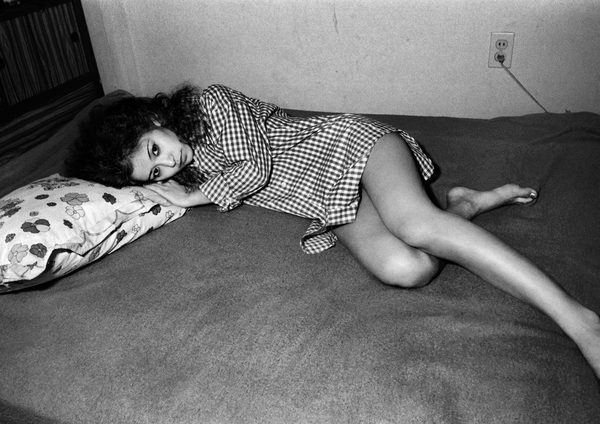
Tokyo–Koza — Keizō Kitajima’s new photobook explores the explosion of party culture of Tokyo and Okinawa during an era of rapid change in the country, as well as its stranger turns.
Photography emerged at the vanguard in Japan as the 1968–69 university protests signified the rise of the New Left amid a global revolution against Western imperialism. Liberated from the myth of “objectivity” and false hierarchies of form, a small group of Japanese artists and critics including Daidō Moriyama and Nakahira Takuma came together to create Provoke, a photography magazine that embraced the raw, radical, and expressionistic possibilities of the medium.
Although Provoke only ran three issues, its legacy would inspire generations of photographers from around the globe, beginning with native son, Keizō Kitajima. “I began photography in the mid-1970s, around the time when the political fervour symbolised by the May 1968 Paris Uprising was beginning to subside,” he says. “At that time, photography was considered one of the most cutting-edge and powerful means of expression in Japan, and I was deeply impressed by it.”
Born in 1954 in Suzaka, Nagano Prefecture, Kitajima first discovered the work of Nobuyoshi Araki and Daidō Moriyama as a teen, going on to study with the latter in 1975 at WORK SHOP Photography School, founded by members of Provoke after the magazine folded. The two established a lifelong collaboration that took root the following year with the creation of CAMP, an artist-run gallery, darkroom, and meeting space in the Shinjuku district of Tokyo.
With Moriyama’s support, Kitajima began exploring Koza, the historical name for Okinawa City and second largest city on the island following Tokyo. “Okinawa has numerous US military bases, and Koza is a nightlife district catering to American soldiers,” Kitajima says. “When I frequented Koza, it was shortly after the Vietnam War, and the town was bustling with many returning soldiers. People from all over Southeast Asia gathered in Koza to do business with the American soldiers. Many of them, including the soldiers, carried painful experiences in their hearts. I heard a thousand sad stories and a hundred happy stories from them.”
With the recent publication of Keizo Kitajima: Tokyo–Koza (Little Big Man Books), the artist returns to the start of his career, retracing a fascinating chapter of Japanese photography and history. The lush, oversize paperback brings together Kitajima’s early works, Photographs of Okinawa (1975–1979) and Tokyo 1979, to create an electric portrait of Japanese nightlife during the second half of the decade.
In 1979, Kitajima mounted a monthly series of exhibitions at CAMP showcasing black and white photographs made around the gallery in Shinjuku Ni-chome, a former red light district, accompanied by booklets titled Photo Express: Tokyo. “Japan was undergoing rapid urbanisation, and I was fascinated by the image and energy of the city,” he says. “The city seemed like a chaotic entity where light and darkness coexisted. Wandering through the labyrinthine alleys of Tokyo, I sought an encounter with a truth that transcended good and evil.”
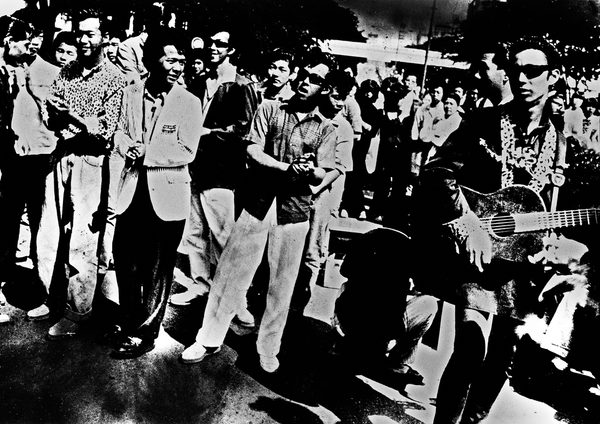
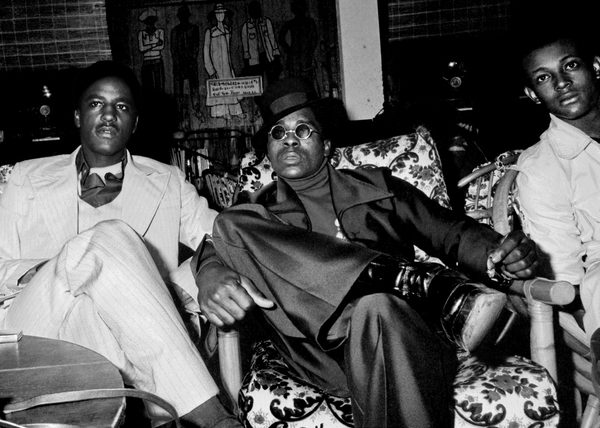
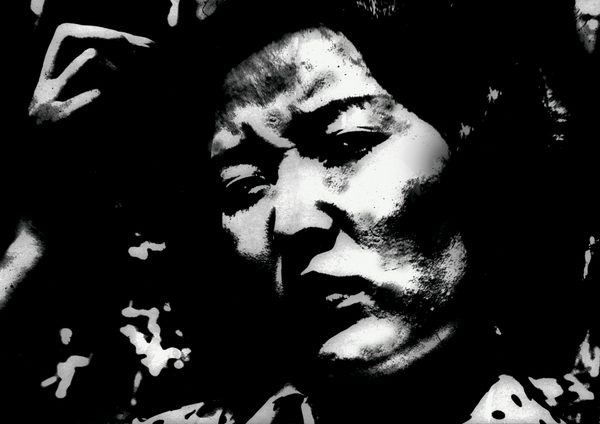
Kitajima remembers the experience as a whirlwind, excitedly photographing people who frequented the area, delighting when they would come to exhibition openings when their images were hung. “I attempted to compress the act of shooting, production, and exhibition into a single act, presenting it with maximum volume,” he says. Kitajima transformed CAMP into a darkroom by covering the walls with rolls of photographic paper, projecting the negatives onto them, developing them with a sponge, rinsing them in a bucket of water, and opening the show the very next day in that state.
It is only now, half a century after these two series were made, that they can be seen together as Kitajima always dreamed. “For me, there are no past photographs. All the photographs I take, including street photography, are in the present tense and reflect my current position,” he says. “I believe it’s important to repeatedly revisit the same photographs, and I continue to re-examine the photographs I’ve taken, reinterpreting them in new contexts. My photographs are always beyond me.”
Keizo Kitajima: Tokyo–Koza is published by Little Big Man Books.
Miss Rosen is a freelance arts and photography writer, follow her on X.
Buy your copy of Huck 83 here.
Enjoyed this article? Follow Huck on Instagram for more from the cutting edge of sport, music and counterculture.
Support stories like this by becoming a member of Club Huck.