Four Deaths, No Charges and Tough Questions at Boat Collision Inquiry
Four people died in the Anse Cochon boat collision, but more than four months later, no one had been charged over the incident, its lead investigator told the Maritime Commission of Inquiry during a tense hearing that brought police resources, command decisions and accountability under scrutiny. Corporal Luciano Garde said he used his personal vehicle […] The post Four Deaths, No Charges and Tough Questions at Boat Collision Inquiry appeared first on Saint Lucia Daily Post.
 Black News
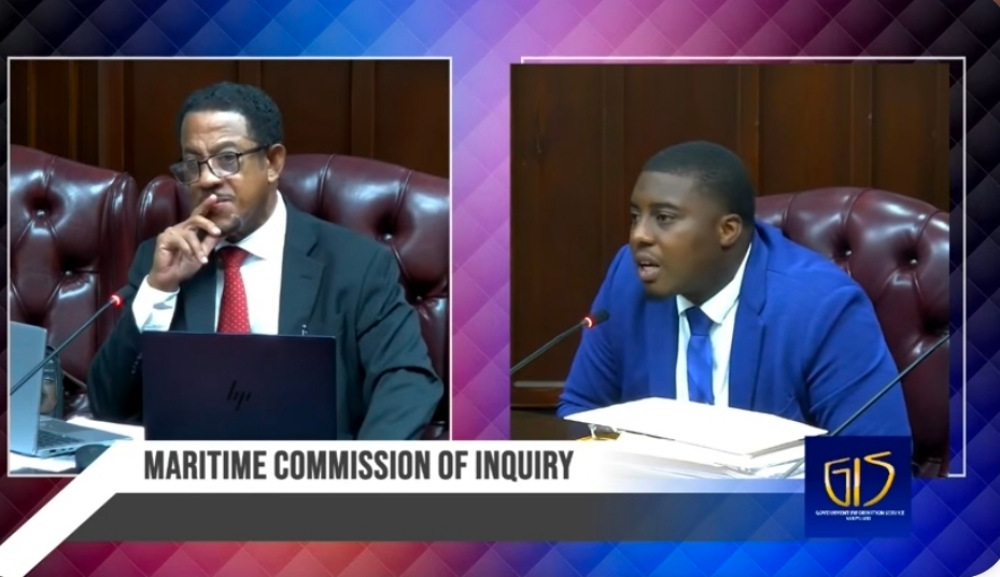
Four people died in the Anse Cochon boat collision, but more than four months later, no one had been charged over the incident, its lead investigator told the Maritime Commission of Inquiry during a tense hearing that brought police resources, command decisions and accountability under scrutiny.
Corporal Luciano Garde said he used his personal vehicle for land travel throughout the investigation after a formal request for transportation assistance was not granted. His account of difficulties obtaining support drew pointed questions from commissioners, including Assistant Commissioner of Police Luke De Freitas, who challenged why he had not sought help beyond his immediate supervisor.
Commission chairman, retired Justice Mario Michel, repeatedly questioned the absence of charges arising from the July 18 collision, which killed two young men and two young women and left several others injured.
Michel contrasted that position with the separate investigation into an alleged incident aboard a nearby yacht, which he said resulted in charges on August 10, just over three weeks after the collision.
“Why, corporal? Why?” Michel asked after Garde confirmed that no charges had been filed over the fatal collision.
The chairman pointed to information already contained in police witness statements, including allegations of excessive speed, operation without navigational lights, alcohol consumption by both captains before departure and one captain’s licence having expired 11 years earlier.
Michel stressed that he was referring to information police had gathered before the commission was appointed, rather than disclosures first made during the inquiry. Those allegations have not been established as findings of criminal liability.
Garde defended the investigative process, saying the gravity of the case required careful collection of facts and attention to detail.
“In my opinion, this investigation and the time frame in which the facts have been collected is appropriate in reference to the magnitude of said matter,” he said.
He told commissioners that he had submitted the investigative file through senior officers for advice from the Director of Public Prosecutions. He described submitting it first to Superintendent Alfred and subsequently, following further investigation, to the officer who took over command of the Police Marine Unit.
The exchange did not establish when the DPP’s office received the file.
Garde maintained that sufficient material had been submitted for prosecutorial consideration, while explaining that additional reports were still coming in. He also cautioned against prematurely disclosing investigative findings in a way that could prejudice subsequent court proceedings.
Michel questioned whether the absence of charges could encourage unsafe practices among boat operators by creating an impression that breaches would carry no consequences.
He said the commission needed to understand both the circumstances of the collision and the actions taken by those responsible for investigating it.
The questioning then turned to the support Garde received within the Police Marine Unit.
Although he acknowledged assistance from senior officers and access to police vessels for sea travel, Garde said he would not describe himself as satisfied with the support provided.
“There were some major challenges in reference to the conduct of this investigation,” he said.
Garde told commissioners that he formally requested vehicular assistance from Superintendent Alfred and retained copies of the correspondence.
“For some reason I was not granted with that particular vehicle or transportation,” he said, explaining that he used his own vehicle whenever investigative work required land travel.
He also said he initially removed correspondence concerning his requests from the investigative file because he did not want those matters aired publicly. However, he considered it important to explain the challenges encountered.
De Freitas pressed Garde on why he had not approached an Assistant Commissioner when the assistance he sought was allegedly unavailable.
“I am concerned about the allegations you making against the Superintendent. I am very concerned,” De Freitas said. “And you need to understand that what you are saying here is being aired publicly.”
Garde maintained that Alfred was his immediate supervisor and that official documents had to pass through him. He said bypassing the superintendent would have been improper.
De Freitas disputed that position, arguing that an officer facing difficulties with an immediate supervisor could seek intervention from the next level of command.
“I will not sit here on this commission as an Assistant Commissioner of Police and listen to a Corporal of Police make such damning allegations against a superintendent and not try to get to the bottom of it,” he said.
When Garde attempted to explain that he had received investigative guidance from Sergeant Dantes of the Criminal Investigations Department, De Freitas interrupted.
“Forget Sergeant Dantes. I am concerned about the allegations you making against the Superintendent,” he said.
Michel also intervened, pressing Garde to answer whether an officer could approach the next rank when a supervisor failed to provide assistance.
Garde acknowledged that this could happen in the example put to him, but continued to defend his handling of the requests.
“I worked around the challenges and I highlighted the challenges in the submission of my documents, sir,” he said.
Further questioning established that Garde had not raised the difficulties with an Assistant Commissioner, either Deputy Commissioner or the Commissioner of Police.
Garde nevertheless argued that the investigation completed despite those challenges should also be considered. He referred to Michel’s assessment that the file contained sufficient material to advance the matter, saying this reflected the investigative work undertaken.
The post Four Deaths, No Charges and Tough Questions at Boat Collision Inquiry appeared first on Saint Lucia Daily Post.