Budget, infrastructure challenges hamper Mashare institute
Lylie Joel MASHARE- Farm manager George Haufiku said the Mashare Agricultural Development Institute (MADI) in the Kavango East has been unable to operate at full capacity, with budget shortages and deteriorating infrastructure affecting livestock conservation and the delivery of agricultural training. Haufiku outlined the challenges during a visit to the centre by a delegation led... The post Budget, infrastructure challenges hamper Mashare institute appeared first on New Era.
 Black News


Lylie Joel
MASHARE- Farm manager George Haufiku said the Mashare Agricultural Development Institute (MADI) in the Kavango East has been unable to operate at full capacity, with budget shortages and deteriorating infrastructure affecting livestock conservation and the delivery of agricultural training.
Haufiku outlined the challenges during a visit to the centre by a delegation led by National Council chairperson Lukas Sinimbo Muha.
MADI is one of the centres attached to the Directorate of Agricultural Research and Development.
He said the institute has two main responsibilities: conserving local genetic resources and providing agricultural training.
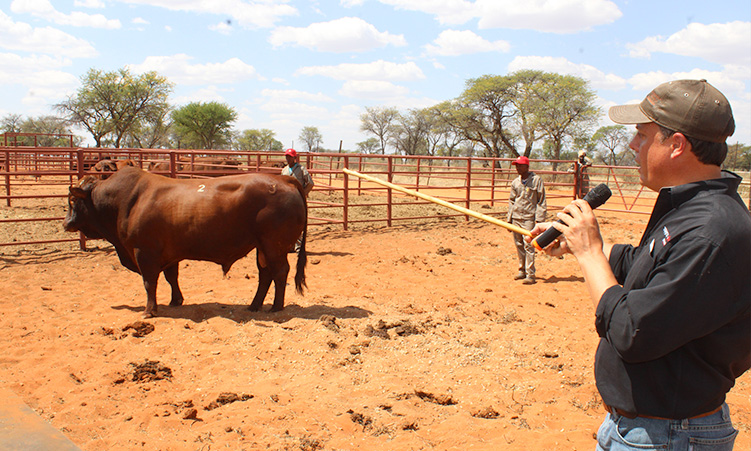
The farm keeps indigenous goats, pigs, cattle and donkeys, including local breeds that are maintained for conservation.
He said the institute had also provided short courses and longer agriculture courses, but training has been held back by a lack of funding and the resources needed to run programmes.
MADI has developed a training calendar and is working towards registration and accreditation through the Namibia Training Authority (NTA).
Haufiku said accreditation requires funding and suitable facilities, while students would also need reliable internet access. The centre currently has no network tower or internet connection.
“Our infrastructure and farm camps need to be operational for us to give quality. Teaching proper management is what we need to teach and enforce into the students,” he said.
Haufiku said MADI’s funding is shared with other farms under the directorate, leaving the institute to compete for resources such as fuel, animal feed, operational materials and infrastructure work. The shared budget covers 18 farms, including crop and livestock research farms.
“This is really putting us on the spot whereby we are not achieving a lot,” he said.
He added that prioritising one farm could leave others without the support they need.
The institute’s infrastructure, including livestock facilities and camps, is in a poor state. Haufiku said the farm sometimes lacks funds to buy materials for fencing and camp maintenance. A bulldozer used to clear and prepare camps is shared among farms and private institutions across the country, and repairs or service costs are difficult to meet.
He said MADI also stopped keeping chickens after the Covid-19 period, when funding for the farm was no longer available.
The institute hopes to revive chicken production, but that would depend on resources being made available.
Haufiku said staffing costs, including overtime payments and the materials needed to manage livestock, also put pressure on the farm. He said those constraints affect their ability to conserve local breeds and provide benefits to communities.
The institute has made some progress. Haufiku said the administration block had recently been renovated and classrooms were located there.
Some toilets were built, fire extinguishers were replaced, and work towards NTA accreditation is ongoing.
The workshop and livestock section still need renovation, which he said would require substantial funding.
Agricultural research and seed production are also affected by the lack of irrigation.
MADI has 12 hectares of operational land, while a larger area is planned for production. Haufiku said the farm has produced seeds for processing in Omaheke and is researching new seed varieties, but its work depends heavily on rainfall.
“If it doesn’t rain, we are going to face some challenges,” he said.
Haufiku said the institute needs support from government and other stakeholders to improve facilities, restore training and strengthen farm operations.
He said the ministry’s budget alone cannot meet the needs of all 18 farms without leaving some of them short of resources.
He said the institute aims to conserve local genetic resources and provide practical agricultural training, but achieving that requires reliable funding and infrastructure.
National Council Chairperson Lukas Sinimbo Muha said the institute’s challenges were a concern not only for its staff but for the nation, given its role in supporting agriculture.
“We really understand what this government is pushing for, more particularly in the area of agriculture. Part of those institutions entrusted to facilitate this objective is this institution where we are today,” Muha said.
He said Parliament’s committees could seek explanations for delays in revamping the institute, while other stakeholders should help address issues such as network access.
Muha acknowledged that funding constraints affected government institutions, but said agriculture should be prioritised.
Muha also asked whether MADI could take on additional responsibilities, such as storing and packaging produce, if the government selected it for that role. He urged management to identify areas where the institute could deliver despite its difficulties.
The post Budget, infrastructure challenges hamper Mashare institute appeared first on New Era.