Ethiopia: Elections, Constitutional Change, and Genocidal Violence
The decision to exclude Tigray from the 2026 election all but assured the outbreak of war if for no other reason than that the terms of the region’s union with Ethiopia are being altered without its consent. The post Ethiopia: Elections, Constitutional Change, and Genocidal Violence first appeared on The Elephant.
 Black News
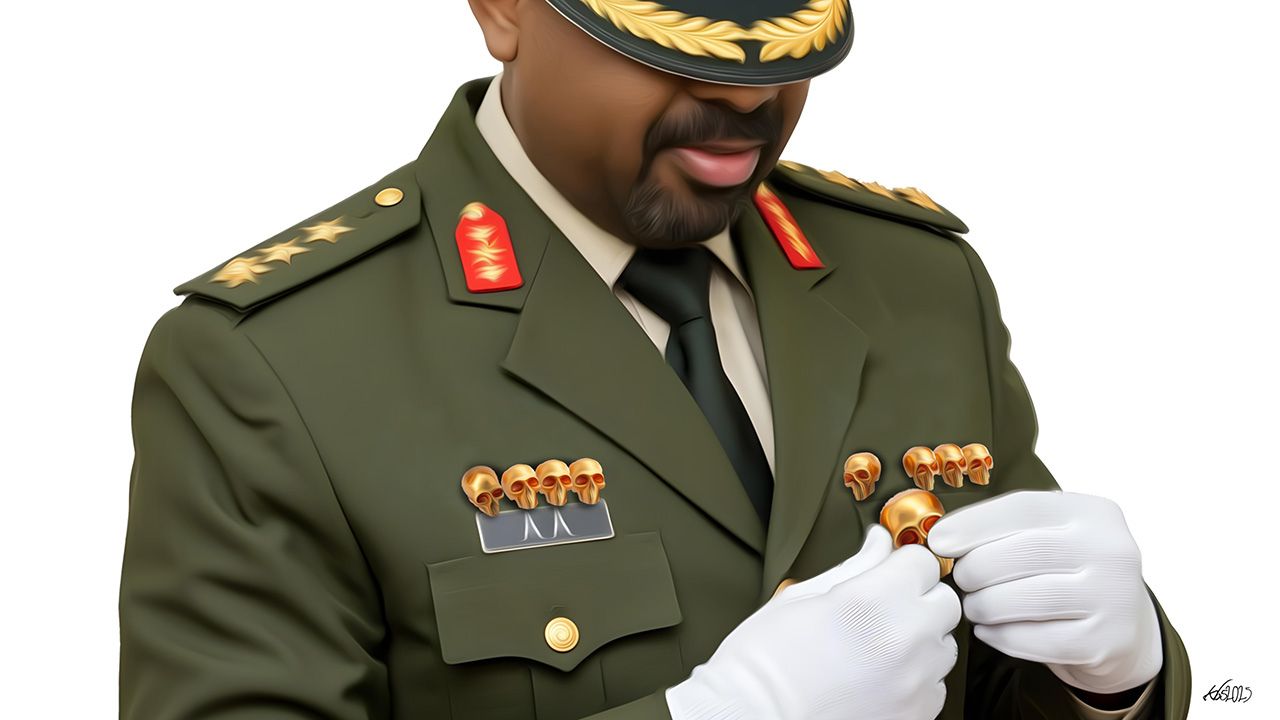

In November 2020, a war erupted in the Ethiopian region of Tigray. Six hundred thousand to a million civilian lives are estimated to have been lost. Amongst the many war crimes and crimes against humanity committed during the two-year war was genocide against Tigrayans. Abiy Ahmed has on several occasions insisted that the catalyst for war was his intolerance for voluntary disassociation and the exercise of the right to vote.
The National Electoral Board of Ethiopia (NEBE) postponed the 2020 election several times, but the final “indefinite” postponement under the cover of COVID-19 breached the constitutionally set term limit. Then NEBE chair Birtukan Mideksa’s claim that COVID-19 introduced public health imperatives that overrode those of democracy was unconvincing given the government’s non-enforcement of other measures such as lockdowns or even social distancing, and its farcical claim of having developed a “homegrown” cure.
Following a public outcry over the “corona-clouded power grab”, four prescriptive options for a “constitutional route to postponement” were presented to a curated array of government-aligned opposition by the then minister of justice, now minister of foreign affairs, Gedion Timothewos. The exercise was met with derision, even by its hand-selected participants. An equally performative constitutional “tribunal” was held, but that too failed to foster agreement over the legality of the postponement and the legitimacy of the government following the expiration of its term.
Having catalysed constitutional chaos, Mideksa set about facilitating Ahmed’s bypassing of various laws and bylaws to dissolve the Ethiopian People’s Revolutionary Democratic Front (EPRDF) and establish the Prosperity Party (PP). Beyond legal and procedural controversies, the move to reconstitute the EPRDF drew criticism for its intent. Abiy’s desire to dissolve the EPRDF and “Medemer” (amalgamate) its constituent and affiliated parts was viewed by many as an initial step towards constitutional remaking and a reversal of multinational federalism.
The dissolution of the EPRDF ended the “reformist” coalition known as Team Lemma that propelled Abiy Ahmed to its chairmanship and Ethiopia’s prime ministership. In August 2020, Lemma Megersa, after whom Team Lemma was named, was removed from the Prosperity Party and as Minister of Defence for opposing the EPRDF’s amalgamation. The PP’s establishment was so ad hoc that it remains unclear if Megersa had actually joined the PP before he was booted out.
The relationship between the erstwhile allies came under strain as early as 2019 and was indicative of a wider rift between Abiy Ahmed and his Oromo base over the meaning of “reform” and its alignment with the demands of the protests that spurred Team Lemma’s rise. Ahmed positioned himself as an Oromo populist championing the cause of the Oromo farmer and, more broadly, seeking the “proper implementation of federalism”. Once in power, he started to appeal to a form of “pan-Ethiopian” nationalism which hoped to homogenize national identity and recentralize Ethiopia’s governing structures. Many in Ahmed’s Oromo base viewed the turn as a betrayal of the cause. Even before Megersa’s political downfall, suspicions over Ahmed’s intentions ignited a still-raging conflict with the Oromo Liberation Army.
For a time, Abiy managed to force together the antagonistic nationalisms by offering a shared enemy – Tigrayan supremacy. Once considered the champion of the “national question”, the Tigray People’s Liberation Front (TPLF) was recast as the primary impediment to its “proper implementation”, while maintaining its long-held position as the primary impediment to the return of a unitary institutional setup. “Tigrinya speakers” became “daytime hyenas” on whom the country’s many political and social crises could be scapegoated.
The TPLF opposed the postponement of the election and refused to recognize the federal government once its constitutionally set term was over. Unfortunately, the TPLF did not lodge an official challenge to the postponement through its seats in both chambers of parliament. Instead, it retreated into Tigray to shore up its base and made plans to hold a regional election within constitutionally set limits.
Both the dissolution of the EPRDF and the postponement of the elections drew widespread criticism from divergent opposition groups. Still, the TPLF’s concerns were dismissed as the mere disgruntlements of “hardline old guard (…) bad losers” piqued to see their star waning after being displaced from power, and jealous of the neoliberal “reforms” and “peacemaking” of the new prime minister. The perniciousness of this view all but excluded serious discussion over the democratic merits of Ahmed’s neoliberal reforms, their compatibility with the governing structures of Ethiopia, and the processes and procedures through which said structures should or could be altered without reverting to violence.
Most analysts explain Abiy’s centralizing impulse as a personal problem: a desire to fulfil his mother’s prophecy that “my son, you will be king”; a religious conviction – pastors say he is the messiah; a need to fill the gaping hole left by a philandering absentee father, all of which, we are told, made him look back towards Ethiopia’s imperialist past. Through this lens, genocide becomes a way for Ahmed to work out his “daddy issues”. While I don’t doubt Ahmed’s delusions of grandeur, or the international community’s benevolence, it is unlikely they underwrote genocide to help Ahmed cope with his personal pathologies.
One of the many “heroic assumptions” underlying the neoliberal reforms Ahmed instituted is the existence of a unified state with a homogenized identity. None exists in Ethiopia; our history won’t allow for it. The economic inequalities generally associated with neoliberal reform have put such pressure on societal cohesion and nation building – even in states without the historical baggage or ethnic plurality of Ethiopia – as to lead to their failure. African history over the last half century is replete with examples. Ethiopia’s governing structures, designed on the basis of its historical idiosyncrasies rather than abstract theories formulated in Chicago, are in obvious friction with the dictates of the IMF and the World Bank. Centralizing Ethiopia was, for this reason, always going to be a violent affair. The international community’s workaround was to encourage the PP’s brutal infringements on the rights and liberties of Ethiopian citizens by framing tyranny as exclusively and excusably aimed at the TPLF.
NEBE enjoyed unwavering diplomatic support, most directly expressed through the United Nations Development Programme’s (UNDP) “Supporting Elections for Ethiopia’s Democratic Strengthening” (SEEDS) project. The project, and its successor SEEDS II, were both explicitly designed to strengthen the institutional capacity of NEBE to conduct “credible, inclusive, transparent, and peaceful elections”. The reforms funded by SEEDS have yet to achieve these objectives. What we have seen instead is an increased entanglement between ballots and bullets.
Mideksa’s personal commitment to using elections as instruments of genocide led her to resign in protest at the Cessation of Hostilities Agreement (CoHA) that brought the war to a formal end in November 2022. She, like many in the “pan-Ethiopian” camp, viewed Ahmed’s failure to “finish off the Tigrayans” as a setback to the return of the unitary state including now independent Eritrea. She need not have fretted. The 2026 election cycle triggered war and cemented the relationship between the two.
The agreements ending the 2020–2022 genocide litigated the constitutional interpretations that led to the war. The government established through Tigray’s regional election was deemed illegitimate and disbanded. Setting aside the moral implication of overturning elections through genocide, the dissolution of government meant Tigray would go without a legislative branch, and its constitution would, in effect, be suspended. The agreements became the legal thread tying Tigray to the Federal Democratic Republic of Ethiopia until an election restored the constitutional order. This created significant institutional gaps within Tigray and its relationship to the rest of the federation. To bridge some of these gaps, CoHA stipulated an interim administration whose cabinet would be formed on the basis of negotiations between the TPLF and the federal government.
Initially, the federal government showed little interest in the establishment of the Tigray Interim Regional Administration (TIRA), and Tigrayan political elites debated its composition without interference. Abiy Ahmed began to take an interest in the appointment of the president, vetoing TPLF chairperson Debretsion Gebremichael and all the other members of the TPLF’s Executive Committee (EC). Ahmed demanded that a “new face” take charge of the interim setup. Following instructions, the EC coalesced around Fiseha Haftetsion, a young technocratic member of the Central Committee (CC) as their preferred candidate. The TPLF’s CC overrode the EC, selecting Getachew Reda for the presidency with a narrow majority. Abiy’s acceptance of the TPLF’s selection despite his earlier dismissal of members of the EC raised suspicions amongst Reda’s comrades in the party’s highest decision-making organ, exacerbating the distrust that emerged from his role in the opaque negotiations that led to COHA.
These suspicions were heightened when Ahmed appointed Reda president through Intervention Proclamation 359/2003 rather than through the modalities built on the basis of the CoHA. Every extension of TIRA’s mandate and the accompanying presidential “appointment” invoked Intervention Proclamation 359/2003. Bypassing CoHA through a proclamation designed to regulate military intervention in regional states was a worrisome indication of the Prosperity regime’s intentions. Intentions aside, given that Tigray has yet to reintegrate into the Ethiopian federation, it is unclear whether Tigray is bound by Intervention Proclamation 359/2003, or any other federal laws.
Reda sought to leverage the wartime camaraderie he had established with the generals of the Tigray Defense Forces (TDF) to counter his political isolation within the EC. Upon his insistence, active-duty combatants and non-TPLF members of TIRA were invited to participate in the meetings held from November to December 2022 to evaluate party leadership during the war. Reda’s gambit backfired; Fetlework Gebregziabher, his most ardent critic in the EC, emerged as the generals’ darling. Despite concluding by appointing him the TPLF’s deputy chairman, the November/December evaluations triggered a snail-paced coup that held Reda at gunpoint until his ouster and exile.
Following the November/December 2022 evaluation meetings, Fetlework Gebregziabher quickly manoeuvred to consolidate her hold on the TPLF through a party congress. Tensions hit fever pitch as the Prosperity regime, backing Reda, insisted a congress could only take place under the auspices of NEBE and that the latter had no intention of accommodating the congress. The TPLF went ahead with the congress, which Reda and his faction boycotted, arguing that the party had not adhered to national election law or its own bylaws. Reda decided to boycott despite retaining support from important party organs such as the congress oversight committee, thereby delegitimizing the only processes, however flawed, that could have reestablished the primacy of the political.
The TPLF pointed to NEBE’s two-year-long foot-dragging over the reinstatement of its legal registration, initially voided in January 2021 following the outbreak of war, as evidence of its bias and desire to undermine CoHA. The TPLF argued that failing to recognize the legality of a signatory to the agreement amounted to its nullification. Nullifying CoHA, as the TPLF claims NEBE did, would sever the last remaining legal tie between Tigray and the Federal Democratic Republic of Ethiopia. Given that Tigray’s own constitution remains suspended until it elects a legislative wing, legally speaking, the region no longer exists.
Having essentially declared martial law on dubious legal grounds, Ahmed went about stripping Tigray of a legal identity. NEBE’s decision marked a souring of TPLF’s relationship with itself, the interim government, and the prosperity regime. It all but assured that Tigray would remain in legal limbo for the entirety of the 2020–2026 term of government.
The failure to fully reintegrate Tigray and the attempt at stripping it of a legal identity are the driving factors of Pretoria’s inability to make political gains on – and sustain – peace. Processes such as the reinstatement of Tigray’s constitutional borders, the return of Internally Displaced Persons, and Disarmament, Demobilization and Reintegration, all of which had initially shown promise, stalled as they became subject to differences over institutional arrangements. Some would argue that, given that regional states can essentially veto constitutional amendments, and Abiy has plans to amend the constitution, leaving Tigray in legal limbo suits his agenda just fine. The decision to exclude Tigray from the 2026 election all but assured the outbreak of war if for no other reason than that the terms of our union with Ethiopia are being altered without our consent.
Ahmed’s unilateral extension of TIRA’s term two months before a national election set to exclude Tigray was met by the TPLF’s restitution of Tigray’s pre-war council. The restitution of the council reimposed the TPLF’s monopoly over Tigray’s political space, but it also put its constitution back into play and gave it access to a legislative arm, however illegitimate, through which it was trying to address some of the institutional and legal gaps.
A few days after the election, Ahmed oversaw the opening of a congress organized by the Ethiopian National Dialogue Commission. The commission was established in late 2021 as Tigray Defence Forces made significant military gains that threatened the capital. Despite the language of national reconciliation that informed its establishment, many felt the commission was an attempt at concentrating power in the person of Abiy Ahmed and bypassing constitutional ends towards constitutional change. The conference was to serve as the culmination of the commission’s work and was expected to roll out the basis for Ethiopia’s transition into a unitary state and a presidential system. Various changes to the electoral system anticipating this shift had quietly been rolled out in the 2026 election with no public debate or oversight.
Instead, the conference revealed Ahmed’s waning power. The changes Ahmed wanted were in effect vetoed by members of his ruling party organizing around Shimelis Abdisa, the president of Oromia region. Abdisa seems to have been able to galvanize support not just from within the Prosperity Party, but from an Oromo opposition that had grown weary of Abiy Ahmed. Whatever their perhaps theatrical differences on constitutional change, messaging from opposition actors aligned to Abdisa suggests his alignment with Ahmed on the issue of war with “the northerners”.
To bolster his waning popularity and, apparently, his inability to effectively project power in his own party, Ahmed fell back on a familiar formula – anti-Tigrayan populism. On 31 July, Ahmed appeared on Amhara state television bemoaning that Fano, a conglomeration of Amhara militia groups allied to him during the genocide, were now allied with the TPLF. Their alliance with the TPLF, he claimed, was built on Fano agreeing to drop their claims to Western Tigray. The Ethiopian National Defense Force attacked a TDF camp in Western Tigray, close to the Sudanese border, on August 1st.
The split with Fano occurred when they were left out of the negotiations that led to CoHA, an agreement they felt undermined them by calling for their disarmament and the return of Tigray’s constitutionally mandated borders. The return of “ancestral lands” had been a rallying cry of Amhara nationalism, and was sold as a central aim of the 2020–2022 war. Ahmed’s decision to “betray the cause” may have been motivated by his plans to satisfy populist appetites through the conquest of Assab in Eritrea and/or Berbera in Somalia. A few days later, he appeared on Oromo state television to claim that he would return Oromo ancestral lands in Eritrea. The PP regime is open about plans to use the return of war in Tigray as an opportunity to “alter geography”.
The argument laid out to legitimize the conquest of Assab, if not Berbera, is based on a rejection of the process through which Eritrea formally achieved independence, that is, the process that established the Federal Democratic Republic of Ethiopia on the ashes of the Provisional Military Government of Socialist Ethiopia. There is, then, an explicit link between the desire for constitutional change and territorial expansion.
Whatever the merits of the arguments against the transitional period of the early ’90s, it is important to note that the governing structures of Ethiopia have since been legitimized by seven election cycles, including three that, in the final accounting, delivered Abiy Ahmed the prime ministership. It is to be recalled that Ahmed unleashed genocide on his citizens, with his Eritrean partners, under the guise of a “law enforcement operation” to defend Ethiopia’s constitution.
On 8 August, with Tigray in the midst of sustained aerial attacks, Debretsion Gebremichael held a presser adding Ahmed’s plans to “rip up” the constitution to the list of reasons Pretoria, which maintained constitutional signposts, was dead. In the same presser, Gebremichael made public the formation of an “Alliance for Survival”, a still growing grouping of armed Ethiopian actors with a shared mission of overthrowing the prosperity regime. The Alliance for Survival too has plans to “rip up” the constitution. In their first shared statement, Alliance members used the constitutional language of “Nations, nationalities, and peoples of Ethiopia”, but let it be known that the regime rests on an “anti-people state structure” which would be replaced through an “honest, trustworthy, fully inclusive and participatory popular and constitutional dialogue”.
Shortly after issuing the statement, a section within TDF took over federal installations in Tigray, including three airports, and launched an offensive that dislodged it from the Tigrayan capital and returned, yet again, to its insurgent roots.
Ahmed celebrated his conquest of Mekelle by hosting a gala to announce that the Commission’s recommendations would be presented to parliament for ratification. The expectation is that Tigray’s lack of a legal identity and elected council, in concomitance with its lack of representation in both chambers of parliament at the federal level, means he can change the terms of Tigray’s belonging to the federation while the regional state is in legal purgatory.
While the likes of Birtukan Mideksa hoped that the 2020–2022 war would end with a return of the unitary Ethiopian state, both sides, at least rhetorically, sought to uphold their interpretation of the constitution. The start of war in 2026 threatens to make the country the epicentre of a theatre of war stretching from the Sahel to Iran and is explicitly about undoing the Federal Democratic Republic of Ethiopia. What comes next is anybody’s guess. Still, whatever wars are won or lost, and however entangled they become, the right to vote remains inviolable and inalienable. Given that Tigrayans have been denied the right to vote for six years, Tigray cannot be legally or morally beholden to changes to the terms of its constitutional relationship with Ethiopia imposed by either belligerent of the war on Tigray.
The post Ethiopia: Elections, Constitutional Change, and Genocidal Violence first appeared on The Elephant.