Decades since Selma: Houston leaders remember fight for voting rights
A Selma march survivor reflects on Bloody Sunday and six decades of voting-rights battles since.
 Black News

In 1965, roughly 600 marchers set out from Brown Chapel AME Church in Selma, Alabama, intending to walk the 54 miles to Montgomery to demand the right to vote.
They made it only as far as the Edmund Pettus Bridge. There, Alabama state troopers awaited them, some on horseback, tear gas and billy clubs in hand. As protesters marched, they attacked them with their gear.
Several protesters were injured.

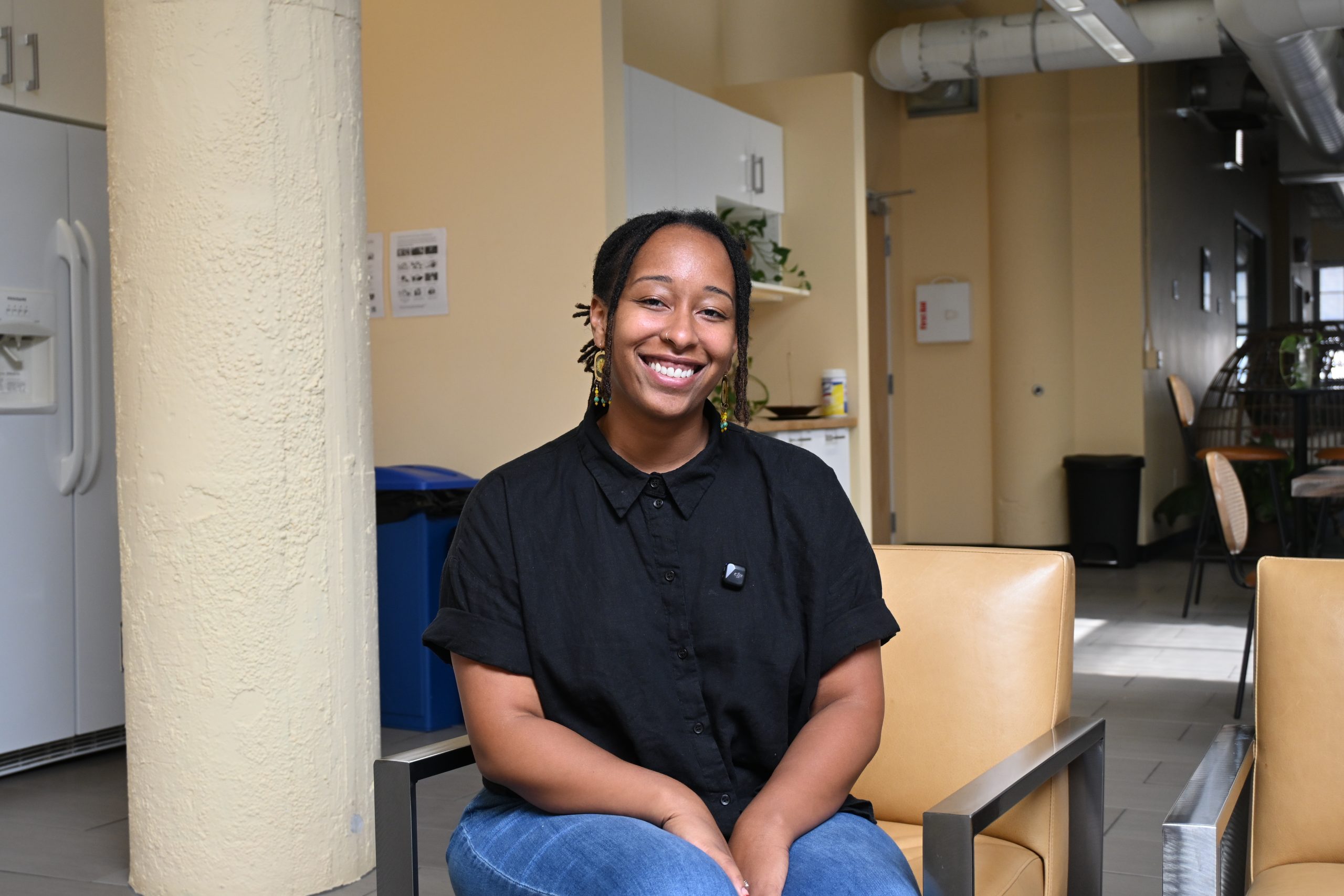
Among them was Dr. Alexander Brown, a teenager when the protests started to take shape in Alabama, the epicenter of the Civil Rights Movement in the country.
When he was sixteen, Brown joined The Children’s March. The state’s youth, using word-of-mouth information, organized to protest segregation in 1963 by deserting their classrooms on May 2, 1963. Despite his principal’s order, he decided to walk out of his general school assembly and join the protests.
He was later recruited by Dr. Bernard Lafayette for the Selma marches.
Brown remembers being at the back of the line, with the “Courageous Eight” leading the protesters. That’s when the law enforcement tear-gassed them.
“There were mounted police…policemen on the horses, to stop us. We had to run through the police, away from the tear gas, back to the church,” said Brown, remembering that nearby residents opened their doors to the protesters. “They hid us. They opened the doors and let us in, locked the doors, and pulled the shades so that we would just disappear.”
It has been 61 years since the Selma marches. But Brown, a survivor of Bloody Sunday and now a Houstonian, says that the issues protesters were marching for still plague the lives of Black Americans.
“We still need voting rights,” Brown said. “They’re still fighting us for voting rights. I keep hearing, ‘voting ain’t that important.’ Well, damn it, if voting isn’t important, why are these folks doing all this stuff to disenfranchise us, to take away the vote from us?”
Referring to Tarrant County’s decision to reduce its polling locations by 92 booths, Brown said such moves were not possible before the gutting of the Voting Rights Act, triggered by the Louisiana v. Callais ruling.
“We’ve got to make sure that everyone who wants to vote can vote,” he added. “And we’ve got to encourage those who don’t want to vote to vote.”
Brown had arrived in Selma two years before King did. He recalls the effort civil rights leaders made in Gee’s Bend and Lowndes County to help Black residents pass Alabama’s voter registration tests. But Black people still faced barriers while registering to vote.
“Every time I see it [Selma], it brings that back…that we were working so hard to get people ready to vote,” Brown said. “You had to get past the fear, get past to teach them how to physically, how to write the answers, and then to go in and be treated like that. It’s just unconscionable.”
Bloody Sunday: A 20th-century history lesson?
The day of the first Selma march came to be known as Bloody Sunday.
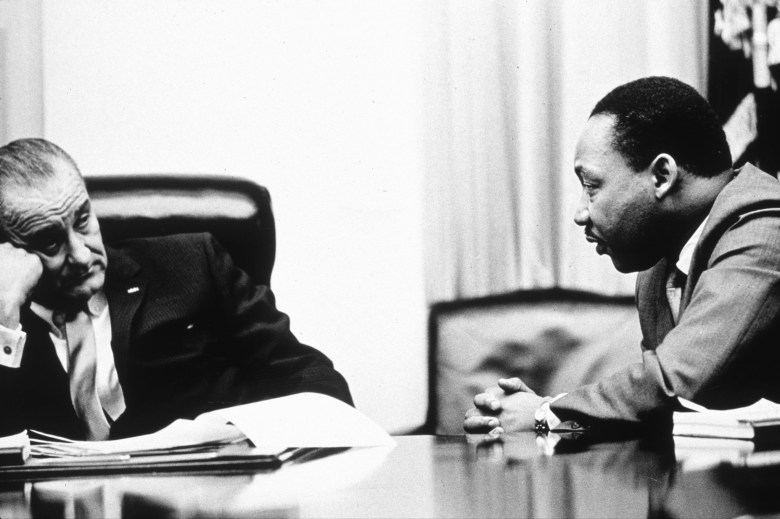
Five months later, President Lyndon Johnson signed the Voting Rights Act of 1965 into law, signaling his support for civil rights legislation.
The foundation of a series of marches in Alabama was the protest against the racist voting structures of the Jim Crow South. Although the Civil Rights Act of 1964 forbade discrimination in public spaces and employment, civil rights and student organizations such as the Southern Christian Leadership Council and the Student Nonviolent Coordinating Committee faced resistance when attempting to register Black voters.
“The people of Selma were afraid, but they didn’t let the fear stop them from registering to vote, from speaking out.”
Dr. Alexander Brown, who participated in Bloody Sunday
But the movement was far from being over. In early 1965, Dr. Martin Luther King, Jr. chose Selma as the seat of the Black voter-registration movement, urged on by Amelia Boynton Robinson.
The Selma marches led to the passing of the Voting Rights Act of 1965.
Section 2 of the VRA was crucial, experts say
The timeline from 1965 to 2026 is studded with irreversible changes, Brown says.
Reflecting on his recollections from the march, he said that with the dismantling of Section 2 of the VRA, Black voters are now faced with a challenge that resembles the period of disenfranchisement before the VRA.
“It ain’t right,” Brown said. “The Voting Rights Act, the one that we fought for, we were on the bridge [Edmund Pettus Bridge] for, is gone. I’m mourning for the movement. I’m mourning for all that we went through to get to our Second Reconstruction…and here we are at the end of that, in my short lifetime, I’ve gone from the beginning of the reconstruction period in the 60s to now having it taken from us.”
The legal machinery behind voting rollbacks

Dr. Veronica Reyna, associate director of Houston Civic Projects at Rice University’s Center for Civic Leadership, said that much goes unnoticed when discussing how the Voting Rights Act came into existence.
At the heart of its success was rigorous planning.
“Students often think, ‘ You just wake up, and the Voting Rights Act passed. Boom,” Reyna said. “There were various student strategies that were always at the heart of everything that was going on.”
Arguing that young voters need to break out of a sense of apathy and educate themselves on the leverage of voting, Reyna said civic participation does not need citizenship as a prerequisite.
“There are other forms of participation,” Reyna added. “There’s an opportunity for everyone to do something. Not everyone needs to be in front of the protest; we need people who give their voice, who are writers, poets, artists, cooks, and can do logistics. There’s writing letters, holding space, and volunteering space and time for conversations.”
Voting rights

Legal rulings can be situated alongside historical patterns, according to Dr. Annie Johnson Benifield, president of the Houston Voting Initiative and the first African American president of the League of Women Voters of Houston in 2022.
Johnson Benifield pointed to “systematic attempt to eliminate seats and to decrease minority representation” as a primary barrier to casting one’s ballot in Texas, a majority-minority state.
Six decades since Selma, she draws a parallel to Reconstruction, when, after the 13th, 14th, and 15th amendments to the U.S. Constitution were passed, slavery was abolished across the country. Black men gained the power to vote and were elected to office.
But it was short-lived, as incidents like the Civil Rights Cases of 1883, the Slaughterhouse Cases, alongside Plessy v. Ferguson, “basically unraveled every attempt to integrate the formerly enslaved individuals into the political structure,” Johnson Benifield said.
Now, she sees the same patterns unfolding with the Louisiana v. Callais ruling, which came three years after the Allen v. Mulligan case in Alabama, in which the court ordered the state to draw an additional majority-Black district.
“The Voting Rights Act did not change,” Johnson Benifield said. “So what happened? The court simply changed its mind, and the court is made up of people. Maybe the political ties are changing, or maybe the political mindset of the justices on the court has changed. That is emblematic to me as a former political science professor who taught for 30 years.”
The Selma marches were born out of necessity. But the ending to the story is yet to be written, Brown said, for it is missing a crucial component.
“A happy ending,” he concluded.