Culturally Responsive Care and Collective Healing at Althea Therapy
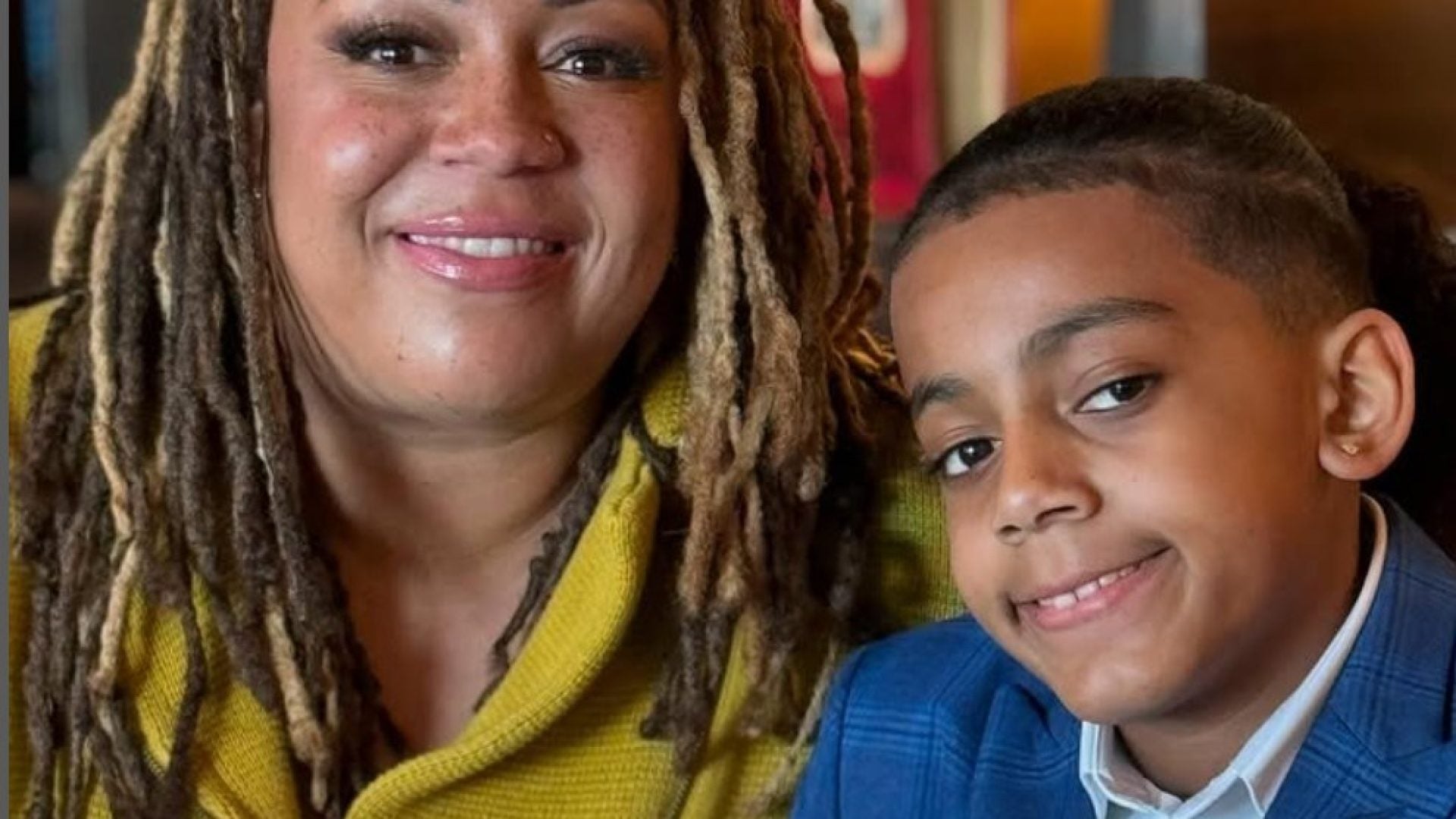
In an exclusive interview with Black Business Magazine, Micheline Khan, Founder and CEO of Althea Therapy, shares how she is transforming mental health access through culturally responsive care and community-centered support. With a background in science, climate, and human-centered innovation, Micheline discusses her journey from research to entrepreneurship and the experiences that inspired her to [...]
 Black News

In an exclusive interview with Black Business Magazine, Micheline Khan, Founder and CEO of Althea Therapy, shares how she is transforming mental health access through culturally responsive care and community-centered support. With a background in science, climate, and human-centered innovation, Micheline discusses her journey from research to entrepreneurship and the experiences that inspired her to build a platform addressing gaps faced by underserved communities.
Interview By SK Uddin
Micheline Khan is a mental health advocate, scientist, and CEO and Founder of Althea Therapy.Honoured in the DMZ Women of the Year Award for Women in Technology, her mission is tounlock access to culturally responsive mental health support for underrepresented groupsthrough technology and community.
Micheline has spent over a decade in the scientific field at the intersection of climate change,nature and people. In 2020, after witnessing the disproportionate effects of the pandemic onhistorically marginalized communities, Micheline moved into the technology space to address a growing challenge in access to culturally responsive mental health support. Combining her scientific background with her strategic insight, she founded Althea Therapy, an app to help people across Canada get access to culturally responsive mental health and wellness support.
She is building the next solution transforming access to culturally responsive care for a diverse world.
You spent over a decade working at the intersection of climate, nature, and people before founding Althea Therapy in 2020. What gap in the mental health landscape did you see—especially during the pandemic and rising anti‑Black and anti‑Asian racism—that made this platform feel urgently necessary?
My path to founding Althea Therapy started out as a side project and turned into a necessary community tool. What I kept seeing regardless of the context I was working in, was that the people most affected by systemic harm were the least served by the systems meant to support them.
When the pandemic hit and anti-Black and anti-Asian racism escalated so visibly and so violently in 2020, something shifted. The gap I’d always known existed became impossible for anyone to ignore. People were grieving publicly, processing collective trauma in real time, and the mental health system’s response was: go find a therapist. As if finding a therapist who actually understood your experience wasn’t already one of the hardest things to do, especially for communities who had generations of reasons to distrust healthcare systems. And the language being used, even in well-meaning spaces, kept centering a kind of universal human experience that wasn’t actually universal at all. Althea Therapy came out of the belief that people deserve to be met where they are.

Althea Therapy connects people with culturally responsive therapists, therapist‑led group programs like Reclaim, and self‑paced mental health memberships, with a mission to reduce racial mental health disparities. How do you define “culturally responsive care” in practice, and what difference does it make for the communities you serve?
For Althea Therapy, ‘culturally responsive care’ is our core principle that touches everything we do. It starts with the therapists themselves and how they respond to and create space for a clients cultural context, which shapes their distress and overall life experiences. Every therapist who joins our community brings lived experience alongside clinical training. The kind of understanding that doesn’t only come from a cultural competency training module. It comes from living it.
But it goes beyond representation. Culturally responsive care means the therapeutic relationship doesn’t require a client to justify their reality before the work begins. It means a program like the Reclaim Program can hold a conversation about boundary-setting that acknowledges how different that looks when you come from a collectivist family culture, where setting a boundary with a parent might feel like a betrayal of your entire community, not just a personal decision.
It means we don’t pathologise responses to systemic harm. Anxiety that comes from living in a body that is perceived as threatening, or grief that comes from watching your community targeted again and again — those aren’t disorders. They’re responses to real conditions.
You’ve spoken about the importance of collective care, and you’ve seen people like “Amara” feel truly seen for the first time in a group they just met. How does community‑based support sit alongside individual therapy in Althea’s model—and why did you decide that both had to be core to the platform?
Individual therapy is profound and it’s necessary. But there’s a specific kind of healing that can only happen in the presence of other people who share your experience.
What we’ve seen in the Reclaim Program (our five-week therapist-led group program) is that something particular happens when people are in a space where they don’t have to explain themselves. Where someone else names an experience and ten other people in the room exhale because they’ve felt it too and didn’t have words for it until that moment. That’s not something we can always replicate in a one-on-one session. It’s a different kind of medicine.
And honestly, collective care isn’t a new idea. It’s one that many of the communities Althea Therapy serves have always known. The idea that healing happens in relationship, in community, in circle — that’s deeply rooted in African, Indigenous, and many diasporic traditions. What mainstream mental health is slowly catching up to, these communities have practised for generations. Althea Therapy is in some ways just building infrastructure around what people already know to be true: that we do not heal alone.

Many people feel torn between staying informed about difficult news and protecting their nervous systems. As a scientist and mental health advocate, how do you personally navigate the tension between civic engagement and emotional self‑protection—and what guidance do you offer Althea users facing the same struggle?
The honest answer is that I haven’t perfectly solved it. What I’ve come to understand is that what’s happening in our bodies when we’re doomscrolling is a nervous system problem. Your body is responding to genuine danger (racism, political violence, climate collapse, economic precarity) and it doesn’t distinguish between a threat that’s happening to you right now and a threat you’re watching on a screen at midnight.
So, the exhaustion is real, the hypervigilance is real, and telling yourself to just log off and do some deep breathing doesn’t actually address what’s happening physiologically.
But disengaging from the news is a form of privilege that not everyone can access equally. When the legislation being debated directly affects your rights, your safety, or your community’s survival; switching off isn’t a wellness strategy. So the guidance I try to offer isn’t ‘protect yourself by looking away.’ It’s about finding ways to stay connected to what matters without letting the algorithm decide how much of it you consume and when.
Althea Therapy has been recognized among “Apps We Love” on the App Store and awarded Best Culturally‑Responsive Mental Health Service in Canada, yet asking for help is still deeply stigmatized in many communities. What do you wish someone had told you—or told the communities you serve—about seeking support long before you built this platform?
What I wish someone had told me was that the resistance you feel to seeking support is just information. It’s telling you something true about the history between your community and the systems that were supposed to care for you.
For so many Black, Indigenous, and racialized communities, not trusting healthcare systems is a rational response to real historical harm like medical experimentation, pathologisation of cultural difference, institutions that have consistently failed to see the full humanity of the people walking through their doors. The distrust makes sense. And any platform or practitioner that doesn’t start from that acknowledgement isn’t actually ready to help.
Asking for help doesn’t mean trusting a system. It can mean finding one person, one practitioner, one community, one space, who earns your trust.
When Althea Therapy was recognized as “Apps We Love” on the App Store and awarded Best Culturally‑Responsive Mental Health Service in Canada, what struck me was the messages we received afterward from people saying that they’d been looking for something just like this. That response told me everything about how long the gap had existed and how little people had been told they deserved something that actually fit.
Disclaimer: The views and opinions expressed in this interview are those of the guest and do not necessarily reflect the official policy or position of Black Business Magazine or its affiliates. The magazine is committed to supporting Black entrepreneurs and fostering conversations that promote inclusion and economic empowerment.