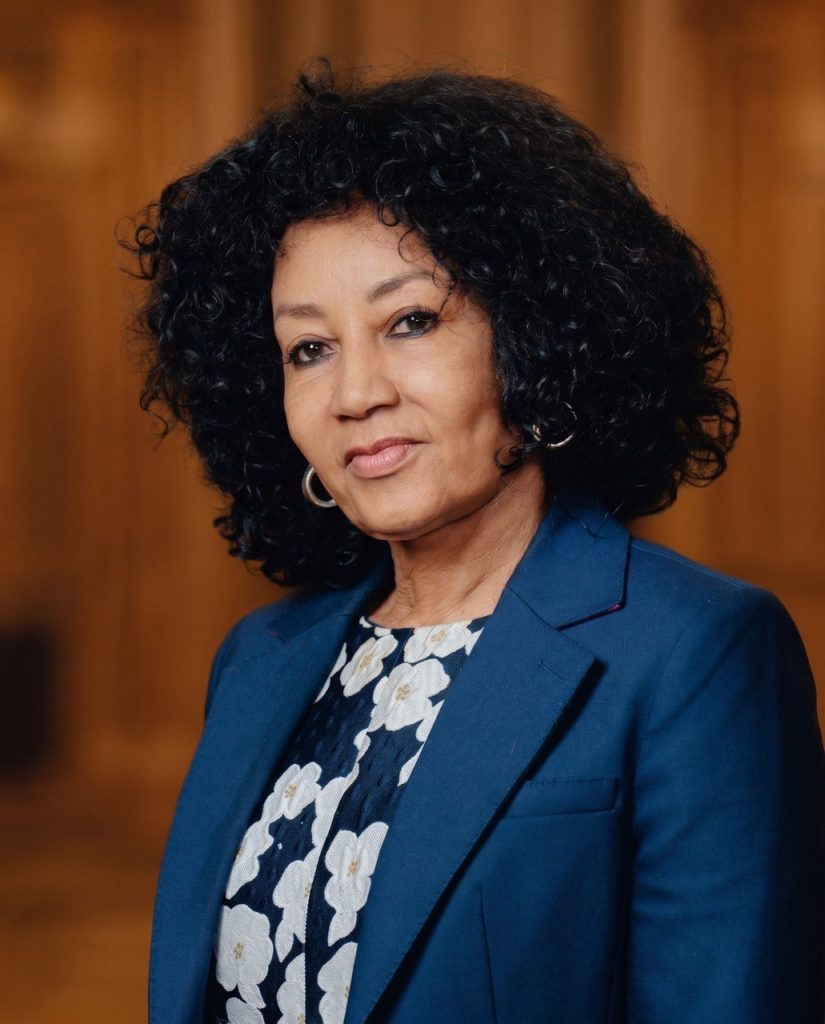
Building Trust and Making AI Pay: Dr. Mukhtar Lasisi’s Advice for Black Entrepreneurs
In an exclusive interview with Black Business Magazine, Dr. Mukhtar Lasisi, Founder of Martial Technology, explores how Black entrepreneurs can approach AI and cybersecurity as strategic business priorities rather than simply technical challenges. With extensive experience across technology, enterprise transformation, and AI governance, Dr. Lasisi shares why businesses should begin with real problems, measurable outcomes, [...]
 Black News

In an exclusive interview with Black Business Magazine, Dr. Mukhtar Lasisi, Founder of Martial Technology, explores how Black entrepreneurs can approach AI and cybersecurity as strategic business priorities rather than simply technical challenges. With extensive experience across technology, enterprise transformation, and AI governance, Dr. Lasisi shares why businesses should begin with real problems, measurable outcomes, and a clear understanding of risk.
Interview By SK Uddin
Dr. Mukhtar Lasisi is a technology entrepreneur, cybersecurity and AI governance expert, and founder of Martial Technology, serving organizations across North America and the UAE.
With over 16 years of experience in enterprise technology and transformation, he has worked with leading organizations across financial services, consulting, and other industries. He holds a PhD in Information Systems.
He is the author of Make AI Pay, a practical guide that helps business leaders make informed AI investment decisions, achieve measurable business results, and manage the associated risks. He is also passionate about developing the next generation of cybersecurity and AI leaders through education, mentorship, and practical experience.

You have built a career across cybersecurity, AI governance, enterprise transformation, and leadership education. What inspired your journey into technology entrepreneurship, and what key lessons have shaped your approach to building trusted businesses?
I grew up in an entrepreneurial environment, so building a business was always something I considered.
My technology career started about 20 years ago as a software developer using VB6 before moving into systems administration, education, research, and consulting.
Having done some consulting in the UK, I understood how organizations often value external perspectives. But an experience during one of my first roles in Canada reinforced that lesson.
As a lead analyst, I made recommendations that the executive team rejected. They later hired an external consulting firm, which spent three months and $150,000 arriving at essentially the same recommendations. This time, the executives accepted them.
That experience reinforced my belief that I could create greater impact as a consultant. When COVID arrived, it became the catalyst to go all in on entrepreneurship and build Martial Technology into the business I envisioned.
Along the way, I have learned that technical expertise alone does not build a sustainable business. Understanding customers, communicating value, and delivering consistently are equally important.
My biggest lesson is that trust is not built by what you promise, but by what you consistently deliver.
AI offers major opportunities for small businesses, but it can also introduce risks around data, privacy, and decision-making. What practical first steps should Black entrepreneurs take to adopt AI responsibly and confidently?
My advice is to start with the business problem, not the AI tool.
There is enormous pressure on entrepreneurs to adopt AI, often driven by the fear of being left behind. But adopting AI does not automatically make a business more profitable or competitive.
I encourage business owners to ask three questions before investing in AI:
- What problem are we trying to solve?
- What measurable business outcome would make this investment worthwhile?
- What could go wrong, and are we comfortable with that level of risk?
For example, a small consulting business might use AI to improve customer follow-ups, prepare proposals, or reduce administrative work. The value should be measured in time saved, improved customer experience, or increased revenue, not simply how much AI is being used.
Entrepreneurs must also be careful about the information they share with AI tools, particularly customer data, financial records, and confidential business information. Important decisions should remain subject to human oversight.
This is the principle behind my Make AI Pay approach: AI investments should deliver measurable business value without exposing the business to unacceptable risk.
Start small, measure results, manage risks, and scale what works.

For a growing Black-owned business with limited resources, which cybersecurity practices should be treated as non-negotiable to protect customer information, business operations, and long-term reputation?
I often remind business owners that cybersecurity is not about protecting technology. It is about protecting the business they have worked hard to build and the customers who trust them.
The good news is that you do not need a large budget or an IT department to get started.
I recommend five simple practices:
- Secure your accounts. Turn on two-step verification for your email, banking, and business applications. Use strong, unique passwords, preferably managed through a password manager.
- Protect customer information. Collect only the information you need, store it securely, and avoid sharing it unnecessarily.
- Keep your devices updated. Install software and browser updates, enable automatic updates, and back up important business files.
- Be careful with messages and payments. Verify unusual requests, especially those involving money, passwords, or customer information.
- Know what to do when something goes wrong. Have a simple plan for recovering important files, securing compromised accounts, and contacting affected customers when necessary.
Most of these steps cost little or nothing to implement.
My advice is simple: start with the basics, make them habits, and improve your security as your business grows.
Your work emphasizes that successful AI and security programs depend on strong leadership and governance, not simply buying more technology. How can Black founders build a culture of accountability and sound decision-making as their businesses grow?
One lesson I have learned from working with businesses of different sizes is that technology cannot fix a leadership problem.
I have seen organizations invest millions in technology without clearly defining what success looks like, who owns the outcome, or how results will be measured.
For small businesses, building accountability does not require complicated governance structures. I recommend starting with five practices.
First, define clear expectations. Everyone should know what they are responsible for, what success looks like, and when results are expected.
Second, give people ownership. Assign responsibility for decisions and provide the authority and resources needed to deliver.
Third, establish regular check-ins. Even a 15-minute weekly meeting can help review progress, identify problems, and agree on next steps.
Fourth, encourage honest conversations. Create an environment where employees can raise concerns, admit mistakes, and suggest improvements without fear.
Finally, lead by example. Keep your commitments, acknowledge your mistakes, and hold yourself to the standards you expect from others.
As your business grows, these simple habits become the foundation for stronger governance and better decision-making.
The goal is to build a business where people can make good decisions and deliver results without the founder having to oversee everything.

You also train and mentor emerging leaders through Martial Tech Leadership. What advice would you give Black entrepreneurs and young professionals who want to build expertise in technology, create sustainable businesses, and contribute to the next generation of Black innovators?
My first advice is to stop waiting until you feel completely ready. You do not need to know everything before taking the first step, but you must be willing to learn and apply that knowledge.
My journey has taken me through software development, systems administration, education, research, consulting, and entrepreneurship. Each transition required building on existing knowledge while developing new capabilities.
Through Martial Tech Leadership, we have trained over 200 professionals, many of whom have progressed into leadership roles. I consistently emphasize that qualifications and certifications can open doors, but the ability to solve real problems and demonstrate results creates lasting opportunities.
For aspiring entrepreneurs, identify a problem people are willing to pay you to solve. Start small, deliver consistently, and build systems that allow your business to grow beyond your personal effort.
For young professionals, gain practical experience, build meaningful relationships, and learn to communicate the business value of your expertise.
Finally, as we progress, we must create opportunities for others through mentorship, knowledge sharing, and opening doors.
Our success should not be measured only by what we achieve individually, but also by how many others we help succeed.
Disclaimer: This article is for informational purposes only. Black Business Magazine does not endorse or guarantee any products, services, organizations, or individuals mentioned. Readers are encouraged to conduct their own research and due diligence before making any business, financial, or personal decisions.