Black Faces In White Spaces: Helping Your Black Child Thrive In A Predominantly White School
NOVEMBER/DECEMBER FEATURE After racist messages followed her book announcement, author and publicist Tawanna Chamberlain, M.A. Ed., answered what parents of Black children keep asking with a...
 Black News

NOVEMBER/DECEMBER FEATURE
After racist messages followed her book announcement, author and publicist Tawanna Chamberlain, M.A. Ed., answered what parents of Black children keep asking with a practical roadmap for thriving in predominantly White schools. Inside her new book, the national debate over rigor and belonging, and the Los Angeles village that proves the village-building advice already works.
By Janice Robinson-Celeste

Book flyer courtesy of Tawanna Chamberlain.
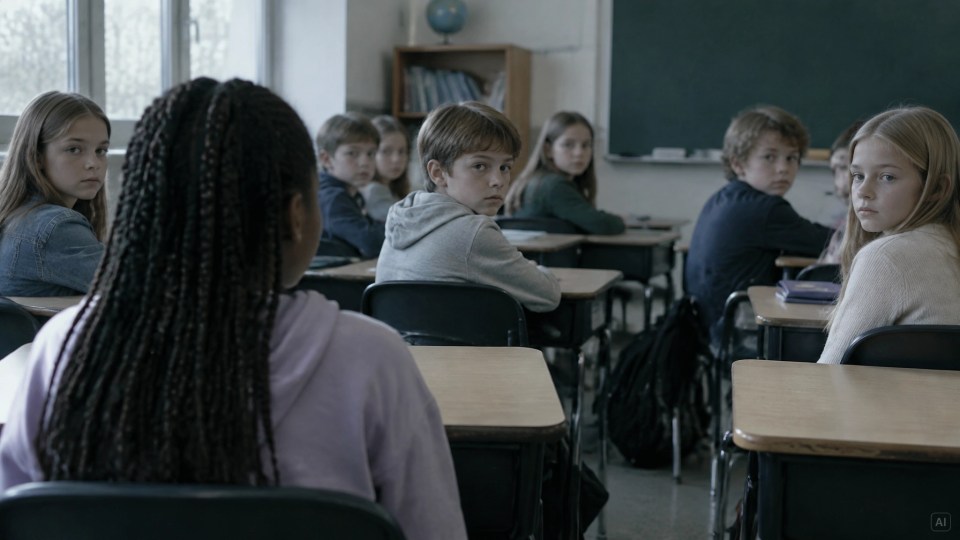
The racist messages arrived after Tawanna Chamberlain announced her new book. She does not need to repeat or describe them to make their point: parents need practical, loving guidance for helping Black children navigate predominantly White schools. Her answer is not fear. It is preparation rooted in confidence, identity, and care.
Her book, Black Faces in White Spaces, speaks to a question you may carry into school meetings, classroom visits, or the ride home: How can your child receive a strong education and feel seen, safe, and free to be fully themselves? You should not have to trade academic challenge for a sense of belonging.
That question reached a national audience after journalist Nikole Hannah-Jones published a September 20, 2026, essay about her daughter’s schooling. The essay stirred a wide debate about school choice, resources, family responsibility, and what a child needs to thrive. For parents of Black children, the conversation can quickly become a false choice between rigor and belonging.
Chamberlain offers a different starting point: you can ask clear questions, learn how your child’s school works, and build a strong foundation at home while expecting the school to do its part.
“These questions are not rooted in fear. They are rooted in love.”
Tawanna Chamberlain, M.A. Ed.
Why This Matters For Parents Of Black Children
What does your child need to feel ready to learn and confident enough to be themselves? Strong academics matter. So do relationships, representation, and the everyday messages a child receives about who belongs in a classroom.
The private-school landscape offers one measure of the conversation. As of fall 2019, federal data cited in reporting on private schools showed about 4.7 million K–12 students attending private schools, with Black students making up 6% of enrollment. The same report, citing the National Association of Independent Schools, gives median private-school tuition as $26,866 for the 2019–2020 school year. Those figures are several years old now, so they are a snapshot, not a live count. They do not tell you which school is right for your child. They do show why access, resources, and the experience of being one of few Black students deserve careful attention.
Chamberlain’s message can support many kinds of households and school settings. Whether you live in a city, suburb, or rural community, and whether your child is Black by birth, adoption, or a mixed heritage, your steady interest helps them know they are valued. Successful Black Parenting Magazine shares practical, culturally grounded guidance for the conversations and decisions that shape that confidence. Explore our school and education guide and identity and culture guide as you plan your next steps.
“The first classroom is home.”
Tawanna Chamberlain, M.A. Ed.
Start With Identity, Then Stay Engaged
What does your child hear about who they are before the school day begins? Home is where you can make room for family stories, books, music, history, and affirming conversations. These everyday moments help your child carry a grounded sense of self into classrooms where their culture may not be reflected often.
Chamberlain puts it plainly: “Our children should know who they are before someone else attempts to define them.” That foundation does not ask a child to ignore unfairness. It gives them language and support to understand that another person’s bias does not determine their worth.
Staying engaged at school is another part of the work. Learn the school’s policies, meet teachers and staff before a problem comes up, and keep a record of important conversations. A national UNCF parent toolkit reports that 93% of surveyed African American parents wanted more opportunities to be involved in their child’s education and more input into education laws. That is a reminder that your questions and perspective belong in the conversation.
“Be involved. Be informed. Be your child's advocate.”
Tawanna Chamberlain, M.A. Ed.
Sidebar: Tawanna's Five Tips
Keep these five reminders close as you build a strong home-school partnership.
- Build Identity At Home. Share stories and affirmations that help your child know their heritage and strengths.
- Know Your Child's School. Learn its policies, resources, key staff, and ways to raise concerns.
- Build Relationships Before You Need Them. Connect with teachers and administrators early, so communication has a foundation.
- Watch For Changes In Your Child. Notice shifts in mood, sleep, confidence, or interest in school. “Sometimes their behavior says it first.”
- Build A Village Outside Of School. Make room for trusted adults and peers who affirm your child and understand their experience.
These steps help you notice what is going well, too. A child who feels supported can share accomplishments, ask for help, and recover from a hard day with a stronger sense of security.
Sidebar: Questions To Ask Instead Of How Was School
If “How was school?” gets a quick “fine,” try a question that makes room for a real answer.
- Ask, “Did you feel included today?”
- Ask, “Did anything happen that made you uncomfortable?”
- Ask, “What was the best part of your day?”
- Ask, “Did you feel like you could be yourself?”
- Ask, “Is there anything you want to talk about?”
Give your child time to answer. You might hear about a joyful moment, a confusing interaction, or nothing at all that day. A calm routine of checking in lets your child know you are ready to listen without pressing them to perform or explain everything at once.
When The School Choice Debate Gets Personal
How do you weigh a school’s academic offerings alongside your child’s day-to-day experience? The discussion around Hannah-Jones’s essay shows how personal that question can become. The Grio’s coverage describes debate about school resources, community, and a daughter’s own account of her education. That complexity matters: a family’s choice is not a simple test of whether they value one child or many.
Chamberlain’s focus is on the actions available to you: stay curious, seek facts, build relationships, and pay attention to how your child is doing. If you are weighing school options, our reporting on school ratings and a child’s sense of belonging offers another lens. No single school type works for every child, but you can ask whether the school is challenging your child while treating them with care and respect.
“Advocacy is not about winning an argument. It is about ensuring that your child has an opportunity to succeed.”
Tawanna Chamberlain, M.A. Ed.
Callout: Private School Village
The village Tawanna describes is already taking shape in Los Angeles.
In spring 2018, Los Angeles mothers Kawanna Brown and Lisa Johnson invited Black private-school families to a park playdate. The park held about 50 people; about 500 had RSVP’d by the day of the gathering. Their effort became Private School Village, formalized as a nonprofit later that year to support students who may be the only Black child, or one of very few, in a class.
Lisa Johnson described that isolation to Word In Black: “It is this experience of isolation. It is an experience of being the only one or one of a few. It's an experience of a lot of 'othering.'”
Today, the organization connects students across more than 90 L.A. County private schools. Its work includes grade-level social pods, parent ambassadors, and efforts to build racial literacy, representation, and community. Johnson also cautions against assuming any single school model guarantees success: “I believe that the strongest indicators for a child's success have nothing to do with whether or not they're in public charter or private. It is parent engagement.”
The story is a Black-joy counterpoint to isolation: parents and children building connection together. You can learn more about the organization's programs and partner schools on Private School Village's website, which shows how a local idea can travel and grow.
Sidebar: If Your Child Faces Racist Words At School
You can respond with care for your child and a clear record of what happened.
- Listen First. Let your child tell the story in their own words. Reassure them that the words were not their fault.
- Document The Details. Write down the date, location, words or actions reported, people involved, and any steps already taken.
- Report In Writing. Contact the school and keep a copy of your message and response.
- Follow The Chain. Start with the teacher, then contact the counselor, administrator, and district if the issue is not addressed.
- Know Your Options. Families may file a complaint with the U.S. Department of Education’s Office for Civil Rights.
Your child needs to know both that you take their experience seriously and that they do not have to manage it alone. For more guidance on preparing for conversations about race, see our article on supporting children as they encounter racism.
Chamberlain also points readers toward bonus resources: a Parent Success Checklist, Conversation Starters for Difficult Conversations, Sample Emails for Communicating With Teachers and School Administrators, and A Prayer for Black Families With School-Aged Children. Used together, resources like these can help you prepare before a meeting or find steady words when a conversation feels hard.
Get The Book
For a practical guide to identity, school communication, and advocacy, explore Tawanna’s book.
 Order on Amazon →
Book flyer courtesy of Tawanna Chamberlain.
About The Author

Photo courtesy of Tawanna Chamberlain
Tawanna Chamberlain is an award-winning publicist and entrepreneur with more than 25 years of public relations experience and the founder of POSH PR. She is a mother, an NAACP member, an Alpha Kappa Alpha Sorority, Inc. member, a certified executive functioning skills coach, and an author. Her honors include Miss Women in Business Florida Elite Winner in 2018, induction into the Marquis Who’s Who in America Business Directory in 2023, and 2026 recognition as a P.O.W.E.R Woman of Empowerment and a Strathmore’s Who’s Who honoree. Learn more at The Posh Publicist or follow her on Instagram at @theposhpublicist.
Key Takeaways
- Build Identity At Home. Your child’s sense of worth can begin with everyday stories, shared traditions, and loving conversations.
- Stay Involved. Learn school policies and keep communication open with teachers and administrators.
- Ask Better Questions. Specific, gentle check-ins can help your child share what is going well and what needs attention.
- Notice Changes. Shifts in behavior may be a cue to listen and learn more, not a reason to blame your child.
- Create Community. Trusted adults and peers can help your child feel connected beyond the classroom.
- Advocate With Purpose. Clear documentation and steady follow-up can support your child’s well-being and opportunity.
As Tawanna reminds you, “There is greatness in the story you come from.” And, in her closing words: “You are intelligent. You are capable. You are worthy. You belong. You do not have to shrink yourself to succeed. And wherever life takes you, you never have to walk alone.”
Frequently Asked Questions
What is Tawanna Chamberlain’s book about?
Black Faces in White Spaces offers parents practical ways to support a Black child’s identity, school experience, and ability to thrive in predominantly White settings. It emphasizes preparation, involvement, advocacy, and community.
How can I help my child feel confident at school?
Start with affirming conversations at home, learn about your child’s school, and make time for specific check-ins. If your child shares a concern, listen calmly and work together on a next step.
What should I do if my child reports racist words at school?
Listen without rushing to dismiss or solve the issue, record the details, and report the concern in writing. Follow the school’s chain of communication and consider the Office for Civil Rights complaint process if needed.
Does choosing a school mean choosing between academic rigor and belonging?
It should not. You can consider academic challenge alongside your child’s sense of safety, connection, and respect. Ask schools what support they offer and how they respond when concerns arise.
What is Private School Village?
Private School Village is a nonprofit founded by Kawanna Brown and Lisa Johnson to build community and support for students in private schools. Its programs connect students and caregivers through social pods, parent engagement, and community-building.
Photos and some content may be AI generated.