African cinema takes root across Texas, Houston
Diaspora filmmakers across Texas are bringing African stories to audiences in Houston and Dallas.
 Black News

Texas is becoming a hub for African cinema in the United States, drawing filmmakers, actors, and audiences who once had few places to see their own stories on screen.
Home to one of the largest Nigerian communities in the country, it has turned into a regular meeting point for the people who make and watch these films.
At the center of that momentum is Nollywood, Nigeria’s powerhouse film industry, which has evolved from low-budget home video cassettes into a global player selling to major streaming platforms and theaters worldwide.
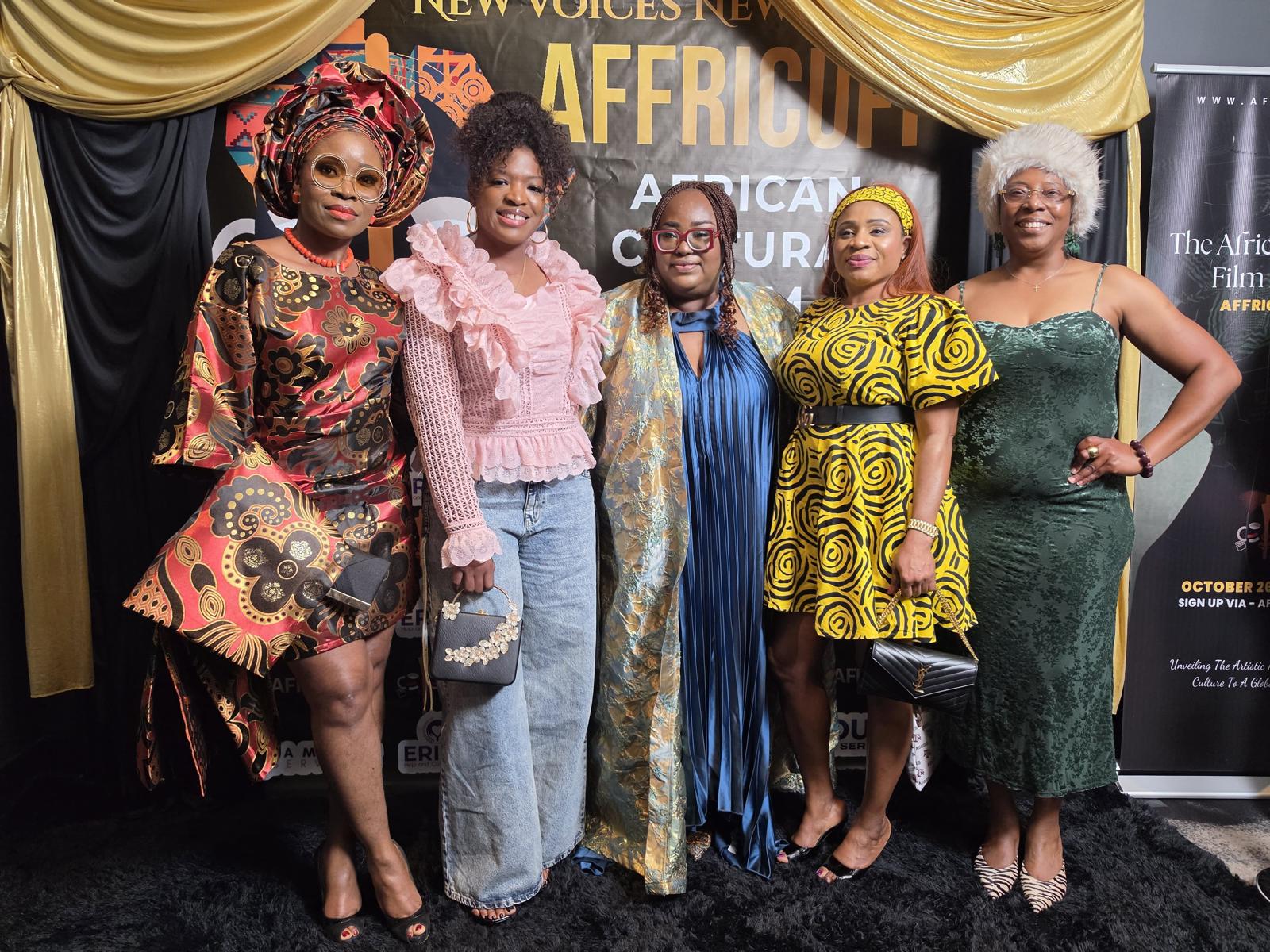
Nigerian film director Emem Isong, who founded the African Cultural Film Festival (AFFRICUFF) in Houston, traces her interest in storytelling to television. Her early training took place in Nigeria, where formal film options were virtually nonexistent.

Emem Isong founded the African Cultural Film Festival in Houston. Credit: Emem Isong/Facebook 
Emem Isong founded the African Cultural Film Festival in Houston. Credit: Emem Isong/Facebook 
Emem Isong founded the African Cultural Film Festival in Houston. Credit: Emem Isong/Facebook 
Emem Isong founded the African Cultural Film Festival in Houston. Credit: Emem Isong/Facebook 
Emem Isong founded the African Cultural Film Festival in Houston. Credit: Emem Isong/Facebook
“I started filmmaking when I was very young, and I think that was because of my love for TV,” she said. “The only thing that was available at the time was theater arts in Nigeria, nothing like films.”
Isong grew up during a period when Nigeria’s once-thriving mid-century cinema culture had largely vanished. Economic crises and crumbling infrastructure in the 1980s and 1990s forced historic movie houses across the country to close, leaving aspiring storytellers with little more than stage theater and state television.
She initially hoped to pursue a doctorate in film in the United Kingdom, but Houston’s diverse, multicultural landscape drew her in instead. She built the festival to bring multiple communities together under one roof.
“I wanted it to serve as a melting point, a kind of meeting point for African filmmakers, not just Nollywood. So it’s not just for Nigerians or Africans in the diaspora, but also for the African Americans and anyone who loves anything culture.”
Emem Isong, founder, African Cultural Film Festival
“I wanted it to serve as a melting point, a kind of meeting point for African filmmakers, not just Nollywood,” she said. “So it’s not just for Nigerians or Africans in the diaspora, but also for the African Americans and anyone who loves anything culture.”
Samson Tarh, a Cameroonian filmmaker who co-hosts The Banta Brigade podcast, attends the festival to support Isong, calling her one of the industry’s trailblazers.
“She’s like one of the powerhouses in African cinema, African filmmaking,” he said. “It’s of a very good value to have something like this, not just in Houston, in the diaspora in general.”
In his home country of Cameroon, Tarh said the biggest hurdles remain financing and distribution. With minimal government backing, local creators rely heavily on community support and private sponsors to get projects off the ground.
“Marketing is a major roadblock for us, and some of our films still aren’t reaching the audiences they should,” Tarh said. “We have very little support from the government, so everything we do is among ourselves and a few people of goodwill who take an interest in sponsoring or serving as executive producers.”
From video tapes to bigger budgets
To understand how Nollywood overcame similar roadblocks, filmmakers often point back to 1992. With no movie theaters left in Nigeria, producers bypassed the big screen entirely and released the landmark thriller Living in Bondage straight to VHS. Shot on a camcorder and sold in open-air markets, the direct-to-video model sparked a massive grassroots boom.
According to the Oxford Business Group, Nollywood eventually grew to account for more than 1.4 percent of Nigeria’s gross domestic product, roughly $7.2 billion, employing about 1 million people and producing more than 2,000 films a year, second only to India’s Bollywood globally. Yet for decades, rapid production and rampant DVD piracy meant independent filmmakers struggled to see lasting returns on their work.
That financial puzzle is what drives Dr. Edna Frenchwood, an educator and filmmaker who shot her first movie in Houston.
“Actors deserve representation. Role choices matter as much as pay. Being typecast can hold an actor back. That’s the problem for an actor who’s trying to grow into a different role. I need to be able to relate to the story and see myself in it.”
Kenneth Okolie, Nigerian actor
“By the time I made my first film with five thousand dollars and turned it into fifteen grand a year later, I knew I had something to teach others,” she said. “Film finance became such a passion because I lost money trying to do independent film myself. There’s no other business like film.”
Frenchwood now teaches students how to fund projects and highlights federal tax incentives that many independent creators overlook. Like many in Nollywood, she sees digital streaming as a lifeline that rewards creators based on actual viewership rather than physical disc sales.
“People are running away from industry budgets; the studios and theaters are not making that money that they used to,” she said. “So, streaming is the new hub, which means you’re making money per viewer for how much time they watch the film.”
The shift from street-market discs to global streaming also transformed the scale of Nigerian productions. In the late 2000s and early 2010s, modern multiplex cinemas began returning to Nigerian shopping malls, ushering in a “New Nollywood” era of higher-budget films. Soon after, digital pioneers like Nigerian-founded iROKOtv proved diaspora audiences would pay to stream African movies online, paving the way for Netflix’s arrival in Nigeria in 2016 and Amazon Prime Video’s expansion a few years later.

Winifred Mena-Ajakpovi left a corporate career in human resources to produce award-winning films. Credit: Winifred Mena-Ajakpovi/Facebook 
Winifred Mena-Ajakpovi left a corporate career in human resources to produce award-winning films. Credit: Winifred Mena-Ajakpovi/Facebook 
Winifred Mena-Ajakpovi left a corporate career in human resources to produce award-winning films. Credit: Winifred Mena-Ajakpovi/Facebook 
Winifred Mena-Ajakpovi left a corporate career in human resources to produce award-winning films. Credit: Winifred Mena-Ajakpovi/Facebook 
Winifred Mena-Ajakpovi left a corporate career in human resources to produce award-winning films. Credit: Winifred Mena-Ajakpovi/Facebook
Winifred Mena-Ajakpovi experienced that financial leap firsthand. Before transitioning into filmmaking, she built an executive career in corporate human resources, serving as head of HR for Heineken in South Africa, holding continental roles for telecom giant MTN, and leading corporate services for an oil and gas firm in Nigeria. Walking away from that secure corporate track during the COVID-19 pandemic, she now splits her time between Houston and Nigeria, traveling home to shoot projects.
Her 2021 feature debut, 4.4.44, drew directly from her mother’s life story and earned roughly 14 nominations and multiple wins across the Africa Magic Viewers’ Choice Awards and the Africa Movie Academy Awards, widely considered the African equivalents of the Oscars.
While Mena-Ajakpovi credits Living in Bondage with proving Nigerians could build a self-made industry from scratch, she notes that modern distribution demands far larger investments. When financing her own project, she turned down an initial 5 million naira offer in favor of a 70 million naira deal so she could meet international production standards.
“I also asked how to get my work on Netflix from day one,” she said. “At the time, we did everything by the book to qualify to be on Netflix or Amazon, possibly get an Oscar mention.”
The focus on quality cinema

Robert O. Peters is an acclaimed Nigerian-American film director, producer, cinematographer, and actor. He is widely recognized for helming some of West Africa’s highest-grossing box-office hits and major streaming titles. Credit: Robert O. Peters/Facebook 
Robert O. Peters is an acclaimed Nigerian-American film director, producer, cinematographer, and actor. He is widely recognized for helming some of West Africa’s highest-grossing box-office hits and major streaming titles. Credit: Robert O. Peters/Facebook
Director Robert Peters’ career mirrors Nollywood’s journey from shoestring camcorder shoots to global streaming hits. His start came in Jos, a central Nigerian city. While studying geology and mining at the University of Jos, he began directing church plays that quickly outgrew local halls. After a packed screening at a neighborhood cinema, audiences urged him to make a movie. Armed with a friend’s event-grade VHS camcorder and virtually no budget, Peters jumped in.
“We didn’t have the budget we needed to make the picture,” he said. “But one thing we had, we had a story to tell.”
An early acting role in the national hit Mama Sunday paid him 6,000 naira for 10 days of work, three times a standard monthly salary at the time, but Peters viewed acting mainly as a way to study the craft. After a brief stint in the oil services sector, he quit to pursue filmmaking full time and relocated to the United States to study visual storytelling at New York University. Now based in Atlanta, Peters credits the move with reshaping his career.
“America was like a launching pad,” he said. “If I never moved to America, I probably would not have made the strides I’ve made in the industry.”
His major breakthrough arrived in 2014 with 30 Days in Atlanta, a comedy starring Nigerian comedian AY. By securing city and airport permits, Peters made it the first African film to shoot legally in Atlanta. The movie became a watershed moment for the “New Nollywood” cinema revival, selling out Nigeria’s newly rebuilt multiplexes for five months and proving that stories bridging Africa and its American diaspora could break box-office records.
Since then, Peters has taken on heavier subjects, including the 2020 drama Voiceless, about the Chibok schoolgirls who were kidnapped, and Hijack ’93, a thriller distributed globally on Netflix.
“We need to talk about our wins and our failures,” Peters said. “If we must, because we learn from it.”
As global streaming platforms began licensing and commissioning Nigerian titles, they also introduced strict technical benchmarks, requiring high-end cameras, crisp sound mixing, and tight production schedules that stood in sharp contrast to Nollywood’s early, improvisational days.

Kenneth Okolie is a prominent Nigerian actor and model who has built a prolific career in Nollywood and international films. Credit: Kenneth Okolie via/Facebook 
Kenneth Okolie is a prominent Nigerian actor and model who has built a prolific career in Nollywood and international films. Credit: Kenneth Okolie via/Facebook 
Kenneth Okolie is a prominent Nigerian actor and model who has built a prolific career in Nollywood and international films. Credit: Kenneth Okolie via/Facebook 
Kenneth Okolie is a prominent Nigerian actor and model who has built a prolific career in Nollywood and international films. Credit: Kenneth Okolie via/Facebook 
Kenneth Okolie is a prominent Nigerian actor and model who has built a prolific career in Nollywood and international films. Credit: Kenneth Okolie via/Facebook
Kenneth Okolie is an actor with experience in both US-based and Nollywood films. He began his career on the fashion runway. He began as a model in Ghana, then entered Mr. Nigeria and went on to compete at Mr. World, where he finished third.
His first acting role came through a connection to the producer Emem Isong, on the television show Catwalk. Since then, he has worked in Nigeria and the United States and has filmed in Belize, Jamaica, Canada and London. Moving between those sets taught him how differently the two industries treat actors.
“Out here, everyone understands it’s a job,” he said of American productions. “Actors are contracted, and schedules are enforced. If you go above that time limit, you’ll be charged. Nigerian productions are more lenient. We overlook certain things.”
Okolie also says actors need to control their careers. He said some producers refuse to deal with agents, and he disagrees.
“I thought, why don’t I create this festival and have a central premiere for great movies like the ones that I’m telling that [focus on] educational advocacy and authentic stories. Because I realized that I wasn’t the only one doing it.”
Kelechi Eke, founder The African Film Festival (TAFF)
“Actors deserve representation. Role choices matter as much as pay. Being typecast can hold an actor back,” he said. “That’s the problem for an actor who’s trying to grow into a different role. I need to be able to relate to the story and see myself in it.
That choice led him to Hyde Park, a romantic dramedy released in 2022. Okolie plays David Eguasa, a Nigerian-American attorney who takes on the case of a gay client facing deportation to Uganda. David’s relationship with an American woman also runs counter to his family’s expectations. The film is set on Chicago’s South Side. It opened in Houston on July 14, 2022, at the Studio Movie Grill in Pearland.
“The world is changing and advancing, so connecting both Africa and the diaspora has been much easier,” he told the Defender. “Encouraged not to let culture and traditions keep them away from loving others.”
Problems diaspora filmmakers are solving

Kelechi Eke is a Dallas-based Nigerian American film director, widely recognized for founding The African Film Festival (TAFF) in Dallas and creating the African movie streaming platform Rootflix. 
Kelechi Eke is a Dallas-based Nigerian American film director, widely recognized for founding The African Film Festival (TAFF) in Dallas and creating the African movie streaming platform Rootflix. 
Kelechi Eke is a Dallas-based Nigerian American film director, widely recognized for founding The African Film Festival (TAFF) in Dallas and creating the African movie streaming platform Rootflix. 
Kelechi Eke is a Dallas-based Nigerian American film director, widely recognized for founding The African Film Festival (TAFF) in Dallas and creating the African movie streaming platform Rootflix. 
Kelechi Eke is a Dallas-based Nigerian American film director, widely recognized for founding The African Film Festival (TAFF) in Dallas and creating the African movie streaming platform Rootflix.
In Dallas, Nigerian-born filmmaker Kelechi Eke launched The African Film Festival (TAFF) to solve a similar distribution bottleneck, one that persisted even as Nollywood transitioned from street-market DVDs to global streaming.
For decades, Nollywood’s physical home-video model relied on rapid, low-budget volume to outrun rampant piracy, leaving independent filmmakers with little control over long-term marketing or theatrical runs.
“Digital streaming eventually curbed piracy and opened global doors,” Eke said. “I discovered firsthand how expensive it remained for an independent creator to build an audience from scratch.”
Before founding the festival, Eke self-distributed his diaspora drama, Lost in Abroad, which followed African immigrants who came to the United States intending to return home, only to settle permanently. The film sold out theaters across 12 U.S. cities, drawing emotional reactions from older immigrants who rarely saw their experiences reflected on screen.
Despite the sold-out crowds, footing the bill for a multi-city theatrical tour proved financially unsustainable for one producer. Realizing that other African directors were facing the same hurdle, Eke decided to build a centralized showcase rather than tour alone.
“I thought, why don’t I create this festival and have a central premiere for great movies like the ones that I’m telling that [focus on] educational advocacy and authentic stories,” Eke said. “Because I realized that I wasn’t the only one doing it.”
That curatorial standard quickly turned the festival into a launchpad, bringing dozens of African directors to the United States for the first time and helping several featured titles advance as national submissions for the Best International Feature Film category at the Oscars.
Yet Eke soon realized that a once-a-year festival wasn’t enough, especially for African filmmakers who couldn’t afford visas or travel to Texas, or whose films needed a permanent home after the festival ended. Drawing on his background as a software engineer, Eke launched Rootflix in 2019, a global streaming service dedicated to festival-vetted African and multicultural films.
By pairing festival curation with direct-to-consumer streaming, Rootflix offers an alternative blueprint for navigating the modern industry. Instead of relying solely on algorithms or waiting for a major studio buyout, independent filmmakers can use curated diaspora platforms to reach global audiences, preserve cultural stories, and retain control over their work.
“Establishing a partnership between talent in the diaspora and in Africa is crucial for creating a presence and building a bridge that benefits both parties,” Eke said. “Which in turn will provide opportunities for our filmmakers back home and create sustainability for our work as creatives.”