
Black Americans Continue to Overrepresent the Homelessness Crisis Today
Black Americans are still severely overrepresented in today's homelessness crisis. Here are the key facts and stats you need to know about this problem.
 Black News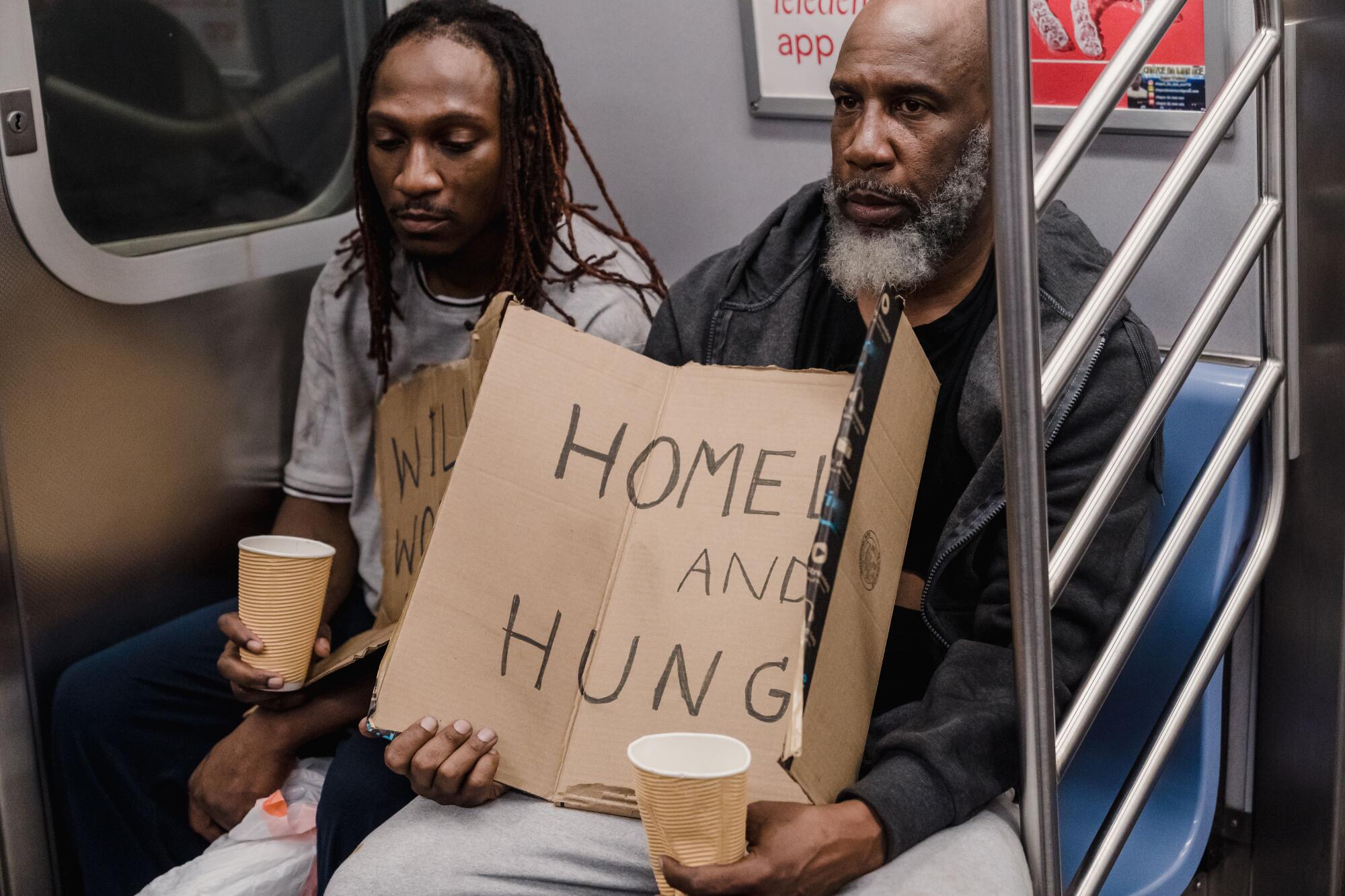

Black Americans represent roughly 13% of the U.S. population, yet they account for more than 40% of everyone experiencing homelessness in the country, a disparity so persistent that researchers have documented it for nearly a century and one that the current homelessness crisis has done nothing to remedy.
Understanding why requires learning the structural forces behind this disparity that were built over generations, compounding to create a situation where Black Americans face a dramatically higher lifetime risk of experiencing homelessness than white Americans. One in six non-Hispanic Black adults has experienced homelessness at some point in their life, compared to one in 20 white adults.
What Are the Main Causes of the Homelessness Crisis?
The causes of the current homelessness crisis are structural, and for Black Americans, they operate with particular force. The National Alliance to End Homelessness traces the roots directly: Black people’s overrepresentation in poverty places them at the sharpest end of housing instability and is a product of:
- Slavery
- Sharecropping
- Jim Crow segregation
- Redlining
- The systemic denial of wealth-building opportunities across generations
According to the National Alliance to End Homelessness, every generation since emancipation has faced a new set of structural barriers to maintaining wealth and stability, with the cumulative effect showing up directly in today’s homelessness numbers.
The Role of Income Inequality
A 2025 Social Problems journal study found that income inequality was positively associated with Black homelessness rates specifically, with no equivalent effect found for White or Hispanic populations.
That finding reflects something important: the factors that push Black Americans into homelessness are clear. Distinct enough from those affecting other groups that they require race-specific policy responses rather than universal approaches that assume the same causes are operating across all populations.
General housing affordability programs help, but they don’t reach the structural depth of what’s actually driving Black overrepresentation in the homeless count.
Washington, D.C., as a Case Study in Extreme Disparity
No city illustrates the disparity more starkly than Washington, D.C. According to Housing Up, Black residents make up 44.4% of D.C.’s general population but account for nearly 85% of people experiencing homelessness in the city.
That 40-percentage-point gap between population share and homeless share reflects decades of housing policy decisions, gentrification, and disinvestment concentrated in predominantly Black neighborhoods. What’s happening in D.C. isn’t exceptional; it’s the same dynamic in concentrated form.
What Are the Effects of Homelessness on Health?
Homelessness and health deteriorate together in a cycle that’s difficult to interrupt once it begins. When compared to those with stable housing, people who are homeless experience much higher rates of:
- Chronic illnesses
- Mental health challenges or issues
- Substance use disorders
Accessing treatment for any of these conditions is considerably harder without a stable address.
Mental Health and Homelessness
Mental health conditions both contribute to and result from homelessness, and Black Americans face compounding barriers in accessing treatment either before or during an episode of housing instability. NAMI reports that only one in three Black adults with mental health needs actually receive care, a treatment gap driven by:
- Cost barriers
- Systemic mistrust
- A shortage of culturally competent providers
When mental health goes untreated, and housing instability follows, the pathway back to stability requires both conditions to be addressed simultaneously, which is exactly the kind of holistic support that most safety net systems are not designed to provide.
What Policies and Programs Address the Homelessness Crisis for Black Americans?
For Black Americans, effective homelessness policy needs to address the pipeline into homelessness, not just the exit. That means:
- Eviction prevention funding
- Rental assistance programs that reach people before they lose housing rather than after
- Investment in affordable housing in neighborhoods with established Black communities rather than areas that displace those communities further
Organizations doing this work on the ground include Mel Trotter Ministries, which provides emergency shelter, housing navigation, and wraparound services for people experiencing homelessness in Western Michigan.
The Policy Gap Between Veterans and Civilians
The contrast between the falling veteran homeless count and the rising civilian homeless count points to a policy architecture problem rather than a resource problem. Veteran homelessness declined because the systems serving veterans operated with:
- Clear performance targets
- Sustained funding
- Defined coordination between housing and services
Civilian homelessness programs often lack all three.
Advocates argue that replicating the structure of the Housing First model that made veteran progress possible, and explicitly targeting it toward Black communities most affected by the crisis, represents the most evidence-based path toward closing the racial disparity in homelessness that has persisted for generations.
Frequently Asked Questions
Why Are Black Americans Overrepresented in the Homelessness Crisis?
The overrepresentation reflects structural conditions built over generations rather than individual choices or circumstances. Redlining prevented Black families from building home equity during the postwar period when white families were accumulating it.
Discriminatory lending, employment barriers, and concentrated disinvestment in Black neighborhoods compounded that wealth gap. Today, Black Americans are more likely to be renters, carry less financial cushion against economic disruption, and face discrimination in the housing market itself.
These factors all elevate the risk of housing loss relative to white Americans at comparable income levels.
What Can Individuals Do to Support People Affected by the Homelessness Crisis?
Direct support to organizations serving unhoused populations matters more than most people realize. Donating to shelters that provide housing navigation alongside emergency services, volunteering with programs that offer job training and case management, and advocating for local policies that fund eviction prevention and affordable housing all produce measurable impact.
Supporting Black-led housing organizations specifically ensures that resources reach the communities carrying the heaviest burden of the crisis with the deepest understanding of what those communities actually need.
Understanding the Homelessness Crisis Among Black Americans
The racial disparity at the center of the homelessness crisis is documented, persistent, and structural, and it demands responses that match that scale. Black Americans experiencing homelessness at more than twice their population share is not a coincidence or a recent development; it is the cumulative result of housing and economic policy decisions spanning generations.
Addressing it requires both emergency response at the individual level and sustained policy investment in the structural conditions that drive Black communities toward housing instability in the first place.
For more coverage of the issues shaping Black communities across the country, stay connected.