Why Maiduguri’s Youths Are Risking the Sahara in Search of a Future
In the overcrowded neighbourhoods and displacement settlements surrounding Maiduguri, the capital of Nigeria’s Borno State, young people are increasingly discussing a long and dangerous route stretching thousands of kilometres through Niger and across the Sahara towards Algeria and Libya. Despite the risks of human trafficking, kidnapping, extortion, detention and death, irregular migration has become less […] ظهرت المقالة Why Maiduguri’s Youths Are Risking the Sahara in Search of a Future أولاً على African Percentions.
 Black News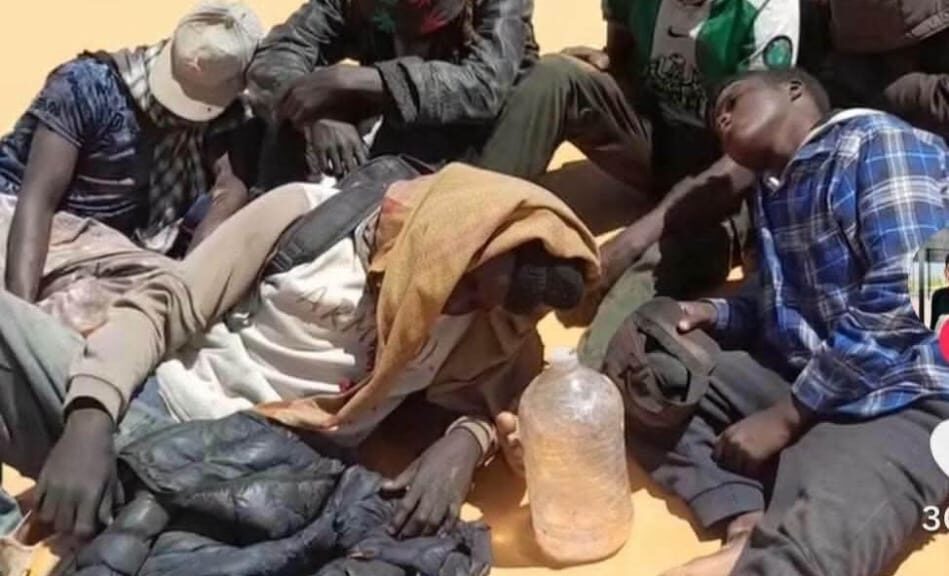

In the overcrowded neighbourhoods and displacement settlements surrounding Maiduguri, the capital of Nigeria’s Borno State, young people are increasingly discussing a long and dangerous route stretching thousands of kilometres through Niger and across the Sahara towards Algeria and Libya.
Despite the risks of human trafficking, kidnapping, extortion, detention and death, irregular migration has become less an expression of ambition for some young people than an attempt to escape the consequences of years of conflict, displacement and economic decline.
Reports by the International Organization for Migration, the UN refugee agency, the United Nations Development Programme and Nigeria’s National Agency for the Prohibition of Trafficking in Persons point to a combination of security, economic and environmental pressures driving more young people towards migration.
A generation raised under war
Many of Maiduguri’s young people have lived most of their lives under the shadow of the armed conflict that began with Boko Haram’s uprising in 2009.
Since then, large parts of Borno State have endured repeated attacks, military operations and mass displacement. Villages have been destroyed, schools closed for extended periods and farmers forced to abandon their land, while entire families have been displaced several times.
Humanitarian organisations say the prolonged conflict has created a generation whose education, professional training and prospects for employment and stability have been severely disrupted.
A 24-year-old man living in Maiduguri’s Muna area, whose family fled Marte several years ago, described the dilemma confronting displaced youths.
“We have spent years waiting for things to improve,” he said. “You finish school or learn a trade, but there is no work. When your friends leave and send money home, you begin to think that perhaps leaving is the only option remaining.”
His account reflects a pattern identified by migration researchers: young people frequently discuss migration collectively, while information about routes, smugglers and costs circulates through friends and social networks rather than official channels.
Camps becoming permanent settlements
Maiduguri hosts one of Nigeria’s largest concentrations of internally displaced people. Although the authorities have closed or consolidated several formal camps in recent years, many families have moved into informal settlements and overcrowded host communities.
Humanitarian assistance has gradually declined as donors shift their focus towards recovery and reconstruction programmes. Recovery, however, has been uneven, and many families remain dependent on daily labour, small-scale trading and irregular aid distributions.
Young people in displacement-affected communities face significant barriers to entering the labour market, including limited access to funding, vocational training and transportation, as well as the absence of the professional and social connections often needed to find work.
The collapse of regional trade
Before the insurgency, Maiduguri was a major commercial centre connecting Nigeria with Niger, Chad and Cameroon. Traders transported livestock, grain, fish, textiles and manufactured goods across the borders surrounding the Lake Chad Basin.
Security restrictions, damaged infrastructure and continuing attacks along major transport routes have caused this trade to decline sharply.
Young people have been particularly affected, especially those who previously depended on transporting goods, livestock markets, loading services and small-scale commerce.
As a result, the city’s economy is increasingly unable to absorb the growing number of jobseekers, including displaced people arriving from rural communities affected by the conflict.
Climate pressures deepen the crisis
Specialists warn against attributing northward migration solely to insecurity. Environmental degradation across the Lake Chad Basin has intensified competition over land and water.
Fluctuating lake levels, unpredictable rainfall and expanding desertification have also weakened farming and pastoralism, two livelihoods on which local communities have depended for generations.
Research by the International Organization for Migration and the UN Food and Agriculture Organization describes climate pressure as a “threat multiplier” because it interacts with poverty and insecurity.
Young people who lose their agricultural livelihoods often move first to Maiduguri. When they fail to find opportunities in the city, some consider continuing towards Niger and the Sahara.
A journey in stages
The journey from Maiduguri to North Africa is rarely organised as a single trip. Migrants generally travel in stages, beginning with the journey from the city to border areas in northern Borno before entering Niger through unofficial routes.
From there, they head towards Agadez or Arlit before crossing the Sahara towards Algeria or Libya. Some then attempt to reach coastal cities or continue towards Europe.
Each stage requires payments to drivers, guides and smugglers, and sometimes to corrupt officials or armed groups controlling parts of the route.
Research suggests that tighter anti-smuggling restrictions introduced in Niger in 2015 pushed smuggling networks towards more remote and clandestine desert routes, where migrants are less likely to be found or rescued if their vehicles break down or lose their way.
Agadez, the city of waiting
Agadez has become one of the main transit points for migrants travelling from West Africa.
Some migrants spend weeks or months in the Nigerien city trying to raise enough money to continue across the desert. Some take temporary jobs in the informal economy, while others become stranded after being abandoned or robbed by smugglers.
Humanitarian organisations say many Nigerians arriving from the country’s northeast have already experienced repeated displacement before leaving Nigeria, making them especially vulnerable to exploitation along the route.
The Sahara’s invisible graveyards
Migrant shipwrecks in the Mediterranean often receive extensive media coverage, but deaths in the Sahara usually occur far from witnesses, cameras and official records.
The International Organization for Migration’s Missing Migrants Project has documented hundreds of confirmed deaths along desert routes. Researchers, however, believe the real toll is considerably higher because entire vehicles can disappear without trace and survivors often do not know the identities of those who die during the journey.
Returnees’ accounts repeatedly describe vehicles breaking down hundreds of kilometres from the nearest settlement, passengers being forced to walk for days without sufficient water and smugglers abandoning sick travellers to avoid delays.
Witnesses also report bodies being left in the desert because smugglers consider their transport an additional burden.
Humanitarian workers describe parts of these routes as “invisible graveyards”, where families may wait for years without learning what happened to their missing relatives.
Libya: From smuggling to exploitation
For those who reach Sabha or other towns in southern Libya, the journey often shifts from cross-border smuggling to systematic exploitation.
UN agencies have documented cases of forced labour on farms and construction sites, torture, physical abuse and detention in overcrowded facilities. Families in Nigeria may also be forced to pay ransoms for the release of their relatives.
Some migrants are trafficked for labour or sexual exploitation.
Nigeria’s anti-trafficking agency warns that young women from conflict-affected states face particular risks. Trafficking networks lure them with false promises of domestic or restaurant work and other employment opportunities in North Africa, only for them to become victims of exploitation.
Why official warnings fail
Governments and international organisations have invested in campaigns warning about the dangers of irregular migration through billboards, radio programmes, community meetings and social media.
Yet the journeys continue.
Behavioural studies by the International Organization for Migration indicate that many young people do not necessarily doubt the warnings. Instead, they compare the dangers of migration with what they regard as the certainty of poverty, unemployment and limited prospects at home.
For a displaced young person without a stable income or a clear opportunity to continue studying, and whose family depends on financial support, the uncertain possibility of earning money abroad may appear preferable to remaining trapped in poverty indefinitely.
The pressure to support families
Social expectations play a central role in migration decisions. In many displacement-affected households, young people are expected to support parents, siblings and members of their extended families.
Migrants who succeed in sending money home often become highly visible examples within their communities, while the stories of those who disappear or suffer exploitation receive less sustained attention.
A community leader in Maiduguri’s Gwange district said families are torn between fear and economic necessity.
“Mothers cry when their sons leave,” he said. “But when there is no food, no work and no future, some families also hope that the child who travels might be the one who changes their situation.”
Return and reintegration
Thousands of Nigerians have returned from Libya and Niger through the International Organization for Migration’s Assisted Voluntary Return and Reintegration programme, implemented with Nigeria’s anti-trafficking agency and local authorities.
Returnees generally receive temporary accommodation, medical examinations, psychological support and vocational training, as well as small grants to start businesses such as tailoring, phone repairs, poultry farming and small-scale trading.
Specialists, however, say small business grants alone cannot address the structural problems of an economy devastated by conflict.
Some returnees struggle with psychological trauma and debts accumulated during their journey. They may also face pressure from communities that expect them to have returned from abroad with considerable savings.
Government efforts and major challenges
Borno State’s Reconstruction, Rehabilitation and Resettlement programme seeks to rebuild infrastructure, restore public services and promote economic recovery in areas affected by the insurgency.
Federal authorities have also introduced vocational training, agricultural support and youth empowerment programmes within the framework of Nigeria’s national migration policy.
Analysts say these programmes are important but face considerable obstacles, including continuing insecurity in parts of Borno, limited funding, damaged infrastructure, rapid population growth and the enormous scale of needs created by prolonged displacement.
More than a migration story
Experts caution against portraying the movement of Maiduguri’s young people towards the Sahara simply as an attempt to reach Europe.
For many, the journey represents the final stage of a much longer trajectory shaped by conflict, displacement, economic exclusion and environmental decline.
A young person leaving Maiduguri today may already have lost a home, farmland, years of schooling and several sources of family income before even reaching the border with Niger.
As humanitarian organisations continue to warn of the dangers of the Sahara routes, the persistence of these journeys reveals a harsh reality: when insecurity and economic despair become permanent conditions rather than temporary crises, even the world’s most dangerous migration routes can begin to seem survivable—and, for some, preferable to remaining in a place where they see no future.
ظهرت المقالة Why Maiduguri’s Youths Are Risking the Sahara in Search of a Future أولاً على African Percentions.