
What Is Samp? South Africa’s Crushed Maize Staple and 6 Ways to Cook It
What is samp? Meet South Africa's crushed maize staple, how to cook it, and six favourite ways to serve it, from umngqusho to chakalaka samp.
 Black News
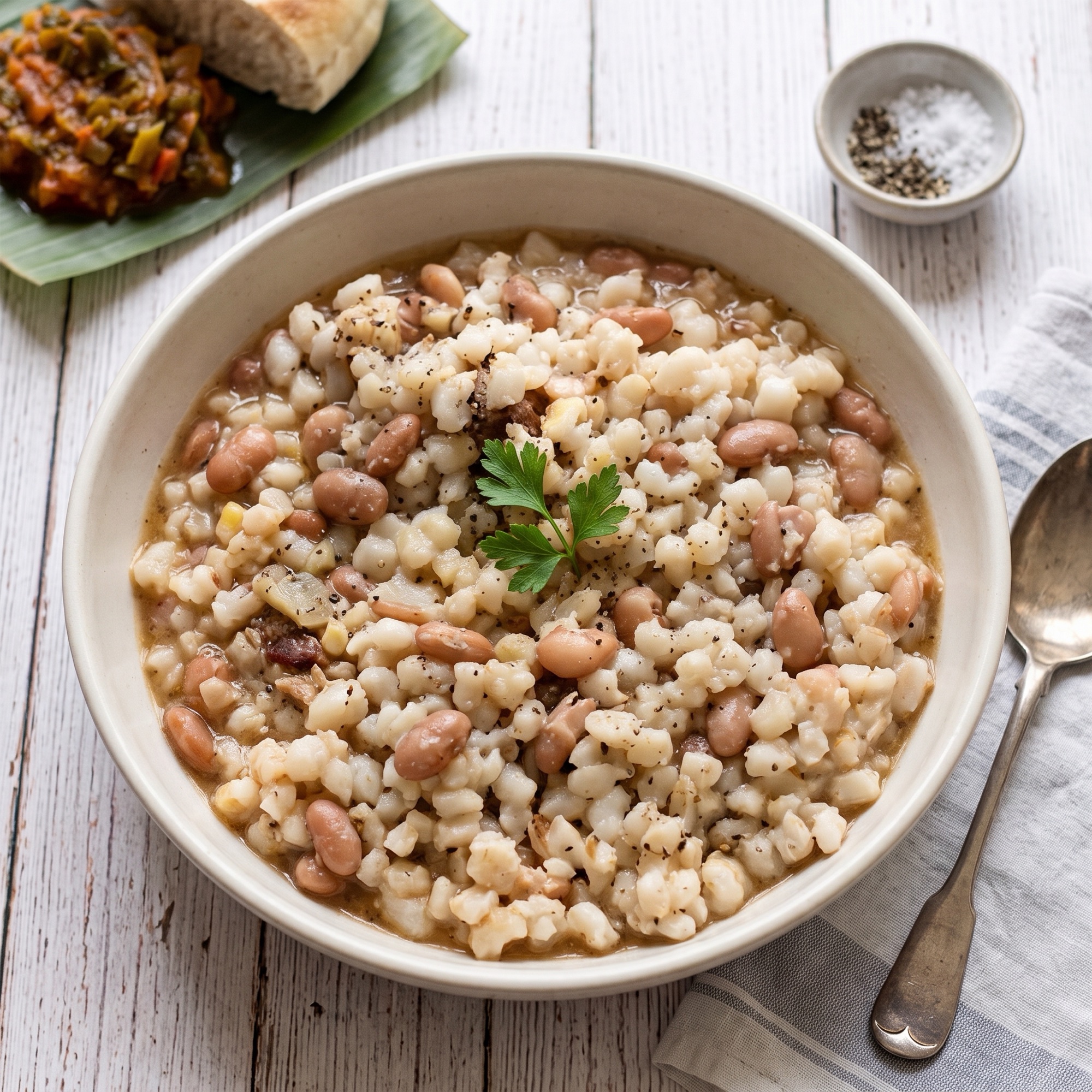
What is samp? It is dried maize that has been stamped or crushed until the tough outer skin falls away, leaving chunky, broken kernels that cook down soft, creamy and faintly sweet. In South Africa it sits at the centre of the table at Sunday lunches, weddings, funerals and ordinary weeknight dinners, usually beside something rich and saucy.
Samp asks for time more than skill. Soaked overnight and simmered low for a couple of hours, it turns from hard, pale nuggets into something close to a rustic risotto. Cooked with beans it becomes umngqusho, the Xhosa dish that many South Africans grew up on. Al Jazeera’s feature on samp captures how much that slow pot means to the families who cook it.
ALSO READ: Braai Essentials: The Ultimate Guide to South African Braai
What is samp made of?
Samp is made from dried maize kernels, white or yellow. The kernels are pounded or machine-crushed so the hull and most of the germ come away, and what is left is broken into coarse pieces, roughly the size of a split pea. It is far chunkier than maize meal, the fine flour used for pap, and coarser than mielie rice, which is maize cracked to the size of rice grains.
White samp is the classic choice for umngqusho. Yellow samp, made from yellow maize, is a little sweeter and turns a warm gold in the pot. In isiZulu-speaking homes the dish is often called isitambu, and in Zimbabwe a similar dish of samp and beans or peanuts is known as manhuchu.
Is samp the same as hominy?
They are close cousins. The English word samp was borrowed from the Narragansett language of North America, where people have been cooking crushed, dried corn for centuries. American hominy is usually whole kernels soaked in an alkaline solution, which changes the flavour, while South African samp is simply stamped and broken. Outside Southern Africa, cracked hominy is the nearest substitute.
How to cook samp
The method barely changes from one family to the next. Rinse the samp until the water runs almost clear, soak it overnight, then simmer it in about five times its volume of water for 2 to 2 1/2 hours, topping up with hot water as it drinks. Samp swells as it cooks, much like rice, so start with a bigger pot than you think you need.
It is ready when a kernel squashes easily between your fingers with no chalky centre. Salt goes in at the end, along with butter, and from there the dish can go plain, creamy, curried or loaded with meat. Unsoaked samp still works; it just needs 3 to 4 hours and extra water.
6 ways South Africans cook samp
The list runs from the two dishes most homes treat as the base recipes to the richer versions built on top of them.
1. Samp and beans (umngqusho)
The best known of all: white samp and speckled sugar beans cooked together until creamy, then finished with butter, softened onion and a little curry powder. It is the Xhosa dish of the Eastern Cape, often named as one of Nelson Mandela’s favourite meals, and it is the version to learn first.
2. Yellow samp with vegetables
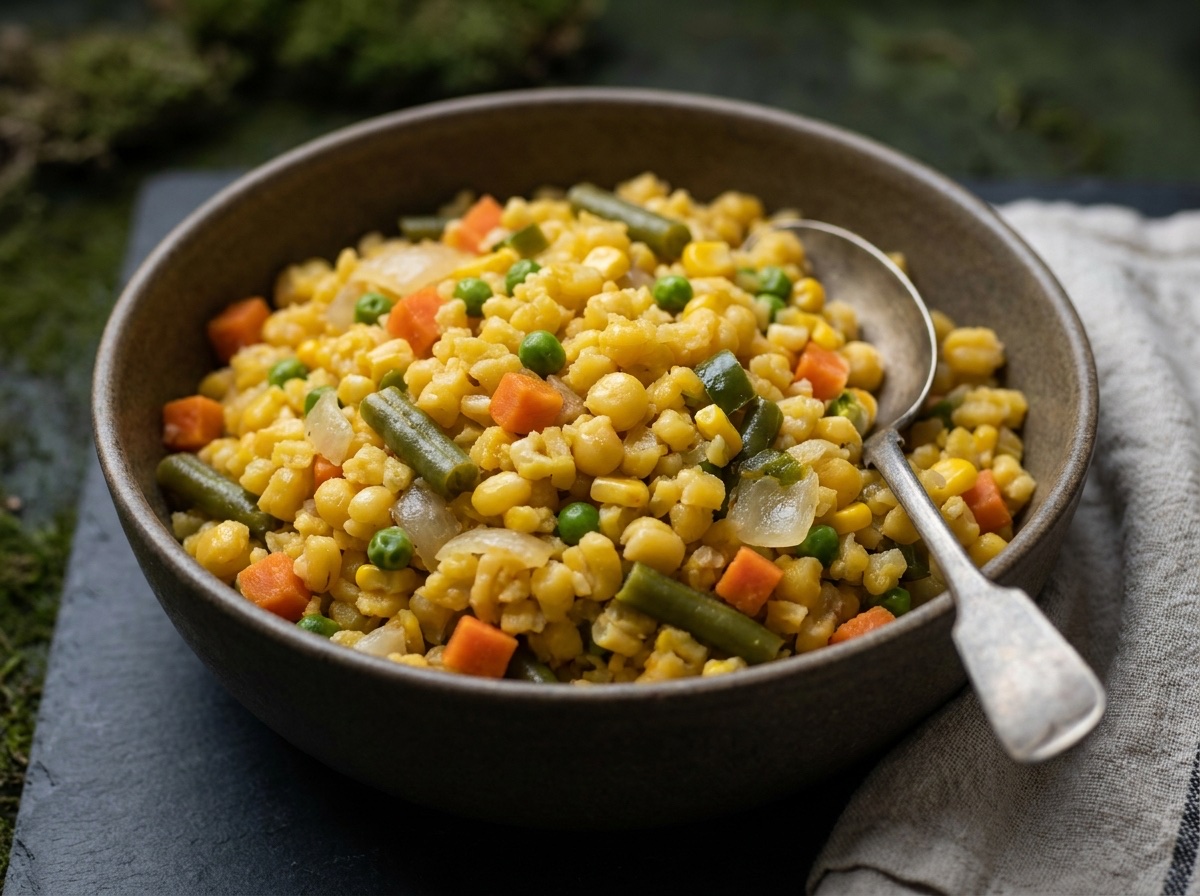
Samp on its own, no beans. Yellow samp is simmered soft, then folded through with butter, onion, green pepper, a pinch of turmeric and a bag of mixed vegetables. It is the quickest route to a colourful side for stews and braai meat, and the clearest lesson in how to cook samp well.
3. Curried samp and beans
Start with umngqusho, then build a quick curry base in a separate pan: onion, a grated tomato, green pepper and a generous spoon of curry powder. Stirred through the cooked samp and beans, it gives the dish a gentle heat and a deeper colour. The variation notes on the samp and beans recipe give the amounts.
4. Samp and beans with lamb
For a one-pot meal, brown lamb pieces with the onion, add the soaked samp and beans and let everything cook together. The fat and bones flavour the samp from the inside, which is why this version turns up so often when the weather turns cold.
5. Samp with pork in a potjie
Cooked outdoors in a three-legged cast-iron potjie, samp is layered with browned pork pieces and beans and left to simmer slowly over coals. It is a gathering dish: the pot goes on early and stays there while the braai gets going.
6. Chakalaka samp
Fold a few spoonfuls of chakalaka, the spicy South African vegetable relish, into finished samp and beans. It brings tomato, pepper and chilli to an otherwise mellow pot, and it is a good way to use leftover relish from a braai.
What to serve with samp
Samp is built to carry a gravy. Serve it with mala mogodu, the slow-cooked tripe stew, with pumpkin bredie, or beside grilled meat and lamb sosaties at a braai. For more ideas, browse our South African recipes.
Samp questions, answered
Is samp healthy?
Samp is a filling, starchy whole-grain food with fibre and a little protein, and it is naturally gluten-free. Cooked with beans it becomes a more balanced meal, since the beans add protein and more fibre. The butter and cream are where the calories climb.
Can people with diabetes eat samp?
Samp is mostly carbohydrate, so portion size matters. Eating it with beans and vegetables, rather than on its own, slows down how quickly it is digested. Anyone managing diabetes should ask their doctor or dietitian how it fits their plan.
Can you cook samp without soaking it?
Yes. Rinse it well, use plenty of water and allow 3 to 4 hours on a low simmer. A pressure cooker cuts soaked samp down to about 40 minutes.
Where can I buy samp?
In South Africa it is sold in most supermarkets, often as a ready-mixed samp and beans pack. Elsewhere, look in African food stores or South African specialty shops, or use cracked hominy instead.