UNGA: Mnangagwa outlines Zimbabwe’s agenda in Security Council in nearly empty auditorium
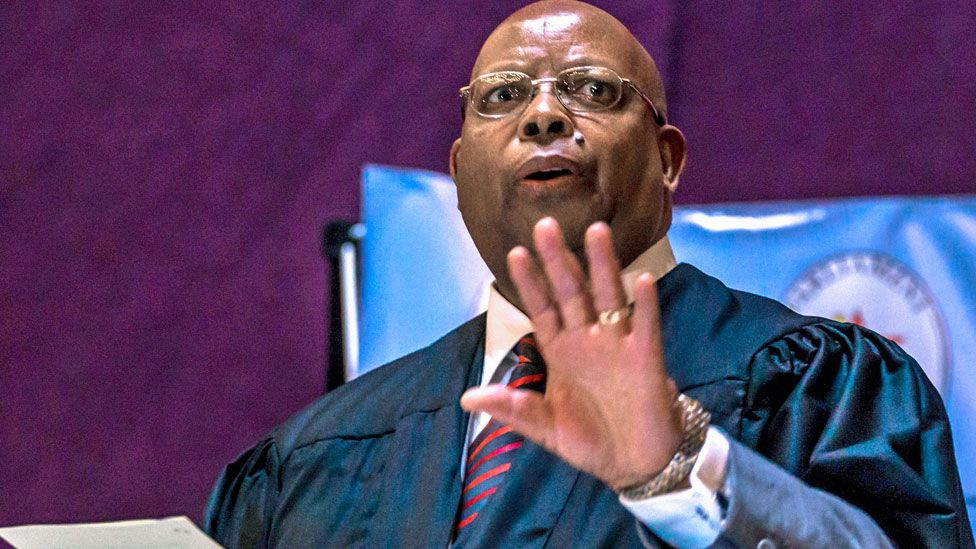
President Emmerson Mnangagwa once again found himself addressing a nearly empty auditorium at the ongoing 81st United Nations General Assembly (UNGA) in New York, United States of America. Mnangagwa suffered the same fate in 2019 and 2023 where he addressed a sparse hall. Mnangagwa did not attend last year’s 80th UNGA, delegating Foreign Affairs Minister […] The post UNGA: Mnangagwa outlines Zimbabwe’s agenda in Security Council in nearly empty auditorium appeared first on NewZimbabwe.com.
 Black News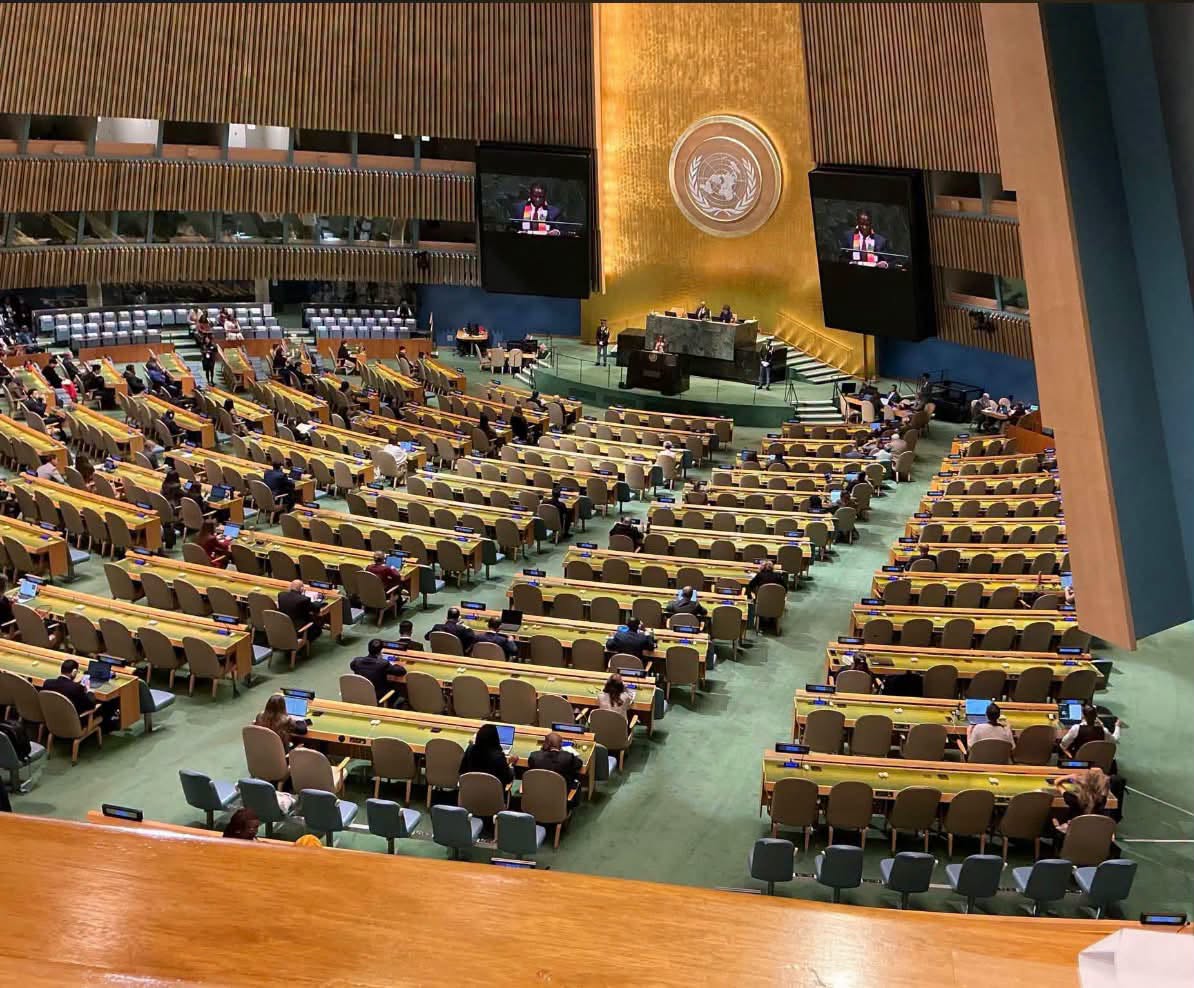
President Emmerson Mnangagwa once again found himself addressing a nearly empty auditorium at the ongoing 81st United Nations General Assembly (UNGA) in New York, United States of America.
Mnangagwa suffered the same fate in 2019 and 2023 where he addressed a sparse hall.
Mnangagwa did not attend last year’s 80th UNGA, delegating Foreign Affairs Minister Amon Murwira to represent him. At the time, Zimbabwe was launching its campaign for the UN Security Council seat, and analysts said the President’s absence sent mixed signals about the country’s diplomatic ambitions.
Mnangagwa outlined what Zimbabwe will prioritise when it assumes its non-permanent seat on the United Nations Security Council from January 2027 until 2028.
The non-permanent seat is important for Zimbabwe and Africa as it gives the continent a direct voice in decisions on war, peace, sanctions and peacekeeping missions. Non-permanent members can influence what the Council discusses, when and how, allowing Zimbabwe to bring African conflicts, sanctions issues and peace-building to the forefront.
Zimbabwe is Africa’s sole candidate for the 2027–2028 term, endorsed by all 54 African Union states. Its election strengthens Africa’s voice in global discussions on peace and security, climate-related risks and post-conflict reconstruction. The seat also provides an opportunity to push for reform of international governance institutions that still reflect the post-World War Two order of 1945.
For the first time, two SADC member states, Zimbabwe and the Democratic Republic of Congo, will sit on the 15-member Security Council at the same time, amplifying southern Africa’s collective voice on critical security and development policies.
Mnangagwa said Zimbabwe will have four priorities to pursue once it assumes its mandate in three months’ time.
“Firstly, the promotion of preventive diplomacy, mediation and peaceful dispute resolution, while tackling the underlying causes of insecurity,” he said.
Mnangagwa said the 2023 UN-adopted resolution 2719 must be implemented in full. His plea comes on the back of implementation hurdles, political obstacles, consensus delays in conflict zones, and global liquidity constraints, leaving the mechanism awaiting its first fully operational test case.
“Secondly, we shall advocate for the strengthening of cooperation between the United Nations and the regional organisations such as the African Union and its peace and security council. In this respect, we call for the full implementation of the resolution 2719 to ensure predictable, adequate, and sustainable financing for authorized African Union-led peace support operations,” Mnangagwa said.
Mnangagwa further added: “Thirdly, our nation believes that our rich heritage and natural resource endowments must advance industrialisation, modernisation and the green agenda for the prosperity of all and not to finance conflict. As such, Zimbabwe shall support Africa’s silencing the guns agenda and strong action against terrorism, organized crime, illicit arms flows, and illegal resource trafficking.”
Mnangagwa also said Zimbabwe will support women and youth’s efforts to shape peace and their security agendas.
“Finally, women and young people must shape peace from the outset. The support of Zimbabwe will also be extended to the women and youth peace and security agendas. The current times demand peacekeeping that is grounded in clear political strategies, realistic mandates, and adequate resources. Those most affected by the decisions of the Security Council should not be the least heard.”
This is the third time Zimbabwe has been elected to the UN Security Council non-permanent seat since independence. It previously served from 1983 to 1984 and from 1991 to 1992. This time it is replacing Somalia.
Mnangagwa told the General Assembly the UN was meeting at a critical moment as the world faces interconnected challenges ranging from climate change to conflicts.
“As the current crop of leaders, it should concern us that today, somewhere, a child is born into war, a family is displaced by conflict, a farmer loses another harvest to drought, and a young person wonders whether technological progress will expand opportunity or deepen inequality. Though separated by geography, these experiences reveal a common truth: humanity’s challenges are increasingly interconnected, and no nation can overcome them alone.”
The post UNGA: Mnangagwa outlines Zimbabwe’s agenda in Security Council in nearly empty auditorium appeared first on NewZimbabwe.com.