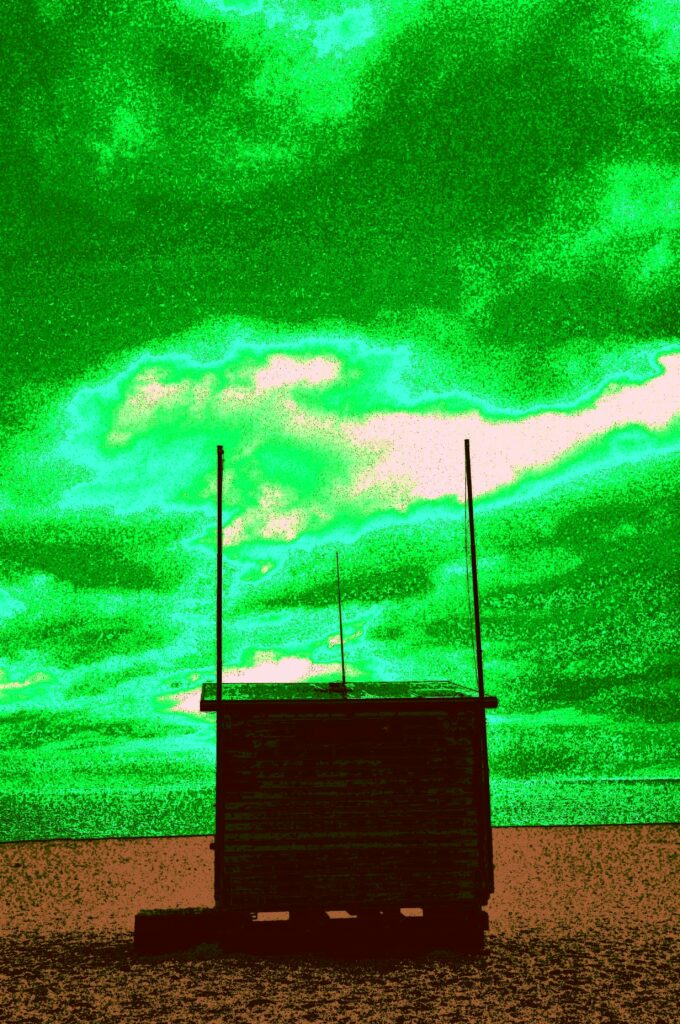
The Old Will Not Be Written Off + There Is A Church Upon The Hill + Hut (photo)
From Time Out’s Manifesto For London. The Old Will Not Be Written Off appears as a story told by a 66 year old Ballerina. The object is to see the aged as people who experience stigma, who still have things to contribute, skills to share and things to give. I am now as old as ... The Old Will Not Be Written Off + There Is A Church Upon The Hill + Hut (photo)
 Black News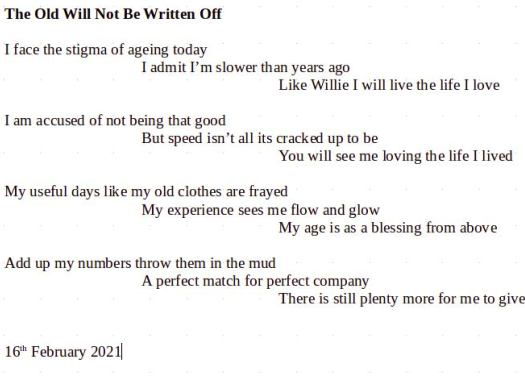
From Time Out’s Manifesto For London. The Old Will Not Be Written Off appears as a story told by a 66 year old Ballerina. The object is to see the aged as people who experience stigma, who still have things to contribute, skills to share and things to give. I am now as old as the Ballerina. My words exist, they are birthed in experience, I can pick out and play songs that I once knew by songwriters that some of you will never have heard of, that you should have heard of, my hair is still far from grey or white, I’m not ready for the nursing home nor the knackers yard, I still stand where I stood and where I was prepared to stand yesterday.
My work in advocacy was about hearing voices speaking out, my activism was just another way of doing the same – I always said this is not for me that I shout but for all the you’s that follow, my time in engagement was also to ensure the board, the management heard your tones, you view on life, your hopes, your dreams.
One of my themes for 2021 is kindness. I am looking to be more kindly to myself. Hear my intersectionality in the my year of receiving a pension. I am a disabled person/artist/poet, my working class roots still call loudly, I am aged. I write. I make myself included.
Richard Downes
From the Declaration series
My struggle with this age thing remains as not being about me. Ageism is discrimination based on age. Ageism exists in society. Older people are discriminated against by society. Heard it before somewhere? I’m just looking for more of a chance to experience more of it.
There Is A Church Upon A Hill
This journey is shrouded in mystery from here to the Styx where we pay the disconsolate boatman his fee, pumped up today by the cost of the depressing cargo I carry. Six swords. Yet, I guess its a fair transaction for the river, as we know, is wide. It’s important to get to the other side. I sit before the swords, hunched down, scowling in my cowl at the many prices paid whilst taking shelter from the wind the tillerman navigates. He is strong. He knows the way. These aspects will serve him well. Today the currents are strong. We cross with no conversation. I respect his need to row. We all steer our own plough.
Across the water the island is bathed in sunlight. I step from the cold into the white heat. The sand beneath my feet, soft as if the tide never washes it. Any grit is mine. My stubborness survives strange courses. I decide to remove my shoes. There are people who believe I hate sand. I don’t. I just don’t like the discomfort it can bring. Others don’t feel that way. More people just don’t tell the truth. Along the shoreline, as far as the eye can see, a striped tent. My destination for the night is candy coloured. It will take a while to get there. I look to the river. It does not lap the shore. It seems a lot more still now than a few moments ago. The side I crossed from doesn’t seem so far away. If it wasn’t for the swords I could have swam it. The iron weighs me down. I wonder why I carry six. I wonder which I could get rid myself of. None is the answer. I struggle on.
The tent is closed when I get there. A single string twists around a peg holding the flap to the canvas. Voices speak from the inside. I hear sounds but cannot make out the words. I feel obliged to wait for silence. It duly arrives. I untwist the string and enter. The shade is heavy. Adjusting my eyes from the bright outside I make out a table. Behind it a man. The leader of the pack. I bow to him. Respectful as a child of rock n roll can be. This is no fake authority. This ain’t no pomp, no ceremony. He looks up from the table. His quiff still black, his leather still black. His greeting is salutary, friendly but spoken from a higher plane. He tells me initially to stay where I am and to drop the swords from the place I stand. I am glad to be relieved of them. I wipe myself down and wait for the next move.
My eyes adjust to the darkness. He is bent over the table adjusting a miscellany of tools; playing card, a glass ball and beside which a tea cup. The cup is empty of water, holding only a detritus of leaves. He sits down, beckons me to a chair and tells me he has been expecting me. Closer now I can see he has hardly aged since last time we met. He has clearly lost a few pounds. It suits him. Whatever the diet, whatever the fitness programme, he seems now to be in the finer fettle of his youth. He appears as most remember him. But its been a long time. He says he’s pleased to see me. He’s glad that i’ve come. I tell him I’m more than happy to be here.
Our conversation is brief. There is not much to say. We both understand the rigour of our journeys. We could both say that it had been a long way from there to here and recount the days remembered best, adjust our stories for the pleasure of the telling but there doesn’t seem much point. I am tired. He knows it. He invites me to sleep. I leave the chair, take the floor, close my lids and before long I’m waking up.
The tent flap is open. I see I am being watched over by a young woman. She has lustrous blonde hair. Fairy tales would refer to it as flaxen. She is wearing a long diaphanous dress mottled with red roses. I make out the contours of her body. They do not excite me. I respect her and appreciate that she has endured a long vigil. Behind her I see the table and its accoutrements have gone. I sit up, look forward to where I dropped the swords. They are also gone. I feel relieved. Dropping swords, losing swords, its a good thing for the soul.
She said her name was Daisy but that was long ago, before she arrived in this place. Nowadays she is as named as any other character in the piece. Not at all. Names have no value here. They have no shamanic vibe to them. They are not nominative. In this place we all have our callings. The question is how well we pursue them. Her’s was to keep watch. She did it well. Her attentiveness was her charm. I asked for no further favour than to know that I had been cared for. She showed that she excelled in this too as she placed her long piano players fingers into a dress pocket and brought out a croissant. Breakfast was served. She sang; “There is a church upon the hill”. I bade her farewell.
Outside the tent, the sand, the heat, the river, the same. Gold and blue. Heraldic colours glinting in the sunshine. Sleep had done me good. It usually did. I had a habit of keeping long hours. I knew how to burn a candle. I burned candles as well as I could do nothing. Today would be a great day for doing nothing but as I turned away from the shore to look inland, I saw a hill and on the hill, a church, and my curiosity grew. Had she messaged me. My tongue flicked around my lips. I caught a final crumb of croissant. It was all I needed to start my long stride forward with her music in my ears.
Green hills, wheat and poppies. I am a slave to the outdoors in daylight. I am tied to this world. It remains very real to me as real as the shoes i’d removed before dropping the swords in a candy coloured tent. Looking down I noted that my shoes were still bare and I felt glad that the hill’s lawns were well manicured with no long strands to catch my toes in, no nettles to sting my feet. Reaching the church walls I saw how high they rose. Having scouted the perimeter and found no gate I scaled them. As high as they rose I scaled them in a jiffy and jumped off into the graveyard. The stones grew green and orange lichen. Regardless of where I was it still felt strange to notice there were no names. In the usual run of things such stones would show names fading but here they hadn’t even been chiselled.
Approaching the door in the churchyard with no gate I found a round iron handle and turned it to find myself being hit by a cold blast of fetid wind from the innards. I immediately thought to call up the silent boatman. This would turn out to be a passing fancy for as easy as the outer walls were to scale I saw the sheer, glass face of its inside and realised I was trapped and would never leave these grounds of unnamed stones. The only way, as ever is forward. So, it was I stepped into the church.
Richard Downes
From the Desolation series
18th February 2021