
Talk of the Table | What Am I? Chopped Liver!
The origins of the dish can be traced back to Alsatian Jews of the Middle Ages. Goose farming was an invaluable Jewish profession, and the sought-after liver was saved for special occasions. The post Talk of the Table | What Am I? Chopped Liver! appeared first on Moment Magazine.
 Black News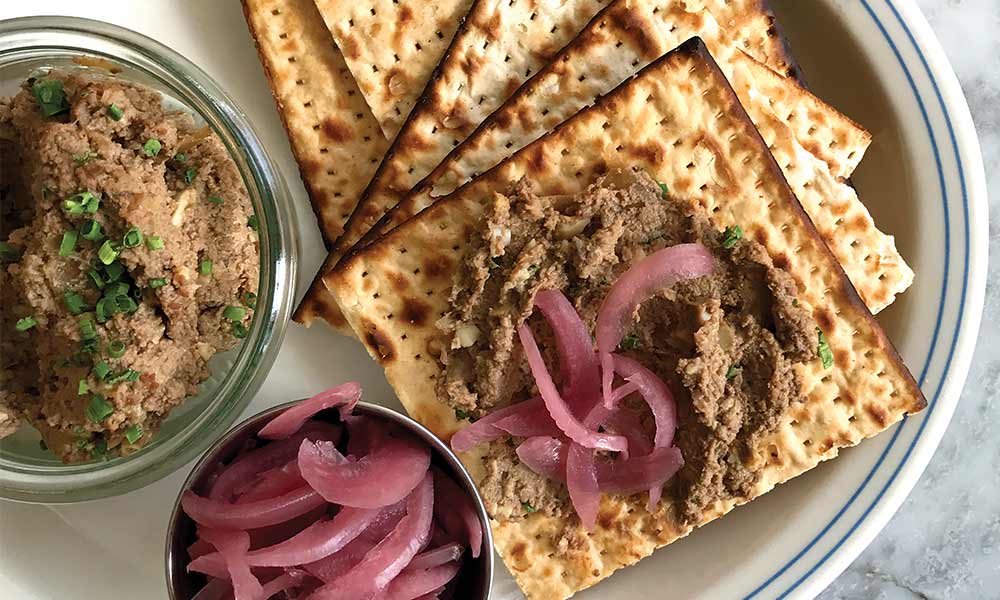

When Josh Russ Tupper works at the counter of Russ & Daughters, the iconic New York City appetizing store started by his great-grandfather, he regularly gets men coming into the shop asking for a quarter-pound of chopped liver. “But don’t tell my wife,” they add.
As more Americans incorporate vegetarian meals into their diets and younger generations trend away from organ meat dishes, it’s easy to picture chopped liver as strictly the domain of Jewish men who should be watching their cholesterol. But there’s a reason chopped liver has stuck around this long. “It’s not just old people who enjoy chopped liver,” Russ Tupper says, explaining that the dish is a popular menu item at the store. “There are a lot of people who come in with a bad stigma of chopped liver. But just try a little taste, it’s delicious.”
The origins of the dish can be traced back to Alsatian Jews of the Middle Ages. As Jews reached Central and Eastern Europe, goose fat became an important part of the kosher diet—pork lard was forbidden and butter could be used only with dairy. Goose farming was an invaluable Jewish profession, and Jews used every part of the goose, down to trading the feathers. The sought-after liver was either sold to French gentiles to be used for delicacies such as pâté or foie gras, or it was saved for special occasions. Jews would slaughter the geese around Hanukkah, store the livers in fat over the winter, and then by springtime they would be ready to prepare for festivals like Passover.
“It’s super flavorful, incredibly nutrient-rich, and very good for you.”
The dish we know now as chopped liver is a kosher version of pâté, which is traditionally made with a blend of fat, meat, herbs, spices and even sometimes milk to make a creamy spread. For Jews, a few extra steps had to be added—eating blood is not kosher, so Jews would broil the liver to rid it of the blood. “When you broil liver, you toughen it up, so it completely loses that texture that makes it so sought after,” says Jeffrey Yoskowitz, co-author of The Gefilte Manifesto and co-founder of The Gefilteria, a “culinary laboratory” in Brooklyn. The result would be a bitter, rough liver that they then chopped up and to which they added schmaltz (rendered poultry fat), caramelized onions, hard-boiled eggs, herbs and spices to attain the smooth, buttery texture of pâté.
While in Europe goose was more commonplace, in America chicken was everywhere. With the emigration of Ashkenazi Jews to the United States and the rise of the Jewish delicatessen, chopped liver went from a special occasion food to a readily available snack, also gaining popularity at the Borscht Belt’s Jewish country clubs. “It kind of went hand in hand; egg salad, tuna salad and chopped liver. You could scoop them,” Yoskowitz says, noting that chopped liver was a top choice because “it was super flavorful, it was incredibly nutrient-rich, and it’s very good for you.”
The counterpart to the Jewish deli, which sold meat products, was the dairy appetizing store, which sold “the food one eats with bagels” (such as cured fish, pickled vegetables, cream cheeses and baked goods). Due to kashrut, dairy restaurants couldn’t serve actual chopped liver, but it was so integral to Jewish culture by that point that it had to remain on the menu. “Vegetarian chopped liver is an actual staple of [Jewish] dairy cuisine,” says Theo Peck, whose great-grandfather started Ratner’s, a Lower East Side kosher dairy restaurant, in 1905. Peck grew up eating their version of the dish, often referred to as “mock chop.”


There is no one traditional recipe for mock chop; the single requirement seems to be that it somewhat resembles chopped liver. “It is kind of a blank canvas; chefs can use their local seasonal ingredients and create something,” Yoskowitz says. “Really, what you want is a flavorful spread or pâté of some kind, and that’s essentially the role that it plays. It’s not made with fake liver, it’s just healthy ingredients that come together to create a liver experience, and still give you that reference point.” Most recipes include caramelized onions and boiled eggs, but the base can be almost anything—some options are eggplant, green beans, peas, walnuts or lentils. The base is then chopped up, or blended in a food processor, with salt and pepper (different recipes add more spices, or veggies such as celery or scallions). “It doesn’t necessarily taste like liver,” Yoskowitz notes. “Chopped liver has a meatiness and minerality, it’s a very unique flavor.” On his podcast Meet Me At The Deli, he and his Gefilteria partner, Liz Alpern, recently discussed a vegetarian chopped liver recipe using beets, which brought out an iron flavor more closely resembling meat. A sautéed mushroom recipe was also mentioned, creating more umami-rich flavoring.
But for some, the mock doesn’t cut it. Russ & Daughters, founded in 1914 and now one of the last New York appetizing stores still around, switched from vegetarian to a traditional chicken liver recipe in the 1970s due to popular request. “[My uncle] was getting a lot of requests for chopped liver,” Russ Tupper says, despite the restaurant traditionally only serving dairy items. “He decided to go for it.”
Located on the Lower East Side of Manhattan, Russ & Daughters caters to a customer base still yearning for traditional chopped liver. But when you leave the Jewish neighborhoods, demand isn’t as high. Peck, whose great-grandfather founded Ratner’s, is now a chef himself and owner of Peck’s Foods. He only serves the dish at his cafe around Jewish holidays. “I think that my neighborhood was not ready for a Jewish-style restaurant when we opened up 14 years ago, and so we kind of had to move away from that food,” Peck says. When he does prepare chopped chicken liver, Peck puts his own unique touch on it. He likes to get some caramelization on the onions and the liver, and then deglaze it with a fortified wine, adding a bit of sweetness.
And of course outside the Jewish world, chopped liver is ingrained in the wider American culture as a question one asks when one feels unappreciated or left out. The comical “What am I, chopped liver?” refers to its relegation as always the side dish, never the main meal. But perhaps it’s time for an idiomatic rewrite: Chopped liver is top nosh, whether real or mock.
MUSHROOM CHOPPED LIVER
Recipe by The Gefilteria
Serves 10-12
INGREDIENTS
5 tablespoons extra virgin olive oil
3 large yellow onions, diced
2 pounds mixed mushrooms (any variety will do but ideally, more than one kind), cleaned, destemmed and diced
4 tablespoons fresh thyme (about 1/2 of a standard bunch), pulled from stems and chopped finely
1 heaping tablespoon paprika
1/4 – 1/2 cup sherry wine, or more as needed to taste
3 large eggs, hard-boiled (optional)
2 teaspoons kosher salt, plus more to taste
dash of black pepper, plus more to taste
crispy fried shallots (or onions), for garnish
flat leaf parsley, chopped, for garnish
INSTRUCTIONS
- In a large pan, heat 2 tablespoons of the oil over medium-low heat. Add the onions and cook slowly, stirring occasionally, until golden. Add an additional 2 tablespoons of oil to the pan along with the mushrooms. Cook slowly over medium heat, stirring occasionally as mushrooms shrink and begin to caramelize along with the onions, about 30 minutes.
- Stir in paprika, thyme, 1 teaspoon salt and a bold dash of freshly ground black pepper. Stir and continue to cook another 10 minutes, increasing the heat slightly but avoiding burning the mushrooms and onions. Pour in the sherry (or red wine) and stir, allowing the mushrooms and onions to soak up the flavor. Add an additional teaspoon of salt. Once sherry is soaked up, remove from heat and let cool before tasting and adjusting salt and pepper.
- Chop by hand in a chopping bowl to retain a chunky, mushroomy texture, or for a more classic mock chop texture, place in a food processor to smooth it out. (Chop in eggs if using.)
- Let cool to room temp before serving and adjust salt and pepper. Serve topped with crispy shallots or crispy onions, chopped parsley and (optional) capers on a sandwich or with crackers.
The post Talk of the Table | What Am I? Chopped Liver! appeared first on Moment Magazine.