

SF drone surveillance — Emergency alert
by Tabari Morris Proposed city policy would gut privacy protections and open the door to federal data sharing San Francisco’s controversial citywide employee drone policy is no longer just a proposal. The Committee on Information Technology (COIT) approved amendments to the Unmanned Aircraft System policy on June 18, 2026, and the City now lists the […] The post SF drone surveillance — Emergency alert appeared first on San Francisco Bay View.
 Black News

by Tabari Morris
Proposed city policy would gut privacy protections and open the door to federal data sharing
San Francisco’s controversial citywide employee drone policy is no longer just a proposal. The Committee on Information Technology (COIT) approved amendments to the Unmanned Aircraft System policy on June 18, 2026, and the City now lists the policy as “Amended June 18, 2026,” confirming that the weaker citywide baseline is in effect.
That changes the urgency of this story. The immediate fight is no longer whether COIT will act, but how departments will use the amended citywide standard as they rewrite their own drone policies for Board of Supervisors approval under Chapter 19B. At the same time, San Francisco is already broadening departmental drone use, with the board giving final approval on June 9 to expand Public Works’ drone policy so the department can use drones to investigate illegal dumping.
***UPDATE: COIT approved the amended citywide drone policy on June 18, 2026. The next phase is department-by-department implementation, with future fights moving to the Board of Supervisors, public hearings and the details of each surveillance technology policy.***
How soon will this happen? — the updated timeline
Phase 1: COIT action is complete
COIT’s June 18 agenda included an action item to approve the draft Unmanned Aircraft System policy, and the City’s published policy page now states that the policy was amended that same day. That means the citywide framework privacy advocates warned about is no longer pending; it has already been adopted at the COIT level.
Phase 2: Departmental rewrites and compliance
The amended citywide policy gives departments 180 days to bring existing UAS programs into compliance from the date of adoption. Departments that use drones can now align their internal rules, flight logs, privacy procedures, retention practices and sharing protocols to the new citywide standard, and some departments may rely on board-approved surveillance technology policies instead of maintaining separate stand-alone drone policies.
Phase 3: Board of Supervisors battles continue
The Board of Supervisors remains the decisive public arena because Chapter 19B still requires board approval for department surveillance technology policies when applicable. That process is already active: Public Works’ amended drone policy passed first reading on June 2 and reached final action on June 9. Future department updates could move quickly if they do not face organized opposition.
***BOTTOM LINE: The citywide policy battle at COIT has already been lost. The next 180 days are the key window for tracking department rewrites, mobilizing public testimony and forcing stronger protections into department-level policies before they are normalized.***
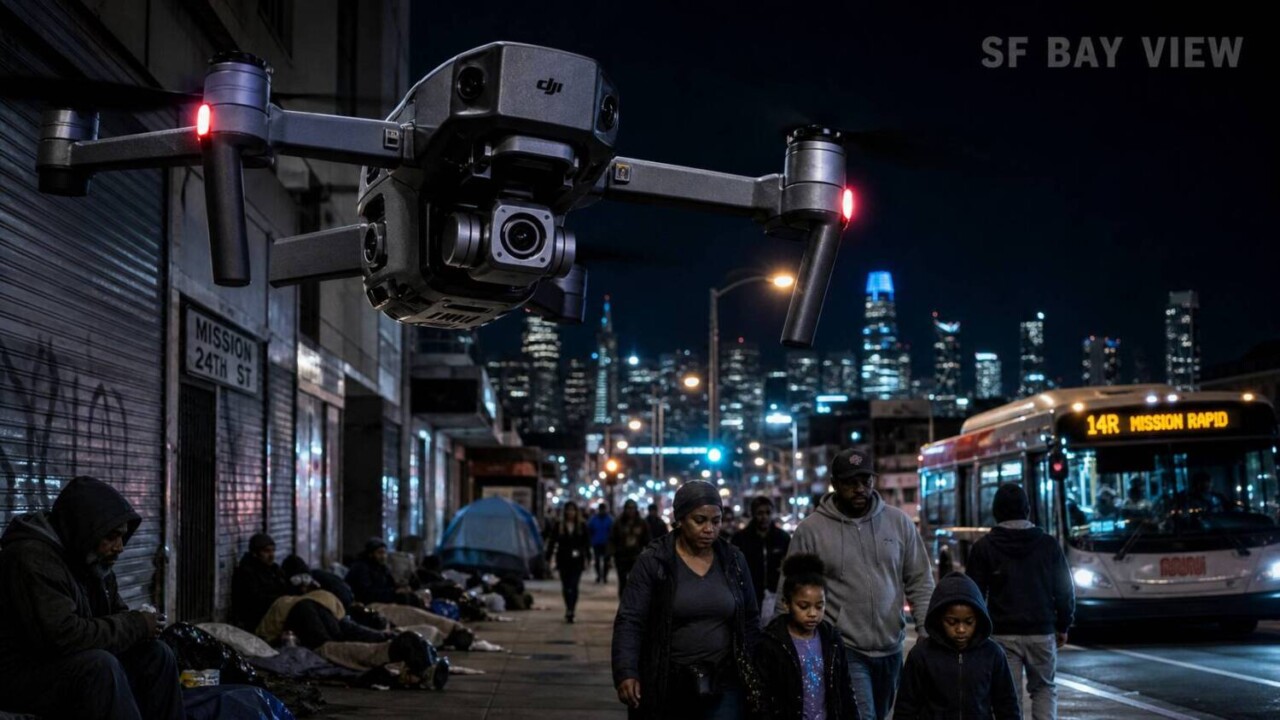
What has changed since our original alert
The biggest update is procedural but significant: What was described in June as a draft has now been formally amended and posted by the City as official policy. That means advocates are no longer warning about a hypothetical rollback. They are confronting an adopted framework that departments can now cite as authority for broader drone programs.
The substance remains alarming. The amended citywide policy emphasizes operational growth, data handling and interoperability across departments, and it allows external sharing for public safety operations to the extent required to complete a mission, while keeping only limited restrictions on when personally identifiable information must be removed or deidentified. The policy says departments should minimize the collection, use and retention of personally identifiable information, but it no longer preserves the stronger older language that departments must remove identifying information as a general baseline.
The new policy also confirms that departments must publish public information about their drone programs, including permitted use cases, categories of data captured, data-sharing procedures and monthly flight logs, except where disclosure would compromise security or safety. That creates an opening for journalists and organizers: the amended policy is weaker on privacy, but it also produces more records that can be demanded and checked.
Why this is still an emergency for San Francisco: COIT approved the framework, and expansion is already happening
The clearest sign of where the City is headed came even before the COIT vote was fully absorbed by the public. On June 9, the board gave final approval to expand Public Works’ surveillance technology policy so the department can use drones to catch illegal dumping. That means the city is not waiting to debate drone surveillance in the abstract; departments are already building out new use cases on the ground.
Police drone use is still surging
The underlying conditions that made the original article urgent have only intensified. Transparent city data showed 1,391 SFPD drone flights in January and February 2026, a 673% year-over-year increase over the same period in 2025. By early July, the San Francisco Chronicle reported that SFPD had already deployed more drones in 2026 than in all of 2025, underscoring how quickly the technology is becoming routine.
Departmental growth means more surveillance points, not just police surveillance
One of the most important developments is that this is no longer only an SFPD story. The amended citywide policy is designed to cover city departments broadly, and Public Works has already shown how non-police agencies can expand drone use into code enforcement and quality-of-life policing functions such as illegal dumping investigations. That raises the risk of a wider surveillance web in which multiple departments collect footage, store it and potentially share it under a looser citywide standard.
Data sharing still raises federal and interagency risks
The amended policy says external sharing is prohibited unless required by law or authorized by written agreement, but it also explicitly permits sharing with external third parties for public safety operations to the extent required to complete the mission. In a city where police and other agencies were already found to have illegally shared license plate reader data with federal entities, that language remains a serious warning sign.

What the public can do now
1. Shift from COIT pressure to department tracking
Because the citywide COIT vote already happened, the most effective next step is tracking which departments move to revise or expand their own policies under the new framework. That means monitoring Board of Supervisors files, committee calendars and departmental notices for each drone-related policy change.
2. Target the Board of Supervisors early
The board remains the public choke point. Public Works’ June timeline showed how fast a department drone policy can move from first reading to final action. Residents and advocates need to intervene earlier in the process, before a policy reaches a final board vote.
Board of Supervisors main line: (415) 554-5184
Clerk of the Board for written public comment: angela.calvillo@sfgov.org
Online legislative tracking: sfgov.legistar.com
3. Demand the records the new policy itself requires
The amended policy requires monthly flight logs, public-facing explanations of permitted uses, and documentation of data categories, storage and sharing practices. Those disclosures can become organizing tools if reporters and advocates compare what departments publish with what they actually do.
4. Watch the 180-day compliance window
The amended policy gives existing UAS programs 180 days to achieve compliance. That means the period between June and December 2026 is the key time to identify whether departments are quietly rewriting rules, expanding uses or locking in new data practices with minimal public attention.
5. Keep the focus on communities most exposed
Any update to this story should keep returning to where surveillance is landing hardest. Earlier flight data showed the heaviest police drone activity in SoMa, the Mission and the Tenderloin. As drone programs spread beyond police, organizers should ask which neighborhoods and populations are most likely to be watched next, and by whom.
CONCLUSION: The story is moving, not ending
The original warning was that San Francisco was on the verge of adopting a weaker drone policy. That warning proved to be 100% factual.. The citywide policy was amended on June 18, and the real question now is how quickly departments use that new framework to widen surveillance, broaden data sharing and normalize drone monitoring across city government agencies.
This is still an emergency, but it is now a different kind of emergency. The fight is no longer about stopping a COIT vote. It is about documenting implementation, contesting department policies one by one, and showing the public that surveillance expansion is happening not only through police flights, but through the routine administrative machinery of city government.
Tabari Morris is managing editor of the SF Bay View. He can be reached at tabari@sfbayview.com.
The post SF drone surveillance — Emergency alert appeared first on San Francisco Bay View.