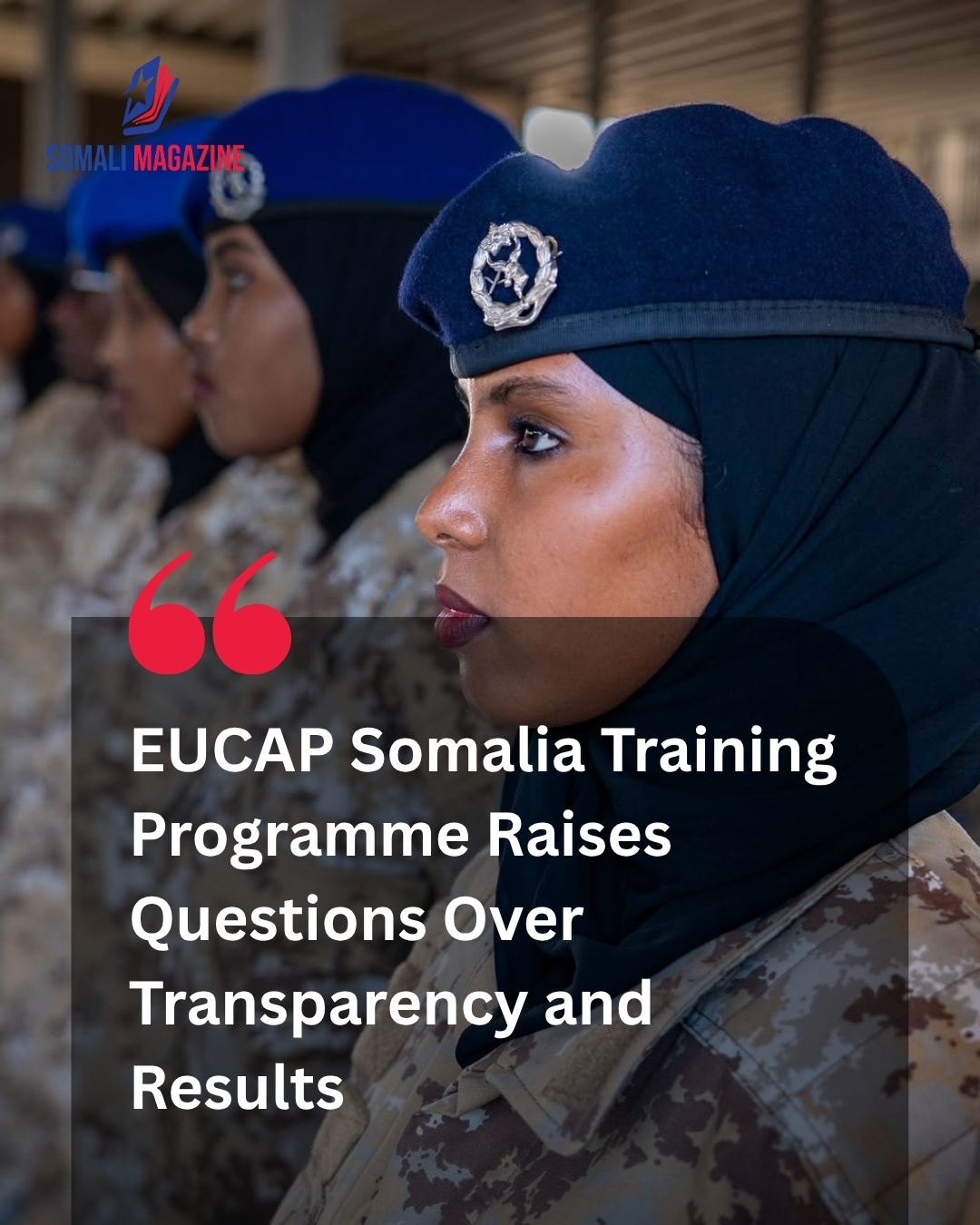
EUCAP Somalia training programme raises questions over transparency and results among security analysts and institutional watchdogs evaluating the long-term effectiveness of international intervention. The European Union’s civilian security mission recently concluded specialized leadership courses for regional stabilization forces, including the Federal Darwish, designed to bolster operational command and control. However, civil society critics and governance experts argue that repeated capacity-building cycles lack sufficient public disclosure regarding trainee selection criteria, curriculum objectives, and measurable post-graduation outcomes.
The growing debate centers on whether foreign-funded security assistance effectively builds sustainable domestic institutions or merely creates a revolving system of short-term courses. While mission leadership maintains that initiatives prioritize human rights, accountability, and eventual national ownership, observers emphasize that training alone does not automatically equate to structural security reform. Concerns have been raised regarding how transparency deficits affect oversight, leaving policymakers questioning whether these high-profile programs produce independently verifiable improvements in regional security capabilities.
With the mission’s current mandate scheduled to approach its expiration horizon, pressure is mounting for international partners to provide clearer evaluations of past investments. Security specialists note that stabilization units operating in complex conflict zones require not only tactical instruction but also robust institutional integration and sustained logistical backing. Critics continue to advocate for rigorous accountability mechanisms that ensure external support actively reinforces domestic command structures rather than operating through opaque channels.
As federal authorities and international stakeholders navigate ongoing security challenges, the demand for greater openness remains a central theme in discussions surrounding foreign assistance. Ensuring that capacity-building efforts translate into independent, accountable security forces is vital for the nation’s long-term stability and governance. Observers maintain that future cooperation frameworks must prioritize transparent evaluation, ensuring that every institutional investment delivers measurable progress for the country’s security architecture.

 Black News