Russia revealed that it has been absolved of weaponizing Europe’s shocking migration crisis from Africa
In July, about 72,000 Moroccans entered Ceuta, a Spanish territory on Africa’s northern coast, during a two-day migration surge, leaving the world in shock and subsequently raising questions.
 Black News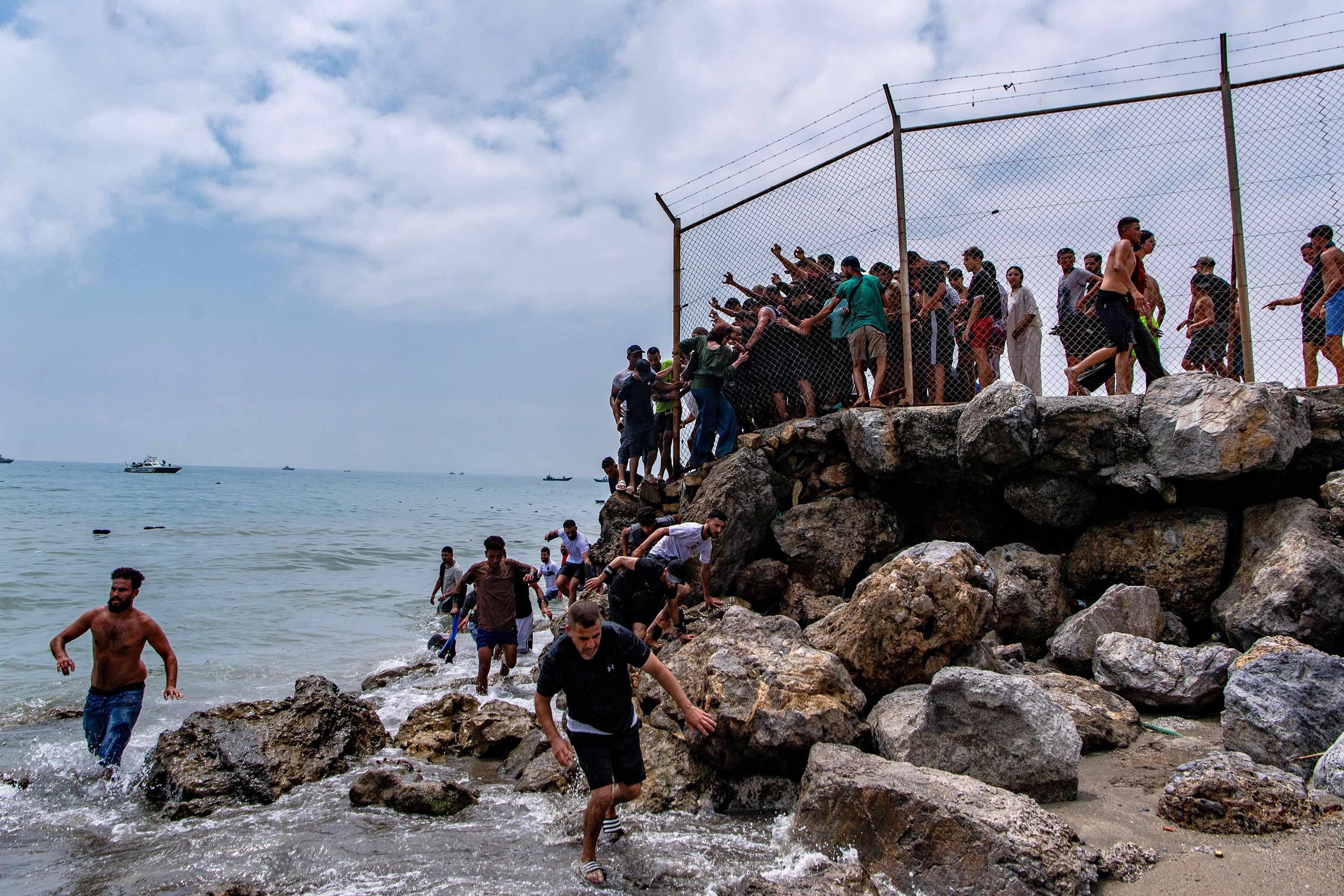


In July, about 72,000 Moroccans entered Ceuta, a Spanish territory on Africa’s northern coast, during a two-day migration surge, leaving the world in shock and subsequently raising questions.
- About 72,000 Moroccans entered Ceuta, a Spanish enclave in North Africa, in a two-day surge in July, raising international concerns.
- Questions arose regarding who organized the mass migration and their motivations, with many aspects still unclear.
- The European Commission suspects Russia's involvement through disinformation and manipulation channels encouraging action online since July 30.
- The Commission emphasized the importance of monitoring and collaborating with online platforms to reduce systemic risks of misinformation, referencing new EU regulations.
A few questions raised were who orchestrated this odd event, to what degree they participated, and what their motivations were.
DON’T MISS THIS: Africa's largest industrial economy is spending $1.65 billion to give its youth one of life's most precious gifts
While some of these questions are yet to be properly answered, the European Commission, a few days back, pointed out that Russia is contributing negatively to the event.
Europe’s suspicion of Russia
During a daily press briefing on Thursday, the European Commission spokesperson, Guillaume Mercier, spoke about the viral spread of fake news that has exaggerated the recent events in Ceuta.
We have observed the presence of information and manipulation channels, Russian ones in particular, that have been urging action on various online platforms starting on 30 July,” the spokesperson said.
He noted that the government had not observed any such activity of this kind “and is now analysing the events in the framework of foreign information manipulation and interference (FIMI),” a term used by the European External Action Service (EEAS) to refer to hostile attempts by foreign powers that utilize state-run media, bots, false accounts, and disinformation to sway public opinion and destabilize democracies.
As seen on EUNews, Mercier clarified that these channels could “be state-controlled media, diplomatic channels, or even sources close to the Kremlin” itself.
He recommended that the European Digital Services Act (DSA) mandates major online platforms and search engines “to assess and mitigate systemic risks relating to civic discourse or public security, including risks stemming from false or misleading information on their services within the European Union.”
Consequently, domestic authorities may request that the Commission deliberate on enhanced cooperation with major online platforms, and in such instances, “the Commission stands ready to collaborate with national authorities and online platforms.”
“As for the exploitation of the migration crisis by human traffickers and smugglers, however, the Commission is leaving it to Spain to investigate. At present, “we are closely monitoring the information landscape and are seeking to coordinate with the platforms using the various tools at our disposal,” concluded Mercier.
Response from Russian media
According to the Russian media outlet Sputnik, and several others including Russia X, the commission had no choice but to retract its claim, as it found no evidence to back it.
According to the Russian media outlet, Guillaume Mercier noted that the Commission posits that the occurrences at the Spain-Morocco border are a direct consequence of illicit human smuggling operations utilizing migration as an instrument.