NBS fined US$10,000 for defying court order over US$5m Treasury Bill
The High Court has fined National Building Society (NBS) US$10,000 for contempt after finding that the financial institution wilfully and in bad faith refused to surrender a US$5 million Treasury Bill (TB), despite a court order directing its return. Justice Faith Mushure said NBS consciously decided not to comply with the September 2025 order, instead […] The post NBS fined US$10,000 for defying court order over US$5m Treasury Bill appeared first on NewZimbabwe.com.
 Black News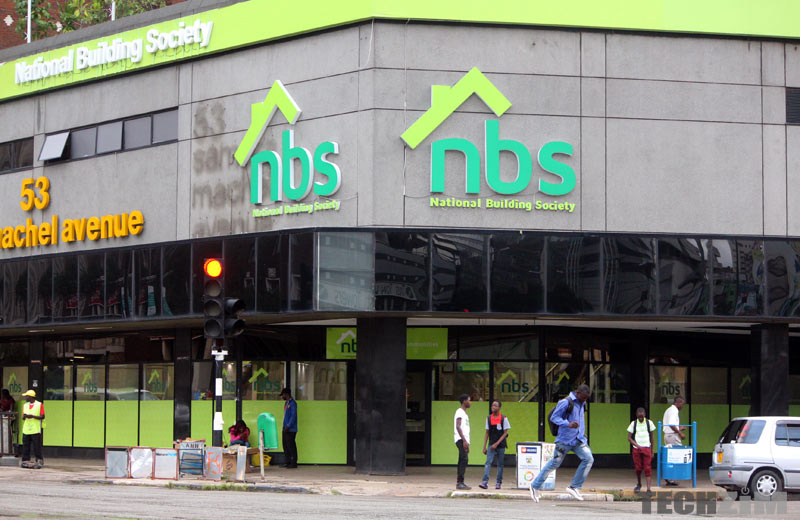
The High Court has fined National Building Society (NBS) US$10,000 for contempt after finding that the financial institution wilfully and in bad faith refused to surrender a US$5 million Treasury Bill (TB), despite a court order directing its return.
Justice Faith Mushure said NBS consciously decided not to comply with the September 2025 order, instead forming its own view that it did not apply to it and later obtaining a legal opinion that agreed.
The judge described the circumstances surrounding the TB as involving documentation “riddled with gaps” and found that NBS had failed to substantiate its claim that it had acquired the security in good faith and for value.
The ruling, handed down on September 14 following hearings on March 3 and September 14, 2026, stems from a dispute involving Stratus Capital Partners, NBS, ADC Capital (Private) Limited, the Sheriff of Zimbabwe and the Reserve Bank of Zimbabwe.
At the centre of the dispute is a December 23 government-issued TB under number FCTB109620231228C and with a maturity value of US$5 million by December 28, 2026.
Mushure described the original transaction as a seemingly straightforward investment that had turned into a multi-million-dollar legal battle.
“The applicant must rue the day it decided to trade its TB with the second respondent,” she said.
“What seemingly looked like a straightforward investment involving a quick disposal of a Treasury Bill at a discounted rate has proved to be a source of frustration and an uphill legal battle for the applicant,” Mushure said.
In the original case, Stratus secured judgment against ADC Capital in September last year and in the process, terminated the TB sale agreement as well as confirmed its right to retain it.
The court ordered ADC Capital and “any persons holding and/or claiming the TB through” it to transfer the security into Stratus’ central securities depository account within seven days.
The order further empowered the sheriff to sign documents and take whatever steps were necessary to effect the transfer if the TB was not returned.
But ADC Capital did not comply.
According to the judgment, the company had initially been evasive about the whereabouts of the TB, claiming it had been absorbed into a multi-faceted transaction and later saying the subsequent transaction was too sensitive to disclose in a public document.
Stratus then traced the TB to the Shingai Mutumbwa-led NBS.
On October 10, 2025, the messenger of the court served the order on NBS and directed it to transfer the TB within 48 hours.
NBS initially told the sheriff that it did not hold the TB through ADC Capital or any other party because it had “settled” the security.
When pressed for clarification, however, NBS confirmed that it was holding the TB.
On October 22, court bailiffs attempted to execute the order against NBS. Still, their returns recorded that the latter had acknowledged holding the instrument and, before claiming ownership, refused to hand or transfer it.
Stratus then returned to court and obtained an interim order on November 7, 2025, placing the TB under judicial attachment and preventing its disposal.
NBS subsequently argued that it could not be held in contempt because it had not been a party to the original proceedings between Stratus and ADC Capital.
It maintained that it had “acquired the TB in its own right and it could not be deprived of the security without being heard”, which was totally rejected by the court.
Mushure found that the wording of the original order had deliberately been framed broadly because ADC Capital had refused to reveal where the TB was being held.
“The object of that paragraph is, in substance, to give or restore possession of the TB to the applicant,” she said.
“I find that paragraph 4 of the order has an in rem character and it is that provision that the applicant seeks to enforce,” Mushure said.
Crucially, the judge said, “NBS fell within the class of persons covered by the order because it had acquired the TB through ADC Capital”.
“A reasonable construction should be placed on paragraph 4 of the order to ensure that its object was effectuated,” she said.
The court also rejected NBS’ reliance on the Bills of Exchange Act (BEA) to claim protection as a holder in due course.
Mushure drew a distinction between TBs and bills of exchange, finding that although TBs are negotiable instruments, they are government debt securities issued under the Public Debt Management Act and are not bills of exchange.
“To the extent that the first respondent relies on the provisions of the BEA, I find its argument flawed,” she said.
“That argument falls flat on its face on that basis alone.”
The judge then examined the transaction through which NBS said it acquired the TB.
NBS had explained that it had an invoice discounting facility with retail giant OK Zimbabwe and that ADC Capital offered the US$5 million TB at a 55 percent discount to settle outstanding obligations.
NBS said the TB was transferred to it on January 17, 2025, after which it liquidated the security and credited accounts associated with OK Zimbabwe and Kenge Foods – *also linked to the ex-Zimbabwe Cricket managing director and Zanu PF politician*.
But the court found several unexplained discrepancies.
Among them was the fact that an instruction from ADC Capital directed NBS to liquidate a particular OK Zimbabwe account, but NBS initially liquidated a different account before acting on the specified account days later.
“The basis of liquidating another account outside the instructions issued by the second respondent remains a mystery,” Justice Mushure said.
The court also scrutinised a memorandum of agreement involving NBS, ADC Capital and OK Zimbabwe.
The agreement stated that it would only become effective on the date on which the last party signed it.
But OK Zimbabwe had never signed the document.
Justice Mushure found this omission fatal.
“In my view, the condition precedent for the MoA to come into effect was that last signature,” she said.
“That signature is missing. There is therefore a fatal failure to comply with a mandatory requirement of the contract.”
The judge concluded: “In short, there was no contract at all.”
She also questioned why NBS had failed to produce the official CSD record which, according to its own case, would have shown its ownership of the TB.
TBs in Zimbabwe are held electronically rather than as paper certificates, with ownership reflected through entries in the CSD system.
“Surely, if the transaction was done in good faith and for value, the necessary appropriate entry in a record or account kept by the CSD would have been conclusive proof of the acquisition of the TB,” Mushure said.
Instead, she found that NBS had placed before the court incomplete and inconclusive documentation.
“That, on its own, is telling,” she said.
The judge was also critical of the conduct of NBS and ADC Capital after Stratus began trying to recover the TB.
“What is striking is that both the first respondent and the second respondent seemed to have now joined hands to thwart the applicant’s efforts to enforce the judgment of this Court,” Justice Mushure said.
“These efforts seem to me neither accidental nor coincidental but by design.”
She said there appeared to have been “concerted efforts” by the two companies to ensure that Stratus did not recover the TB.
The court ultimately rejected NBS’ claim that it was an innocent holder.
“I am not convinced that the first respondent (NBS) is a holder of the TB in good faith and for value,” Mushure ruled.
“The documentation relied on by the first respondent to support its claim is riddled with gaps which render the first respondent’s proof of ownership of the TB glaringly insufficient.”
“At best, the first respondent is holding or claiming the TB through the second respondent.”
Turning to the contempt charge, the court noted that the “NBS did not dispute that it had been served with the order or that it had refused to comply”.
Its defence was that it believed the order did not bind it and that it had obtained legal advice supporting that interpretation.
Mushure rejected that explanation, finding that NBS had effectively decided for itself that the order was not applicable before seeking a legal opinion which confirmed its position.
“This supports a conclusion that the first respondent’s refusal to comply with the order was deliberate,” she said.
“It was informed by a conscious preconceived decision which was then confirmed by the opinion, not legal advice, of the first respondent’s legal practitioners.”
The judge added that allowing litigants to disregard court orders because they believed their interpretation of those orders was correct would undermine the administration of justice.
“If a party could disregard an extant court order because it had adopted an incorrect interpretation of it, obedience to court orders would become optional and the administration of justice would be undermined,” she said.
“In my view, the first respondent’s conduct not only demonstrates that it wilfully disobeyed a court order but that it also acted mala fide.”
In determining the penalty, the court considered the TB’s US$5 million maturity value, although its market value during the proceedings was recorded at between US$2.75 million and US$2.8 million.
The judge also considered the financial loss suffered by Stratus, including deprivation of liquidity and missed investment opportunities, and potential sanctions from the Securities and Exchange Commission.
Mushure ultimately imposed the US$10,000 fine sought by Stratus, saying it was proportionate in the circumstances.
She also ordered NBS to pay Stratus’ legal costs, including the costs of enforcing the NBS fined US$10,000 for defying court order over US$5m Treasury Bill.
The court, however, declined to use the contempt proceedings to expand or rewrite the original order, saying the existing judgment remained enforceable and the contempt proceedings were intended to compel compliance rather than create a new order.
NBS was ordered to pay the US$10,000 fine, or its ZiG equivalent, to the High Court registrar within seven days.
The post NBS fined US$10,000 for defying court order over US$5m Treasury Bill appeared first on NewZimbabwe.com.