Maybe People Facing Infertility Are Not the Problem — We Are
Abby Mango is a UK-based Fertility Lead Nurse Specialist. She founded TacklingInfertility/Hurukurodzembereko to provide education, coaching, and advocacy for African and minority ethnic communities facing fertility challenges. Contact at tacklinginfertility@gmail.com The post Maybe People Facing Infertility Are Not the Problem — We Are appeared first on NewZimbabwe.com.
 Black News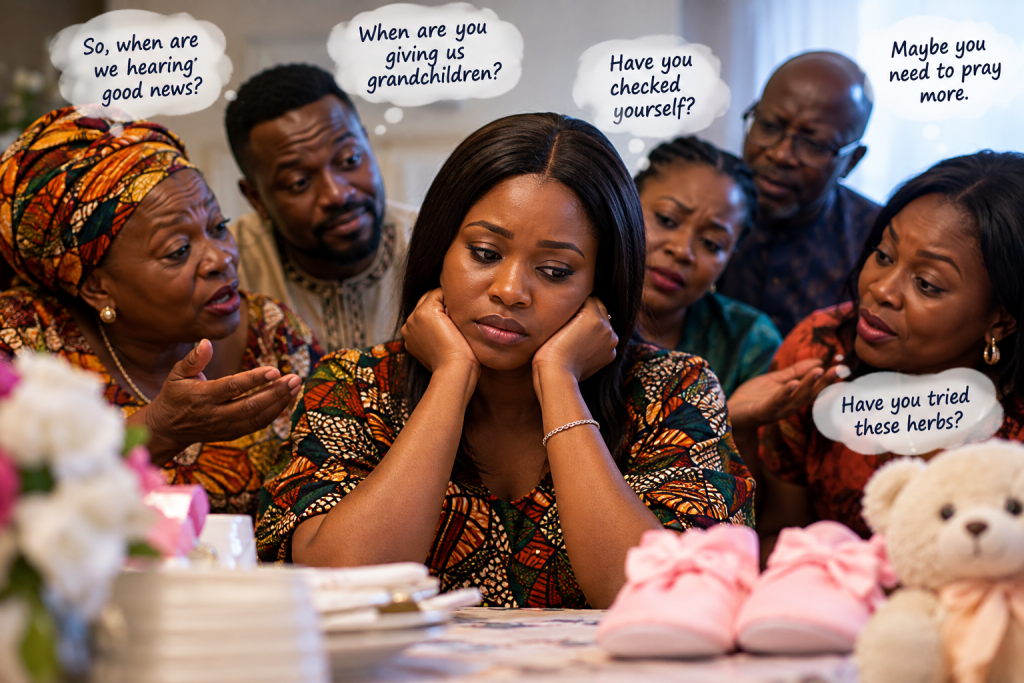
A month ago, someone asked me to write about how to overcome the stigma of infertility, and as I reflected on that question, I realised that perhaps the couples and individuals facing infertility are not the issue, we are.
We are the aunties, uncles, parents, in-laws, friends, colleagues, church members and communities who sometimes treat infertility as though it is a plague, who begin to look at people differently when the children do not come, who ask questions, make comments, speculate about what might be wrong, offer advice that was never requested and, sometimes without even realising it, isolate people because their lives have not followed the pattern we have come to expect: you grow up, you get married and then you have children.
So perhaps we have been asking the wrong people to overcome infertility stigma. Maybe those facing infertility have already got enough to overcome, and it is the rest of us who need to change.
In many African cultures, children are deeply treasured, and there is something beautiful about the way the birth of a child is celebrated not only by the parents but by grandparents, aunties, uncles, cousins, neighbours and sometimes an entire community. The problem comes when that same communal involvement means that, once a couple gets married, their reproductive life somehow becomes everybody’s business.
We all know the questions.
So, when are we hearing good news?
When are you giving us grandchildren?
What are you waiting for?
Most people asking these questions probably do not mean any harm, sometimes it is simply conversation, sometimes excitement, sometimes culture, but for the person who has just had another negative pregnancy test, experienced a miscarriage, been told that their fallopian tubes are blocked, that their ovarian reserve is low, that there is no sperm in the semen sample, or whose latest IVF cycle has failed, that seemingly innocent question can come through very differently.
And because we do not know what is happening behind closed doors, perhaps we need to become more careful about what we ask.
The World Health Organization estimates that around one in six people experience infertility in their lifetime, which means most of us will know someone affected by infertility.
I often talk about encouraging people experiencing infertility to speak out, to break the silence and to challenge stigma, and I have written about breaking the silence, but I have started to question why the responsibility should always sit with them.
Why should a woman have to tell the extended family that she is having IVF before people stop asking when she will have a baby? Why should a man have to disclose the results of his semen analysis before relatives stop blaming his wife? Why should a couple have to explain miscarriages, operations, unsuccessful fertility treatment or something as deeply personal as using donor eggs or sperm simply to earn the right not to be questioned?
They shouldn’t have to tell us everything for us to know how to behave.
Sometimes the problem is not silence, it is our inability to respect it.
This is particularly important because infertility in many African communities can quickly move beyond the medical issue and become a judgement about the person. A woman may be labelled barren, blamed for delaying motherhood because of education or her career, accused of having had abortions or using contraception for too long, while a man with a fertility problem may face comments questioning his masculinity. In other situations, infertility is attributed to witchcraft, curses, punishment or something somebody must have done in the past.
Some of these beliefs and expressions have existed for generations, but culture is not something we are forbidden to question. We can treasure the parts of African culture that give us community, family, belonging and shared responsibility, while also acknowledging when some of our practices cause unnecessary pain.
The church also has an important place in this conversation because, for many Africans, faith is one of the places we turn when life becomes difficult. I am a person of faith myself and I understand the comfort, strength and hope that prayer can bring, but we also need to be careful that our desire to encourage people does not become another burden they have to carry.
Not everyone experiencing infertility needs to be told to pray harder, have more faith or seek deliverance, and we should be very careful about suggesting that infertility must always mean spiritual attack, punishment or lack of faith.
Sometimes there is a medical problem that requires medical investigation and treatment, sometimes treatment will work and sometimes, painfully, it will not.
We also need to make room for that last group because one of the uncomfortable realities of infertility is that not every story ends with a baby. When we only celebrate the testimonies that end in pregnancy, what are we saying to the person who prayed, sought treatment, spent their savings, endured the injections and procedures and still did not have a child?
Perhaps overcoming stigma also means learning how to sit with people when there is no happy ending we can neatly package into a testimony.
There are very practical things all of us can do, and most of them cost absolutely nothing. We can stop asking couples when they are going to have children, stop automatically assuming that infertility lies with the woman, stop forwarding the contact details of fertility clinics, herbalists or prophets unless someone asks us, stop discussing people’s fertility problems at family gatherings, and stop assuming that because somebody does not attend a baby shower or children’s event they are jealous or bitter.
We can also learn to ask better questions.
Instead of “When are you having a baby?”, perhaps ask, “How are you?”
If someone chooses to tell you that they are struggling to conceive, you do not need to have the perfect answer, sometimes “I am sorry you are going through this, how can I support you?” is enough.
And if they do not want to talk about it, allow them not to.
That too is support.
The more I thought about the original question I was asked, the more I realised how easily we place the work of dismantling infertility stigma onto the very people who are being stigmatised. We tell them to speak out, educate their families, challenge misconceptions, explain infertility and tell their stories, while they may already be dealing with appointments, treatment, financial pressure, relationship strain, disappointment and grief.
Maybe they have enough to do.
Perhaps the next stage of the infertility conversation in Africa should not be asking people experiencing infertility to become louder, perhaps it should be asking the rest of us to become kinder, more informed and, sometimes, simply quieter.
Because the couple sitting across from you at a wedding does not owe you an explanation for why they do not have children, the woman in your family does not owe you her fertility history, and the man struggling with infertility does not need jokes about whether he is man enough.
Their infertility may not be something we can change, but the stigma surrounding it is ours, and that means we can.
Let us replace silence with science, and stigma with support.
The post Maybe People Facing Infertility Are Not the Problem — We Are appeared first on NewZimbabwe.com.