Kenya removes university degree barrier for presidential candidates ahead of 2027 polls
Kenya has removed one of the most significant formal educational barriers to political office, allowing candidates without university degrees to contest for president, governor and Parliament in the 2027 general election.
 Black News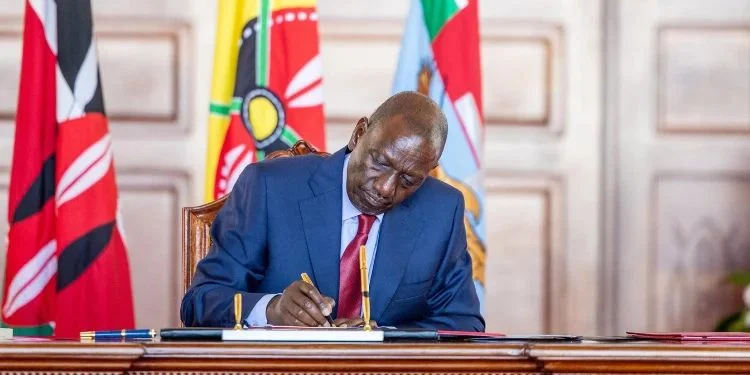


Kenya has removed one of the most significant formal educational barriers to political office, allowing candidates without university degrees to contest for president, governor and Parliament in the 2027 general election.
- Kenya has removed the requirement for a university degree to contest for president, governor, and Parliament in the 2027 election, following court rulings that found it unconstitutional.
- This change allows a much larger portion of the population, around 96.5% of Kenyans, to be eligible for top political offices.
- The Kenyan decision aligns with practices in other African countries like Nigeria, Ghana, South Africa, and Uganda, which also do not require a university degree for presidential candidates.
- In Nigeria, the main controversy is about the authenticity of candidates' educational documentation, not the level of education, as only secondary education is needed to contest for president.
The Independent Electoral and Boundaries Commission (IEBC) confirmed that it currently has no legal basis to require a university degree from candidates for the three positions, following court rulings that declared the degree requirement in Kenya's Elections Act unconstitutional.
The change could significantly widen the pool of potential candidates in a country where only about 3.5% of the population held a university degree at the time of the 2019 census, according to IEBC Commissioner Ann Nderitu.
DON'T MISS THIS: Ruto details what is important to him as president, and it is not the next election
Nderitu said the previous requirement effectively excluded about 96.5% of Kenyans from contesting for the presidency, governorships and parliamentary seats, raising concerns about discrimination and equal political participation.
Why Kenya's decision matters beyond education
Kenya's decision highlights how differently African countries define the minimum qualifications for the continent's highest political offices.
In Nigeria, for example, the Constitution does not require a university degree to become president. Section 131 of the 1999 Constitution requires a presidential candidate to have been educated to at least School Certificate level or its equivalent, alongside requirements including Nigerian citizenship by birth, the minimum age and sponsorship by a political party.
That lower educational threshold has become particularly relevant as Nigeria enters its own debate over presidential qualifications ahead of the 2027 election.
President Bola Tinubu is facing renewed scrutiny over the academic certificate he submitted to Nigeria's electoral commission for his 2023 presidential bid.
DON'T MISS THIS: Kenya's general election the most expensive in Africa and 2nd most expensive in the world
A group has asked the Independent National Electoral Commission (INEC) to clarify the implications of questions surrounding the certificate ahead of his expected 2027 candidacy.
The controversy is not simply about whether Nigeria requires a degree: it does not. Rather, it centres on the authenticity and provenance of academic documents submitted as evidence of a candidate's educational history.
Tinubu has maintained that he obtained a Bachelor of Science degree from Chicago State University, while critics have continued to question aspects of the primary and secondary education records he submitted to INEC.
The contrast with Kenya is revealing. Kenya has effectively lowered the formal educational barrier because courts found the degree requirement incompatible with constitutional principles, while Nigeria already operates with a much lower minimum but continues to face political and legal disputes over whether candidates have truthfully documented the qualifications they claim.
Elsewhere in Africa, the thresholds vary.
Uganda, for instance, requires presidential candidates to be qualified to serve as members of Parliament, and its Constitution requires MPs to have completed at least Advanced Level education or its equivalent.
Ghana takes a different approach. Its Constitution requires presidential candidates to be Ghanaian citizens by birth, at least 40 years old and otherwise qualified to be elected to Parliament, but does not prescribe a university degree as a presidential requirement.
South Africa similarly does not impose a university degree as a qualification for becoming president; its system instead makes the presidency contingent on election to the National Assembly.
Kenya's change therefore does not represent an entirely new direction for Africa. Instead, it brings the country closer to a model already found in several African democracies where academic credentials are not the principal legal test for presidential eligibility.
DON'T MISS THIS: July poll finds Kenyan CEOs are not too bothered about the outcome of next week's elections
The bigger question for Kenya is whether removing the degree requirement will make politics more inclusive without weakening expectations around competence and integrity.
The IEBC has stressed that the change does not mean candidates can ignore the country's other constitutional requirements. Presidential aspirants must still meet requirements including being Kenyan citizens by birth, being qualified to stand for Parliament and satisfying the country's electoral and leadership requirements.
Parliament could also introduce a new educational requirement, but Nderitu said this would have to follow the proper legislative process, including public participation.
For the 2027 election, however, the position is clear: a university degree will no longer determine who is legally allowed to seek Kenya's highest elected office.