Inside the Shs 4bn push taking digital innovation beyond Kampala
Seven months before officials gathered at Busitema University to formally hand over its new digital innovation hub, students were already walking through its doors and putting the computers to work. That detail mattered to Peter Kahiigi. For the chief technology officer at Centenary Technology Services, the real measure of the MTN ACE Spark Innovation Hub […] The post Inside the Shs 4bn push taking digital innovation beyond Kampala appeared first on The Observer Media Ltd.
 Black News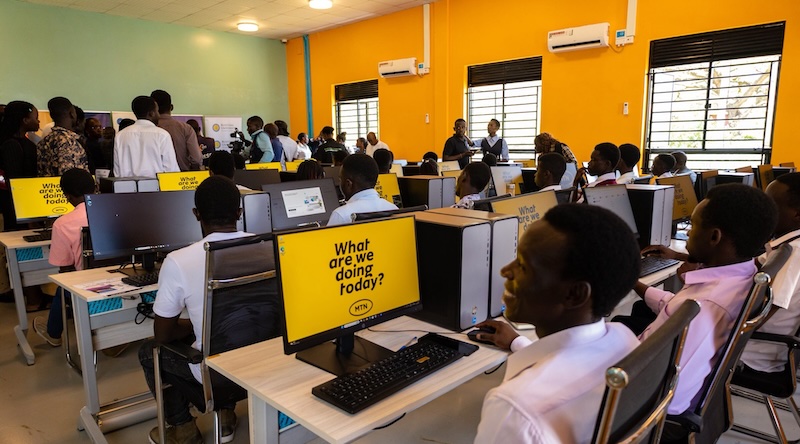

Seven months before officials gathered at Busitema University to formally hand over its new digital innovation hub, students were already walking through its doors and putting the computers to work.
That detail mattered to Peter Kahiigi. For the chief technology officer at Centenary Technology Services, the real measure of the MTN ACE Spark Innovation Hub was never the ceremony marking its arrival. It was what happened after the speeches ended, whether students kept coming back, filling the room and turning access to technology into something useful.
“What we handed over today is not a new lab. It is a working one,” Kahiigi said on September 15. “The equipment arrived in February, and students have been on it since. That is the test of a project like this: not the ribbon, but whether the room is full on an ordinary weekday.”
Busitema is now part of a Shs 4 billion experiment taking Uganda’s digital opportunity beyond Kampala.
Over three years, MTN Foundation Uganda, working with the Ministry of ICT and National Guidance and Centenary Technology Services, is establishing innovation hubs at four public universities and refurbishing the National ICT Innovation Hub in Nakawa.
The ambition is bigger than installing computers. The hubs are intended to give students access to training in artificial intelligence, software development, data science, cybersecurity and cloud computing, skills increasingly shaping how people work, build businesses and compete in the digital economy.
For Uganda, the bigger question is whether that investment can narrow a stubborn geographical divide: can a student in Busitema, Gulu, or Soroti access the same sophisticated digital tools and opportunities available to a young person in Kampala?
And, more importantly, what will they build with them?
“Our job was to create an environment where a learner or a young entrepreneur from this community can do serious work with the same tools they would find in Kampala,” Kahiigi said. “The environment is our part. What the students and the community build in it is the point.”
MTN Foundation trustee Francis Gimara said more than 20,000 students and community members are expected to gain access to digital skills training and mentorship through the initiative.
“By providing tools, mentorship, and opportunities, we are giving young people the platform to create practical solutions, start businesses, and contribute to the economic growth of Uganda,” he said.
The ambition goes beyond teaching people how to use computers. Uganda has a predominantly young population, and the programme is betting that greater access to advanced digital skills can turn some of those young people from job seekers into developers, entrepreneurs and problem-solvers.
Dr Aminah Zawedde, permanent secretary at the ministry of ICT and National Guidance, framed the investment in those terms.
“Investing in Uganda’s youth is investing in the country’s future. These hubs equip young people with the skills and support needed to innovate, create jobs, and contribute meaningfully to the digital economy,” she said.
Busitema University Vice Chancellor Prof Paul Waako said the hub should help bridge the gap between classroom instruction and practical application, preparing students to become problem-solvers, entrepreneurs and innovators.
The broader innovation programme already has examples of what it hopes to produce. According to the MTN media release, the Nakawa ICT Innovation Hub has supported innovations including KaCyber, an online public transport ticketing system, and RideLink, an AI-powered logistics platform for import and export services.
The challenge now is turning infrastructure into measurable opportunity. Computers and high-speed connectivity can narrow the geographical technology gap, but their value will ultimately depend on how intensively they are used, what skills students acquire, and whether those skills produce viable businesses, employment or solutions to problems in their communities.
Gimara said the hubs were designed as places for experimentation and collaboration, not simply computer laboratories.
“We at MTN Foundation Uganda believe that everyone should not only enjoy the benefits of a modern, connected life but also be empowered to drive innovation and entrepreneurship that transforms the communities in which we operate,” he said.
Busitema therefore represents one part of a larger experiment: whether Uganda can decentralise access not merely to the internet, but to the sophisticated digital skills increasingly shaping work and enterprise.
The next facilities are planned for Gulu and Soroti. But Kahiigi’s simpler test may ultimately matter more than the number of hubs opened: whether, months and years after the ceremonies are over, the rooms remain full, and whether something useful emerges from them.
The post Inside the Shs 4bn push taking digital innovation beyond Kampala appeared first on The Observer Media Ltd.