Inside the EU's crackdown on 5 Caribbean nations selling 'golden passports' to rich Africans from Nigeria, South Africa and 8 other countries
For years, rich Africans frustrated by visa delays and repeated rejections found an expensive escape route in Caribbean citizenship, but that option is now under threat as the EU pushes five island nations to end their “golden passport” programmes or lose visa-free access to Europe.
 Black News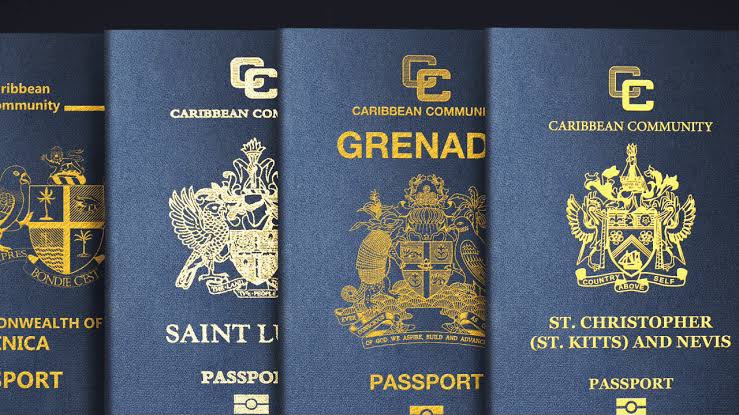


For years, rich Africans frustrated by visa delays and repeated rejections found an expensive escape route in Caribbean citizenship, but that option is now under threat as the EU pushes five island nations to end their “golden passport” programmes or lose visa-free access to Europe.
- The EU is pressuring five Caribbean countries to end their citizenship-by-investment ('golden passport') programmes or risk losing visa-free access to Europe by 2028.
- These programmes have become popular among wealthy Africans frustrated by high Schengen visa rejection rates, offering a backdoor to Europe.
- African clients, especially from Nigeria, lead applications for these Caribbean passports, spending up to $235,000 for easier business and travel opportunities.
- If Schengen access is lost, demand from Africans may fall sharply, though the passports will still offer routes to the US, UK, and other global markets.
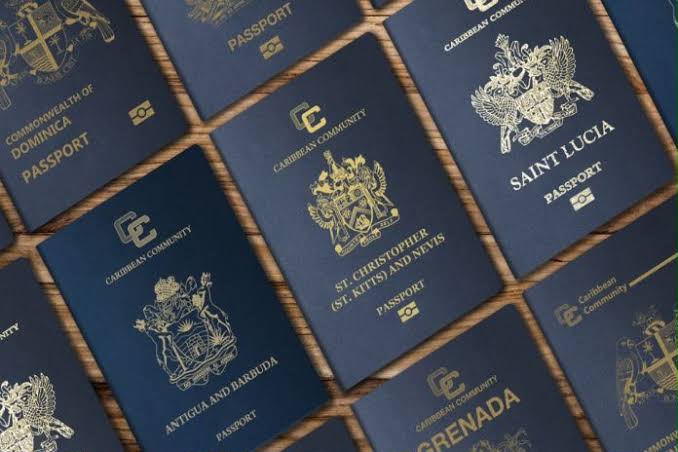
Brussels has given Antigua and Barbuda, Dominica, Grenada, Saint Kitts and Nevis, and Saint Lucia until 2028 to end their citizenship-by-investment programmes or risk losing visa-free access to the 29-country Schengen area.
The programmes allow foreign investors to acquire citizenship through qualifying financial contributions and have drawn strong demand from Africans whose passports offer limited access to major business and travel markets.
Nigeria, Africa’s most populous country, is among the most exposed, as its citizens accounted for about 16% of applications to Grenada’s programme in 2025, ahead of China at 12%, and remained a leading source market in the first quarter of 2026.
In comments to Business Insider Africa, Ukrainian-born investment migration expert Anatoliy Letaev said the proposed crackdown could hit African demand harder than other markets because access to Europe was the main attraction for many applicants.
“For many African applicants, access to Europe was the passport’s biggest benefit,” he said.
High visa rejection rates fuel demand
Crucially, demand for Caribbean passports reflects the difficulties many Africans face when applying for Schengen visas.
Although the global refusal rate eased slightly to 14.6% in 2025, several African countries remained far above that level.
Burundi recorded 53.4%, Senegal 51.9%, Nigeria 47.8%, Angola 45.4% and the Democratic Republic of Congo 40.1%.
Ethiopia recorded a 34% refusal rate, Algeria 31% and Cape Verde 21.4%, while Morocco submitted about 620,000 applications, making it one of the world’s largest sources of Schengen visa applications, according to figures released by the European Commission.
Moreover, African applicants had already lost an estimated €60 million in non-refundable fees from rejected applications in 2024, the latest year for which a continent-wide estimate is available.
These barriers have pushed some wealthy Africans towards Caribbean citizenship as a more reliable route to visa-free travel and predictable business mobility, with some applicants willing to spend about $235,000.
“Almost none of these people buy a Caribbean passport because they want to live in the Caribbean,” Letaev said. “They buy it because the passport they were born with does not work great for them.”
He added that, for a Lagos entrepreneur, a Grenadian or Dominican passport could make a business meeting in Europe predictable rather than dependent on an uncertain visa decision.
The programmes have consequently attracted applicants from Nigeria, Egypt, Ghana, Kenya, South Africa, Zimbabwe, Zambia, Angola, Algeria and Morocco.
By contrast, nationals of Mauritius and Seychelles already enjoy visa-free Schengen access and barely feature in Caribbean citizenship data.
DON'T MISS: Millions of Africans could lose Schengen free movement as calls grow to restrict non-EU travel
EU action could sharply weaken demand
The loss of Schengen access would remove one of the main attractions of Caribbean citizenship for African investors and could weaken demand more sharply than in markets where applicants already hold stronger passports.
Vanuatu offers a glimpse of what could follow. After the EU withdrew its visa-free access over concerns about the country’s citizenship-by-investment programme, the scheme survived but attracted a different type of buyer.
Demand fell among applicants seeking European travel, while interest remained among those pursuing second citizenship, personal security or access to specific markets.
Letaev, who holds Vanuatu citizenship, said the passport had continued to offer practical benefits despite losing Schengen access.
“I have experienced this firsthand. Even with European residency and fairly broad travel access already, there are still countries, Australia being one example, where the Vanuatu passport got me a visa that the Ukrainian passport couldn’t,” he said.
The Caribbean programmes could experience a similar shift rather than collapse completely, although the five states have already raised their minimum investment thresholds to $200,000 and tightened regulation and screening.
Grenada would retain a route to the US
Even if Schengen access is withdrawn, Caribbean passports would retain several benefits and citizenship already granted would remain valid.
Grenada, for instance, would keep its E-2 treaty with the United States, allowing eligible citizens to apply for investor visas.
However, people who obtain treaty-country citizenship through investment must generally live in that country continuously for three years before applying, under rules introduced in December 2022.
Caribbean passports would also continue to provide access to the United Kingdom, the United Arab Emirates, Singapore, China and several markets across Asia and Latin America.
Their value would therefore become more targeted, with investors choosing a passport for a specific travel, business or security purpose.
“What changes is that you now have to know which specific job you are hiring the passport to do, and buy for that job rather than for the brochure,” he said.
Africa has few alternatives
Africa currently has no direct replacement for the visa-free European access offered by Caribbean passports.
São Tomé and Príncipe launched a citizenship programme starting at $90,000 in 2025, while Egypt offers an investment route beginning at $250,000.
However, neither passport provides visa-free entry to the Schengen area, although Egyptian citizens are eligible for the US E-2 investor visa.
African investors may therefore increasingly combine a second passport with separate residence permits and visas rather than rely on one document for every purpose.
The dispute also highlights Africa’s wider mobility challenge. More than a decade after it was announced, the African Union passport remains unavailable to ordinary citizens, while the continent’s free-movement protocol has made limited progress.
Letaev said Europe could reduce African demand for investment passports more effectively by addressing the high visa refusal rates that helped create the market.
“If Brussels wants fewer golden passports in circulation, the most effective policy available is a visa process that ordinary African applicants can actually pass,” he said.