Gravel roads and drinking fuel Omaheke crashes
The police in the Omaheke region arrested 189 drunk drivers between 2023 and 2026, as stakeholders met at Gobabis to address the region’s rising road safety concerns. Regional police commander Heinrich Tjiveze revealed this during a consultative meeting on road accidents with the parliamentary standing committee on transport, infrastructure and housing at Gobabis yesterday. He […] The post Gravel roads and drinking fuel Omaheke crashes appeared first on The Namibian.
 Black News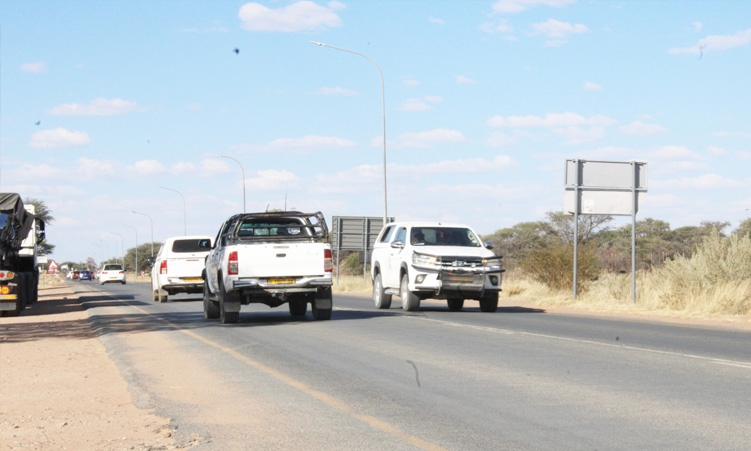
The police in the Omaheke region arrested 189 drunk drivers between 2023 and 2026, as stakeholders met at Gobabis to address the region’s rising road safety concerns.
Regional police commander Heinrich Tjiveze revealed this during a consultative meeting on road accidents with the parliamentary standing committee on transport, infrastructure and housing at Gobabis yesterday.
He said alcohol abuse is one of the leading contributors to road crashes in the region.
“Roaming farm and wild animals, pedestrians jaywalking, fatigue among long-distance drivers and speeding also contribute to road accidents,” he said.
Tjiveze said 109 people were arrested during the 2024/25 financial year and 73 during the 2023/24 financial year.
Livestock, including donkeys, horses and cattle, is one of the major challenges to road safety, he said.
He said dust from gravel roads and loose surfaces also reduce visibility, increasing the likelihood of rollovers and a loss of control over vehicles.
“The B6 Trans-Kalahari Highway and the C22/B14 have experienced a continuous increase in heavy trucks. This may result in congestion and slow-moving trucks, driver fatigue, and dangerous overtaking,” he said.
Tjiveze said road safety remains a concern with about 102 881 inhabitants in the region using the roads and international guests travelling into and out of the region.
The hearing brought together government officials, traditional leaders and residents to discuss measures to improve road safety in the region.
Tjiveze said the police, together with the Roads Authority and the Gobabis Municipality, conduct regular road traffic checkpoints, visible patrols and traffic law-enforcement operations to curb accidents.
“The police conduct alcohol breath testing and strict enforcement against driving under the influence of alcohol, as well as public awareness and road safety campaigns through schools and taxi ranks,” he said.
MORE FENCES
Gobanin Traditional Authority councillor Cynthia Araes during the consultation called for roads to be fenced off to prevent animals from straying onto highways and causing collisions.
She urged authorities to tighten liquor trading regulations, saying bars should close before midnight to curb alcohol-related crashes.
“Licences should be looked into so that bars can close before midnight,” she said.
Araes is also concerned about the shortage of health personnel to respond to road accidents.
Omaheke health director Jeremia Shikulo told the meeting the region is facing a critical shortage of ambulances, with only 19 of its 53 vehicles currently operational.
He said 34 ambulances are out of service because of inadequate funding, limiting emergency response capacity across the region.
Hirukevi Kaapama from the Maharero Royal Traditional Authority proposed reducing legally permitted speed limits for public transport and heavy vehicles operating on designated gravel roads to curb accidents.
He recommended introducing driver education programmes focusing on safe driving in dusty conditions targeting taxis, buses and truck operators.
“Drivers must increase following distances on gravel roads from the conventional three-second rule to between six and eight seconds to allow dust to settle and improve visibility,” he suggested.
Parliamentary standing committee member Erickson Ndawanifa said the consultation was held to get residents’ views on transport and housing infrastructure.
The post Gravel roads and drinking fuel Omaheke crashes appeared first on The Namibian.