Every vote matters: Close elections show ballot impact
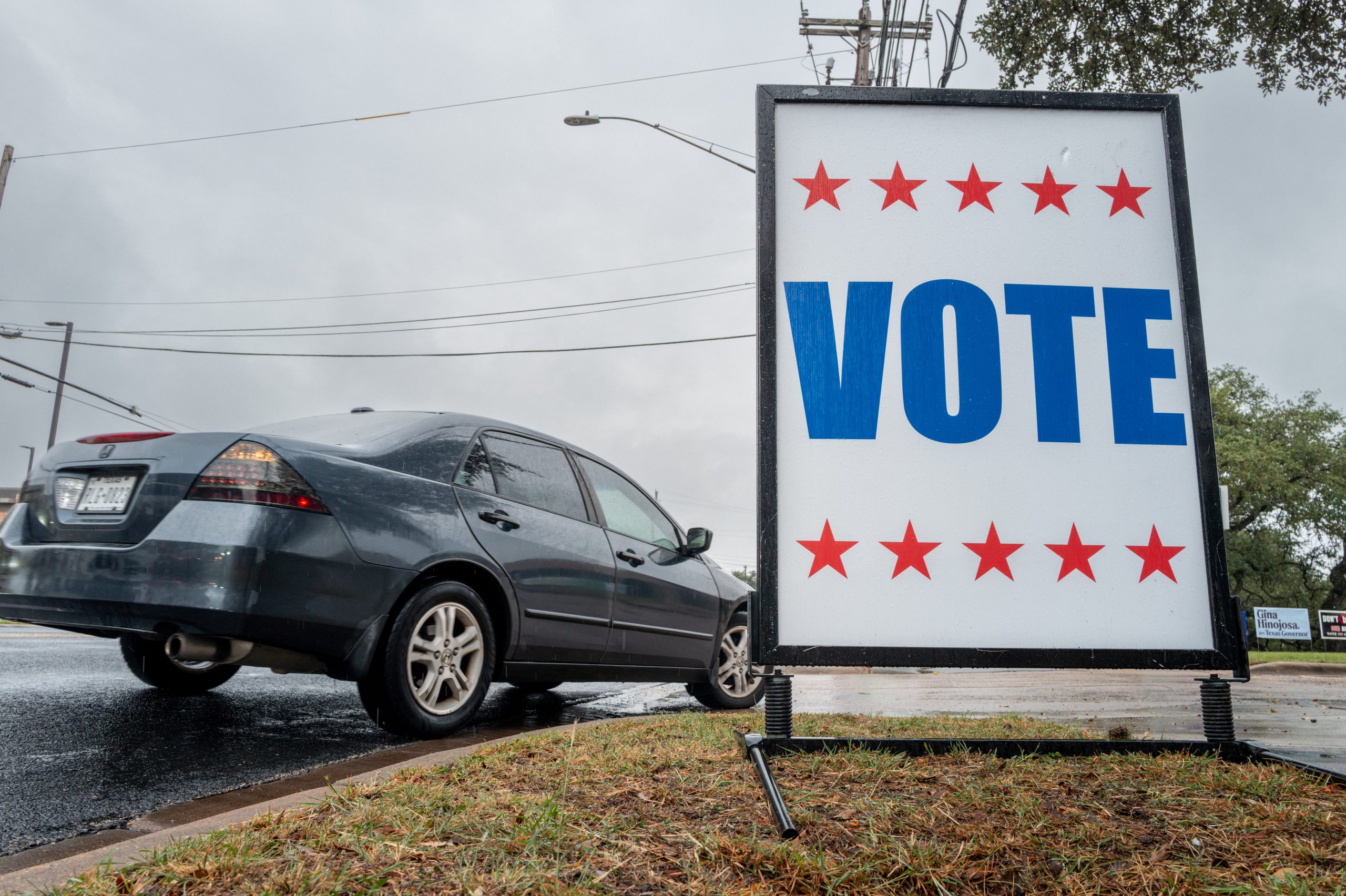
Razor-thin election margins across Texas and the nation highlight the importance of every ballot cast.
 Black News

When Mississippi voters went to the polls Nov. 3, few could have imagined that one of the nation’s most closely watched U.S. Senate races would come down to just a handful of votes.
By Wednesday morning, Democrat Scott Colom’s lead over Republican incumbent Cindy Hyde-Smith had narrowed to just 43 votes. By Thursday, that margin had grown to more than 1,000 votes, with approximately 96% of the expected vote counted. The race remained too close to call.
Colom is seeking to become Mississippi’s first Black U.S. senator since Reconstruction and the first Democrat elected to the seat in more than four decades.

A similarly tight contest unfolded in Alaska, where Democrat Mary Peltola led Republican incumbent Sen. Dan Sullivan by just 637 votes, with approximately 74% of the expected vote counted Thursday. Alaska’s ranked-choice voting system and outstanding mail ballots mean the final outcome could take weeks to determine.
The close contests offer a reminder that even in elections involving hundreds of thousands of voters, a relatively small number of ballots can determine the outcome.
And Texas has experienced its share of razor-thin elections.
Texas races decided by a handful of votes
In Arcola, a small Fort Bend County community southwest of Houston, voters have seen firsthand how much a single ballot can matter.
In May 2025, Fred Burton and Ebony Sanco finished in an exact tie for City Council Position 5, each receiving 53 votes. The deadlock forced a June runoff, where Burton prevailed 76-70, winning by just six votes.
A year earlier, another Arcola City Council race was decided by seven votes. Rosemary Bigby defeated Jasmine Blackmon 92-85 for Position 2. In that same election, Veeda Williams won the mayor’s race by just 15 votes.

Corpus Christi experienced an even more unusual outcome in December 2024, when a City Council runoff between Everett Roy and Billy Lerma ended in a 1,916-1,916 tie. A recount confirmed the results, forcing officials to settle the election by drawing lots. Roy ultimately won the seat through a drawing involving numbered beads.
Even larger elections aren’t immune to narrow margins.
In Fort Bend County’s 2022 election for judge of the 240th Judicial District, Democrat Surendran Pattel initially led Republican Edward Krenek by just 36 votes. The margin eventually widened to 194 votes after additional ballots were counted, but the race demonstrated how close elections can remain even when more than 243,000 votes are cast.
Why every vote matters
For Annie Benifield of the Houston Voters Initiative, these elections illustrate why voter participation matters at every level of government.
“Every vote is more than a number—it is a voice, a choice, and an expression of the power we hold as citizens. Razor-thin election margins remind us that democracy is not shaped by millions of votes alone, but by individual voters who recognize that their participation matters,” said Dr. Annie Johnson Benifield, Founder, President & CEO of the Houston Voting Initiative.
Municipal elections often attract far fewer voters than presidential or statewide contests, even though city councils, school boards, and other local governing bodies make decisions affecting property taxes, public safety, infrastructure, and education.
“Every vote is more than a number—it is a voice, a choice, and an expression of the power we hold as citizens”
Dr. Annie Benifield
The Arcola elections provide a particularly striking example. In the 2025 council runoff, only 146 votes were cast, and six votes determined the winner. In the original election, a single additional vote for either candidate would have broken the tie.
Unlike presidential elections, which attract national attention and extensive campaign spending, municipal elections often take place with little fanfare. Voters may recognize the candidates’ names without knowing much about their platforms, while others may not realize an election is taking place. Yet those elected to city councils make decisions about neighborhood development, infrastructure, public safety, and the spending of local tax dollars.
In smaller communities, where turnout can be measured in the hundreds rather than thousands, a few additional voters can change the outcome of an election.
“When an election is decided by a handful of votes, we are reminded that the difference between having a voice in our future and surrendering that voice can be as simple as showing up at the ballot box. Your one vote may not determine every election, but collectively, our votes determine the direction of our democracy. Never underestimate the power of ONE—because every vote counts, every voice matters, and democracy is stronger when we all participate,” Benifield added.