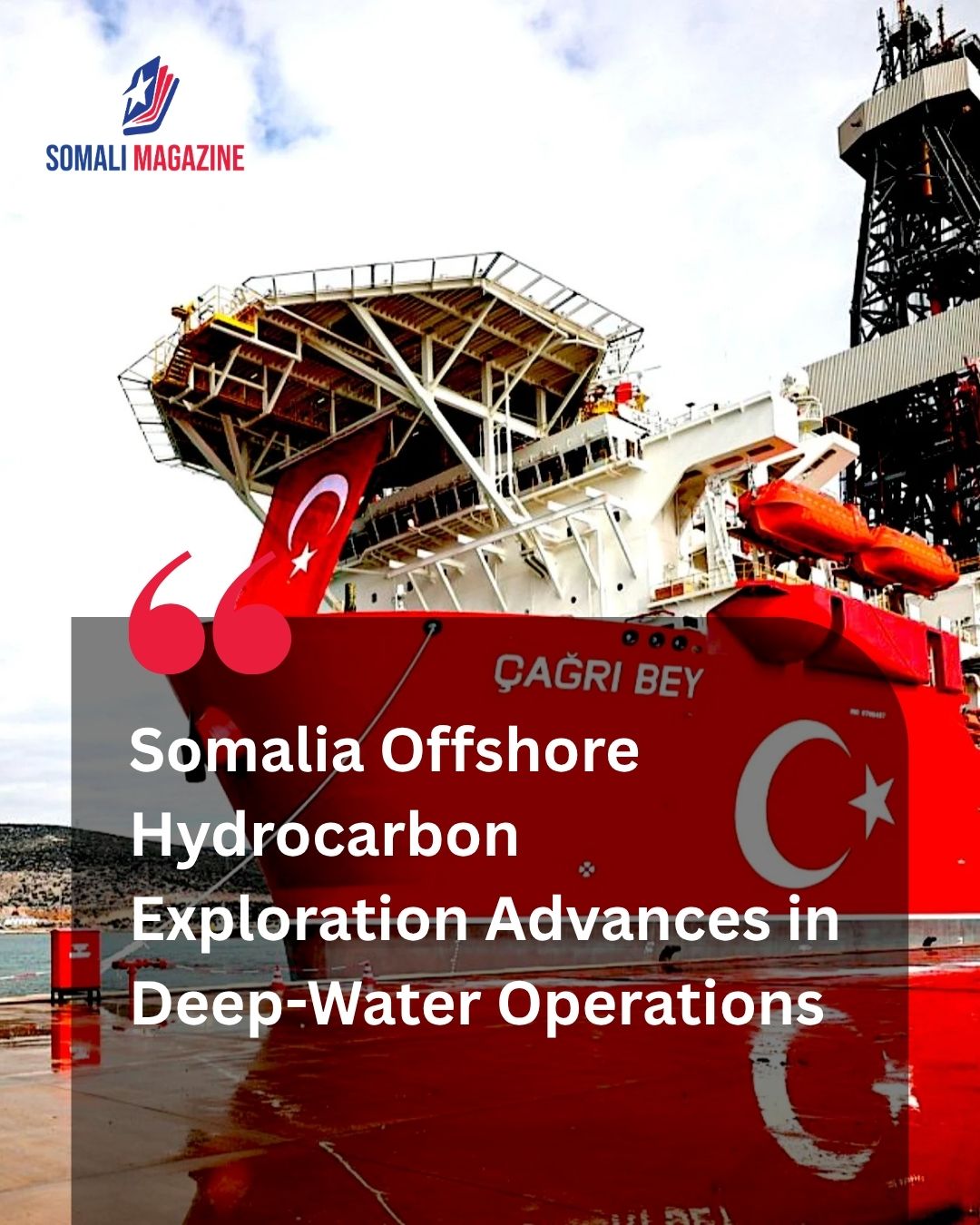
Somalia offshore hydrocarbon exploration has taken center stage as Turkish deep-sea operations advance steadily along the Indian Ocean coastline. Led by state-owned energy entity Turkish Petroleum using specialized deep-water vessels such as the Çağrı Bey, the exploratory campaign aims to map and evaluate potential subsea petroleum deposits within designated maritime energy blocks. Official statements from Ankara indicated that initial drilling tasks in waters ranging up to 3,000 meters deep could wrap up within a target window of six to nine months, contingent on sea weather patterns and logistical conditions. The current campaign follows months of preliminary work by the seismic research vessel Oruç Reis, which conducted extensive 3D surveys across three licensed offshore zones spanning roughly 5,000 square kilometers each.
Federal officials in Mogadishu have framed the project as a critical economic milestone, expressing hope that unlocking potential subsea reserves could catalyze infrastructure development, diversify government revenue streams, and support post-conflict nation-building efforts. Geotechnical assessments cited by international energy agencies suggest the broader region could hold significant crude oil and natural gas potential, though analysts emphasize that exploratory wells serve only as an initial step to determine commercial viability. Beyond subsea operations, bilateral agreements between the two nations also encompass potential onshore exploration, representing a comprehensive energy framework designed to build domestic technical capacity.
However, the initiative unfolds against a backdrop of complex political and security dynamics. Opposition lawmakers and regional political leaders have raised questions regarding transparent revenue-sharing mechanisms, legislative oversight, and legal frameworks governing federal energy contracts. Furthermore, naval security remains a vital operational priority. Frigates and maritime patrol assets continue to monitor international waters around the drillships to mitigate risks linked to regional piracy and coastal instability. Despite these ongoing discussions, energy sector analysts regard the current maritime mission as a defining moment for energy development across the Horn of Africa, marking the most concentrated deep-water technical campaign in the nation’s history.

 Black News