D160M Constitution thrown away with birth water – Counsel Camara
The forum, held under the theme "The Gambia's Political, Judicial and Security Reforms: Progress, Challenges and Recommendations," is part of WADR's project "Voices for Democracy and Freedom in West Africa," supported by the National Endowment for Democracy. Tracing constitutional history, Camara noted that the 1997 Constitution has seen more than 53 amendments out of 232 provisions since its adoption. "In the 1997 constitution, 232 provisions from 1997 to now, 53 or more amendments we know all in disguise of giving us a perfect constitution have not given us a perfect constitution," he said. He recalled the high expectations after the 2017 transition that ended Yahya Jammeh's 22-year rule, when Gambians anticipated a new era with strong transitional justice mechanisms and a constitution reflecting popular will. "Then D-Day came 2017, we said the dictator is gone now we have a new era. We are transitioning from dictatorship to so-called democracy and we need to have transitional justice mechanisms in place to ensure that a very good constitution that will reflect on the wishes and aspirations of the people of The Gambia are being given," he said. While institutions like the Janneh Commission and the Truth, Reconciliation and Reparations Commission (TRRC) were well-intentioned and produced significant findings, implementation remains a concern, he said. "TRRC, very good, well intentioned, very good findings were made, where are they now? Gathering dust somewhere even though I keep hearing that they have been implemented. How long will I hear that it is being implemented," Camara questioned. He reserved particular criticism for the fate of the draft constitution produced by the Constitutional Review Commission (CRC). He said over D160 million was spent on pre-draft and post-draft consultations domestically and internationally, resulting in what he described as a transformational document grounded in empirical data of what Gambians wanted. "It can be challenged, then what happened? The baby was literally thrown away with the birth water on the very first day it was presented to the National Assembly. And we still sit down and say we need constitutional reforms. Do we? Seriously?" he asked. Camara challenged participants to reflect on the essence of democracy beyond formal structures. "Is having a constitution a tenet to democracy? You need a constitution to be a democratic state. Is having a judiciary a tenet of democracy? Is having a national assembly a tenet of democracy? Is having periodic elections a hallmark of democracy?" he asked. "We have them in our 1997 constitution but can we call ourselves democratic? It is not about having institutions, it is about whether the institutions served the people. Whether they reflect on the wishes and aspirations of the people. Whether they have provided the checks and balances that are desirable in a democratic society." Camara also disagreed with former US President Barack Obama's assertion that Africa needs strong institutions, not strong persons. "I once heard a leader, Barack Obama, say that Africa does not need strong persons, strong institutions. I beg to disagree... Africa needs strong institutions and strong persons at the same time," he said. On why the CRC draft failed, Camara offered two reasons: the executive did not sufficiently advocate for the document before lawmakers, and there was no negotiation among political parties on the desirability of a new post-Jammeh constitution to enable a proper transition.
 Black News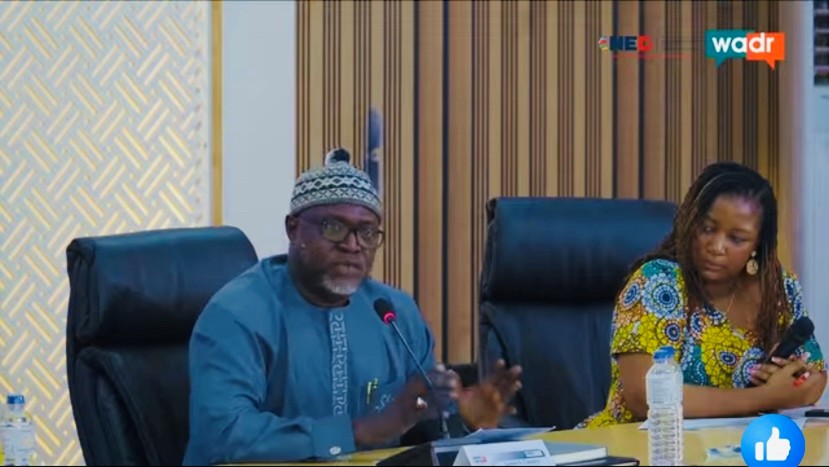
The forum, held under the theme "The Gambia's Political, Judicial and Security Reforms: Progress, Challenges and Recommendations," is part of WADR's project "Voices for Democracy and Freedom in West Africa," supported by the National Endowment for Democracy.
Tracing constitutional history, Camara noted that the 1997 Constitution has seen more than 53 amendments out of 232 provisions since its adoption.
"In the 1997 constitution, 232 provisions from 1997 to now, 53 or more amendments we know all in disguise of giving us a perfect constitution have not given us a perfect constitution," he said.
He recalled the high expectations after the 2017 transition that ended Yahya Jammeh's 22-year rule, when Gambians anticipated a new era with strong transitional justice mechanisms and a constitution reflecting popular will.
"Then D-Day came 2017, we said the dictator is gone now we have a new era. We are transitioning from dictatorship to so-called democracy and we need to have transitional justice mechanisms in place to ensure that a very good constitution that will reflect on the wishes and aspirations of the people of The Gambia are being given," he said.
While institutions like the Janneh Commission and the Truth, Reconciliation and Reparations Commission (TRRC) were well-intentioned and produced significant findings, implementation remains a concern, he said.
"TRRC, very good, well intentioned, very good findings were made, where are they now? Gathering dust somewhere even though I keep hearing that they have been implemented. How long will I hear that it is being implemented," Camara questioned.
He reserved particular criticism for the fate of the draft constitution produced by the Constitutional Review Commission (CRC).
He said over D160 million was spent on pre-draft and post-draft consultations domestically and internationally, resulting in what he described as a transformational document grounded in empirical data of what Gambians wanted.
"It can be challenged, then what happened? The baby was literally thrown away with the birth water on the very first day it was presented to the National Assembly. And we still sit down and say we need constitutional reforms. Do we? Seriously?" he asked.
Camara challenged participants to reflect on the essence of democracy beyond formal structures.
"Is having a constitution a tenet to democracy? You need a constitution to be a democratic state. Is having a judiciary a tenet of democracy? Is having a national assembly a tenet of democracy? Is having periodic elections a hallmark of democracy?" he asked.
"We have them in our 1997 constitution but can we call ourselves democratic? It is not about having institutions, it is about whether the institutions served the people. Whether they reflect on the wishes and aspirations of the people. Whether they have provided the checks and balances that are desirable in a democratic society."
Camara also disagreed with former US President Barack Obama's assertion that Africa needs strong institutions, not strong persons.
"I once heard a leader, Barack Obama, say that Africa does not need strong persons, strong institutions. I beg to disagree... Africa needs strong institutions and strong persons at the same time," he said.
On why the CRC draft failed, Camara offered two reasons: the executive did not sufficiently advocate for the document before lawmakers, and there was no negotiation among political parties on the desirability of a new post-Jammeh constitution to enable a proper transition.