Chamber Project strikes first to open St. Louis’ classical music season
Chamber Project St. Louis scooped the St. Louis Symphony Orchestra in opening the 2026–2027 classical music season. On the Sunday afternoon before SLSO’s Wednesday evening season opener on Art Hill, Chamber Project staged what already was their second concert of the new season. Fitting for this small, scrappy arts organization punching far above its weight, […] The post Chamber Project strikes first to open St. Louis’ classical music season appeared first on St. Louis American.
 Black News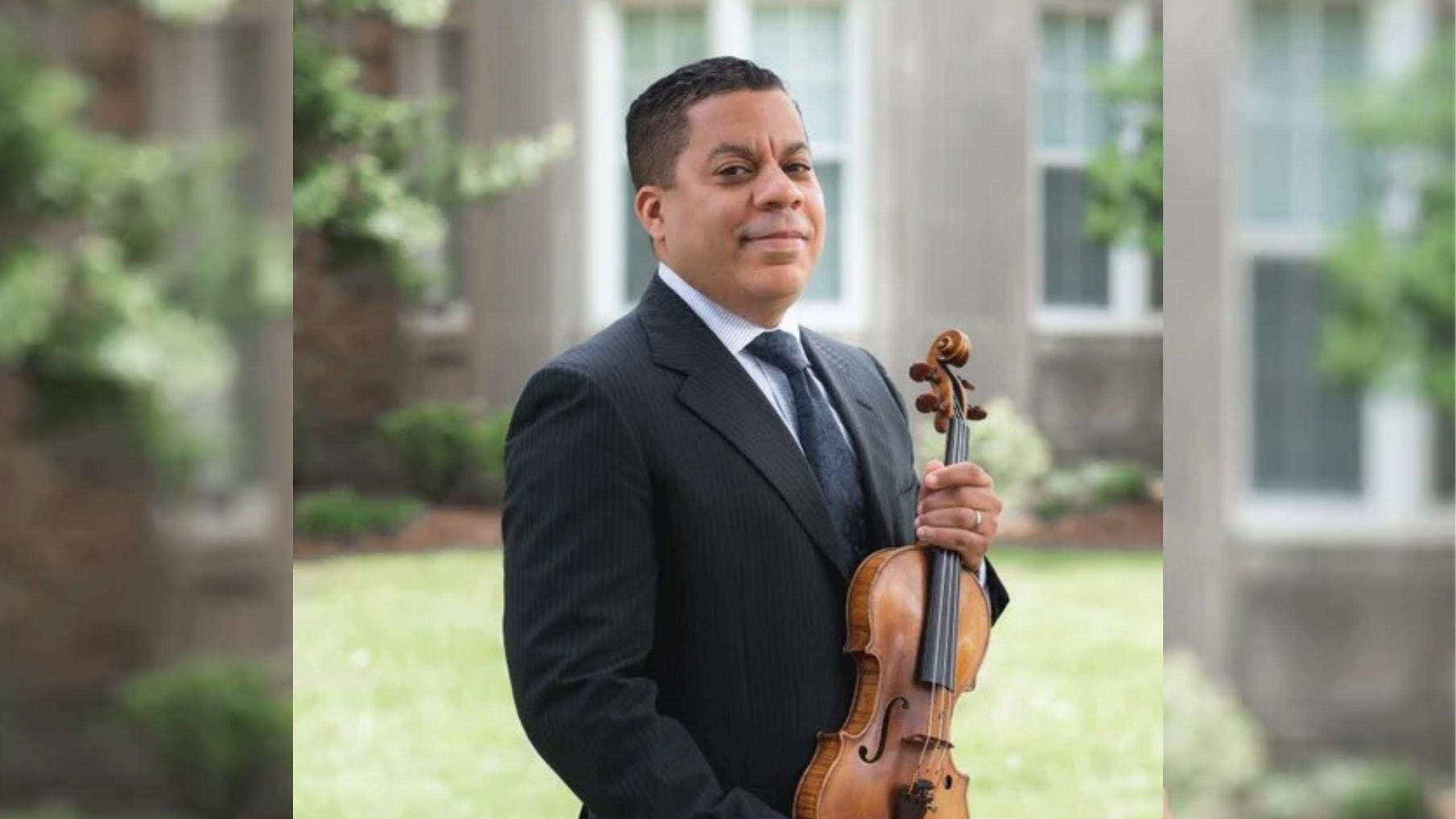

Chamber Project St. Louis scooped the St. Louis Symphony Orchestra in opening the 2026–2027 classical music season. On the Sunday afternoon before SLSO’s Wednesday evening season opener on Art Hill, Chamber Project staged what already was their second concert of the new season. Fitting for this small, scrappy arts organization punching far above its weight, the concert was themed around the Warrior.
Chamber Project cofounder Dana Hotle framed the four pieces with comments on how each selection developed the theme.
I do not read program notes at classical concerts. They tend to be written skillfully by people who know much more about the tradition than I do, and they have a way of taking the music away from me and placing it in a narrative where it may belong, but should not be confined.
… I do not read program notes at classical concerts. They tend to be written skillfully by people who know much more about the tradition than I do, and they have a way of taking the music away from me and placing it in a narrative where it may belong, but should not be confined.
They opened with the first movement of a composition by a man who opposed the Nazis and risked his own life to shelter the Nazis’ victims, Endre Szervánszky. Such an introduction cast a long shadow over the music that followed, and it could be difficult to hear the music for itself rather than as an illustration of the compelling narrative we had just heard. That is why I do not read program notes at classical concerts. They tend to be written skillfully by people who know much more about the tradition than I do, and they have a way of taking the music away from me and placing it in a narrative where it may belong, but should not be confined.
When I made myself tune out heroic resistance to murderous bigots and listen to the first movement of Szervánszky’s “Trio for Flute, Violin and Viola” for itself, I heard the piercing clarity of chamber music. I heard how one flute (played by Jennifer Gartley) paired with only two other stringed instruments (Carolina Neves on violin, Laura Reycraft on viola) clarified the colors produced by those strings.
Hotle introduced the second selection as the musical statement of a composer, Dame Ethel Smyth, who fought for women’s right to vote and was even jailed for her activism. When I put aside thoughts of the Suffragettes (and the two British rock stars who sang that word in a rock song, Paul McCartney and David Bowie), what I heard in the second movement of “String Quartet in e minor” was the taut interplay of four stringed instruments. I heard how fully realized, composed and in command Smyth was of these four sets of four strings and their resonant woody chambers.
Chamber Project is woman-led and the organizers easily could have fielded an all-female string quartet, so it was striking that the lead violin part in this Suffragette-composed quartet was assigned to a man, Kyle Lombard. (He was joined by Neves, Reycraft and Marta Simidtchieva on cello.) One of St. Louis’ relatively few professional African-American classical musicians, Lombard must be the most accomplished violinist in the region who does not have a locker at Powell Hall.
Only the third piece on the program, Part II of Benkei’s Standing Death for String Quartet by Paul Wiancko, took up the Warrior theme in terms recognizable by the U.S.’s current boy secretary of war. This music needed no martial introduction to evoke the sounds of war. The same string quartet conjured the sounds of whistling and thudding arrows and crashing armaments. They wielded their bows like swords. They plucked their strings to the rhythm of warriors marching in formation. They gradually faded their plucking like a warrior slowly succumbing to death throes.
Lombard, Reycraft and Simidtchieva stayed onstage as a trio to perform the afternoon’s first complete composition after three movements of larger works, Ludwig van Beethoven’s “String Trio in C minor.” Hotle pitched this as a more metaphorical battle, a prodigiously inventive young composer struggling against the weight of tradition and the constraints of inherited forms. Beethoven won this war, and victors rewrite histories, so this piece now sounds to us like music is supposed to sound rather than the surprising salvo of a young warrior new to the field of battle. The performances, as throughout the concert, were poised and thrilling.
Chamber Project St. Louis presented Warrior in a large, handsome event space at the Clark Family Branch of the St. Louis County Public Library in Frontenac that they positively packed with intent listeners. The parking lot outside overflowed capacity; fortunately, Merrill Lynch, the library’s neighbor to the north, is chill about absorbing spillover parking. On a blistering hot Sunday in September that also served as opening day for the National Football League, it looked like classical music in St. Louis has a very bright season ahead.
Visit https://www.chamberprojectstl.org/current-season26-27.
The post Chamber Project strikes first to open St. Louis’ classical music season appeared first on St. Louis American.