Beyond Representation: Black male educators are changing outcomes for Black students
PHILADELPHIA—Black men make up less than 2% of America’s teaching force. Yet from Nov. 13-15, more than 1,500 educators, researchers, policymakers. Mentors and students gathered at the Philadelphia Downtown Marriott for the ninth annual Black Men in Education Convening to discuss a question that extends beyond teacher recruitment: Are Black male educators changing outcomes for […] The post Beyond Representation: Black male educators are changing outcomes for Black students appeared first on Final Call News.
 Black News
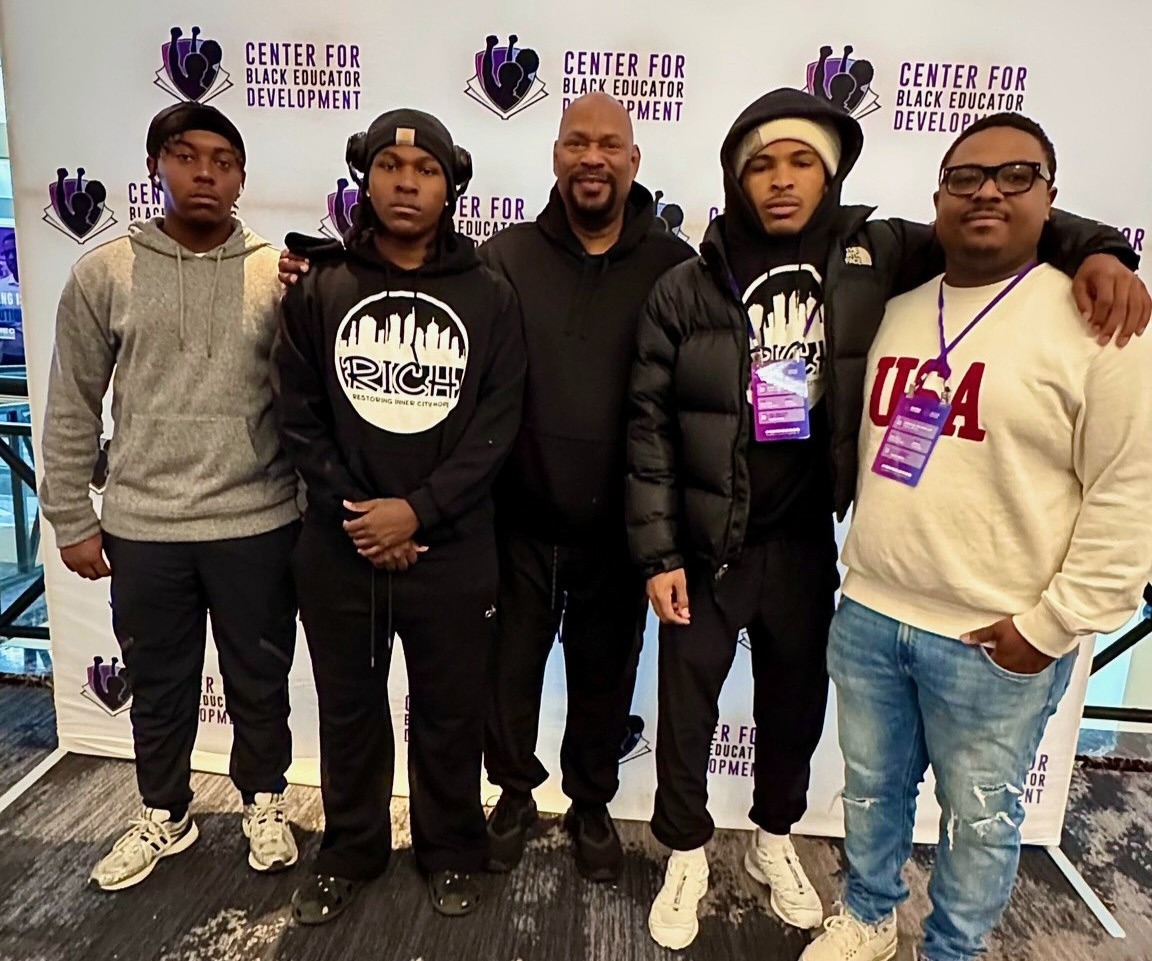
PHILADELPHIA—Black men make up less than 2% of America’s teaching force. Yet from Nov. 13-15, more than 1,500 educators, researchers, policymakers. Mentors and students gathered at the Philadelphia Downtown Marriott for the ninth annual Black Men in Education Convening to discuss a question that extends beyond teacher recruitment: Are Black male educators changing outcomes for Black students?
Judging from the research presented, the testimony shared and the experiences of educators attending the conference, many participants believe the answer is yes. But they also acknowledged that significant challenges remain.
Held under the theme, “Rooted in History: Constructing the Next 100 Years of Education,” the convening focused on recruitment and retention, student achievement, culturally relevant teaching and the future of Black education. Philadelphia Mayor Cherelle Parker, Dr. Bettina Love, Dr. Chris Emdin and Pulitzer Prize winner Nikole Hannah-Jones were among the featured speakers.
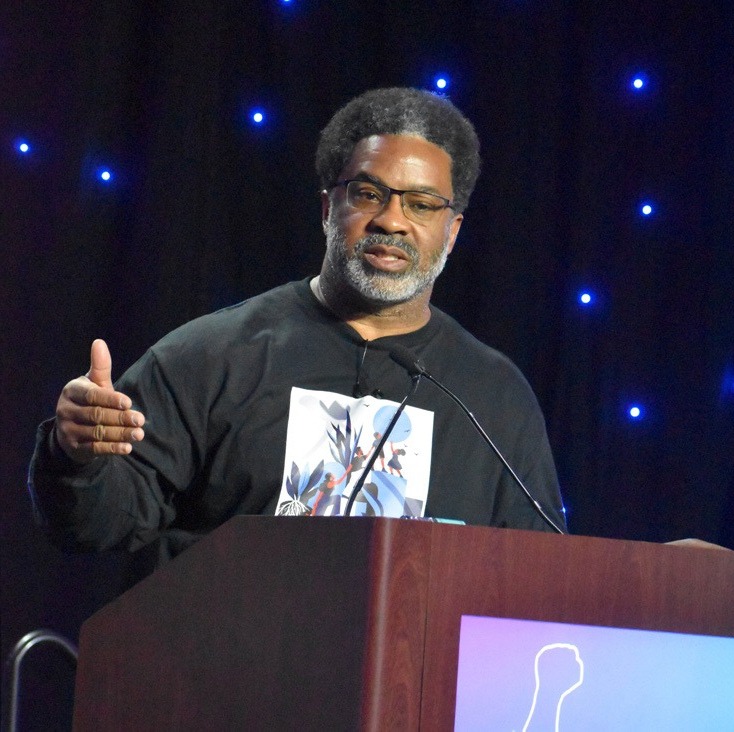
Opening the conference, Winston Cox, Chariman of the Board of the Center for Black Educator Development, connected the gathering’s mission to the vision of historian Carter G. Woodson, who established Negro History Week in 1926 to challenge the exclusion of Black history from American education Mr. Cox said.
“We have to reach back while moving forward,” Dr. Hayes said.
Referencing the Sankofa symbol, which encourages people to retrieve lessons from the past while moving into the future, he reminded attendees that innovation and technology should not come at the expense of historical memory.
“As we explore tools like artificial intelligence, we must stay rooted in ancestral intelligence,” he said. That message echoed throughout the gathering.
For educator Foley Kouevi, a member of the Center for Black Educator Development’s first Future Teachers of Excellence cohort, the conversation was deeply personal. “My childhood was shaped by school, but even more by my relationships with the Black men and boys around me,” he said.
Mr. Kouevi described growing up around uncles, neighbors, mentors and community members whose encouragement shaped his understanding of himself and his place in the world. “That acknowledgment is survival,” he said.
The importance of affirmation, mentorship and identity surfaced repeatedly as speakers discussed the role Black male educators can play in helping students navigate educational systems that have often underserved them.
A National Teacher of the Year, Rodney Robinson described himself as an “opportunity creator.”
Growing up, he said, adults opened doors for him that many of his peers never encountered. Today, he considers it his responsibility to create those same opportunities for his students.
“I’ve had students become UFC fighters, doctors and lawyers,” Mr. Robinson said. “I remember those same students when people told them their dreams were stupid.”
For Mr. Robinson, educational success extends beyond grades and test scores. It also means helping students envision possibilities beyond the limitations others place upon them.
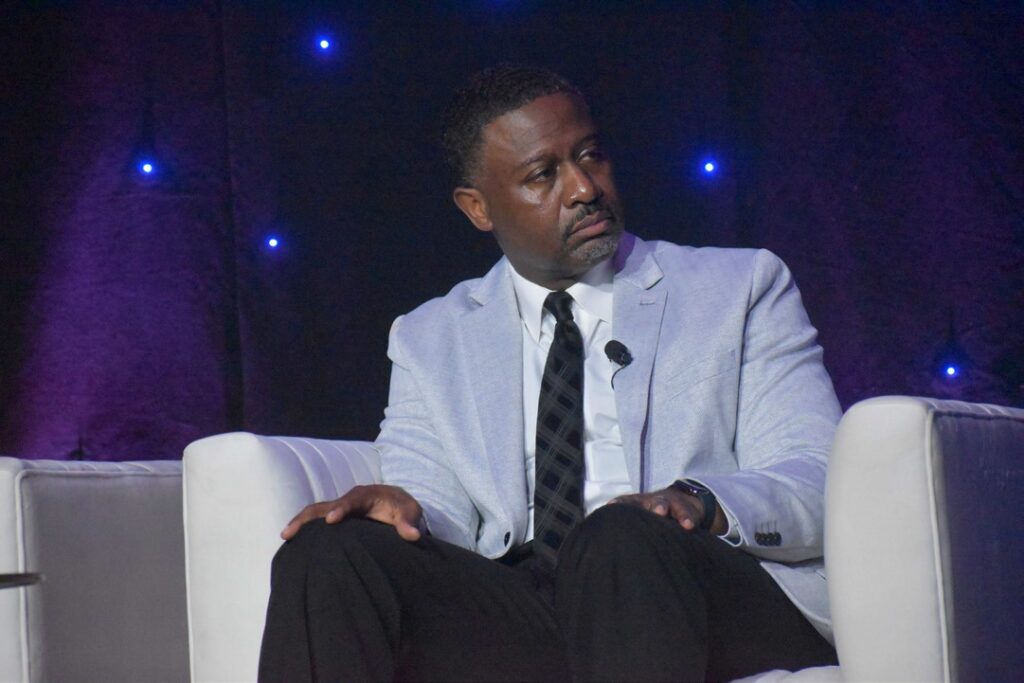
“We don’t just need more Black books,” he said. “We need more conscious Black folks.”
That distinction between representation and transformation emerged as a recurring theme.
Sharif El-Mekki, founder and chief executive officer of the Center for Black Educator Development, explained that the conference was originally created as an annual gathering where educators could gather, share progress and identify challenges.
“The idea was that this convening was like a checkpoint,” Mr. El-Mekki told The Final Call. “From one fall to the next, people were in their own cities supporting Black men and Black students, then coming back here to report.”
Over time, he said, the movement has grown as more organizations have committed themselves to supporting Black educational outcomes. “There are more organizations who’ve decided that we are going to proactively support the Black educational experience in our own places,” he said.
Mr. El-Mekki pointed to growing confidence among Black educators as one measurable sign of progress. “The most important part that we see measurable growth in is how people are feeling about the profession, how they feel about themselves,” he said. “There was some research that showed Black educators had the highest morale.”
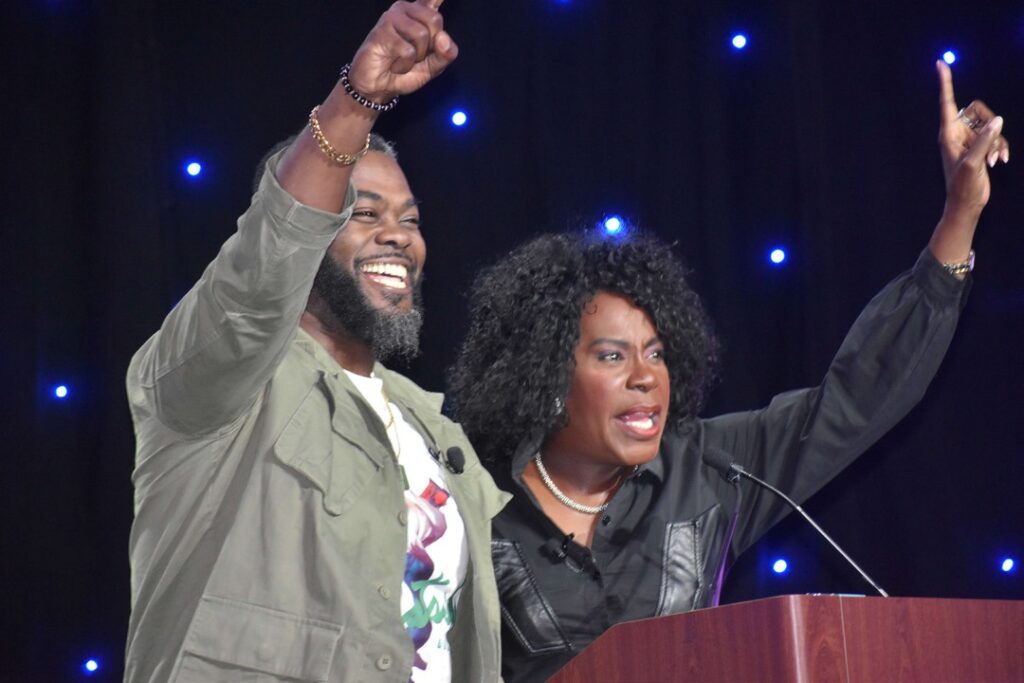
Still, he acknowledged a major obstacle.
“We still gotta deal with the attrition rate,” he said. “Attrition rate is still far too high for us to make the impact that we wanna see.”
Researcher Saroja Warner of Hyattsville, Maryland, said substantial evidence now exists showing the positive impact Black male educators have on students.
“We can say, empirically now, with actual evidence, not anecdotally, that Black male educators matter in terms of academic and social outcomes for all children, but especially Black boys,” she told The Final Call.
Yet Ms. Warner cautioned that progress must ultimately be measured by concrete results.
“Five years from now, the proof will be in the numbers: how many young Black men are in the pipeline, how many are in teaching, and how many are still there three years or more.”
Winston Cox, chairman of the board of the Center for Black Educator Development, echoed those concerns. “We’re still hovering at under 2% of Black men in the field of education,” Mr. Cox said. “We can never rest until we start to really move the needle on that.”
According to Mr. Cox, recruitment alone will not solve the problem.
“It’s not just enough to recruit Black men. We need to develop and retain them at the highest level,” he said.
Much of the discussion centered on the realities facing Black boys in classrooms today.
Jacob Boss, a fourth-grade teacher at Thompson Elementary School in Washington, D.C., said many students arrive carrying burdens schools often fail to recognize.
“A lot of my students are impacted by community violence, gun violence, and also just a lack of consistent, healthy role models,” he said.
Mr. Boss argued that many Black boys are labeled before educators take time to understand their circumstances. “They get an automatic label put on them that might not be placed on other students because they’re young Black boys,” he said.
For Mark Anderson, an instructional algebra coach in Philadelphia, belief and relationship-building remain among the most powerful interventions available. “If we don’t believe in our Black boys, then who will?” he asked. “It might be a little rough around the edges now, but I’m not going to give up on you.”
According to Mr. Anderson, meaningful learning begins with trust. “Relationship building is the key,” he said. “If students don’t trust you or know you, they’re not going to work for you.”
Several attendees argued that understanding trauma is equally important.
Josue Garcia, director of community relations for Timoteo Sports in North Philadelphia, said educators often overlook the emotional burdens students bring into school. “Teaching, education, you have to get to a child’s trauma,” Mr. Garcia said.
He also expressed concern about the way Black history continues to be marginalized. “The biggest challenge facing us is the erasure of our history, the whitening of our textbooks,” he said.
Lydia Parsons is a science teacher with Belmont Charter Network. She described education as one of the strongest long-term responses to violence and poverty. “If we fight crime with education and give our students an equitable chance, they will be as successful,” she said.
For Mr. El-Mekki, improving student outcomes remains the ultimate measure of success.
“How our students are doing, that’s the metric,” he said. “Not just the numbers and percentages of Black men teachers.”
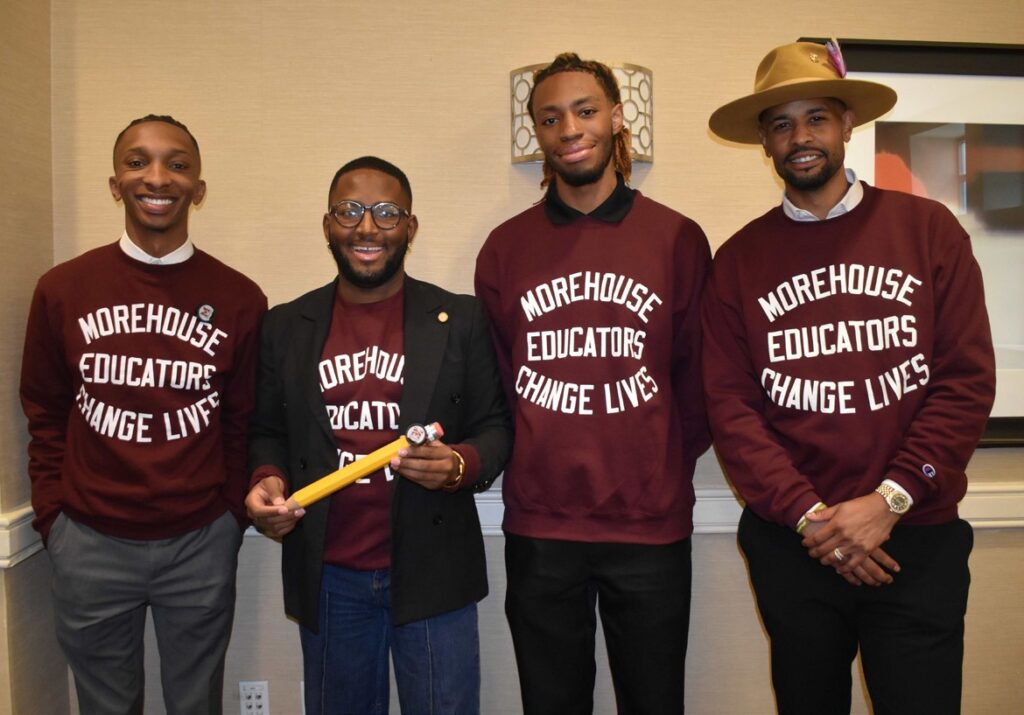
To address that challenge, the organization has increasingly focused on developing future educators through high-school teaching academies.
“We started offinviting youth into the profession,” he said. “We are in 17 high schools around the country.” His goal is expansion. “Five years from now, who have we invested in today that will be leading this work?” he asked.
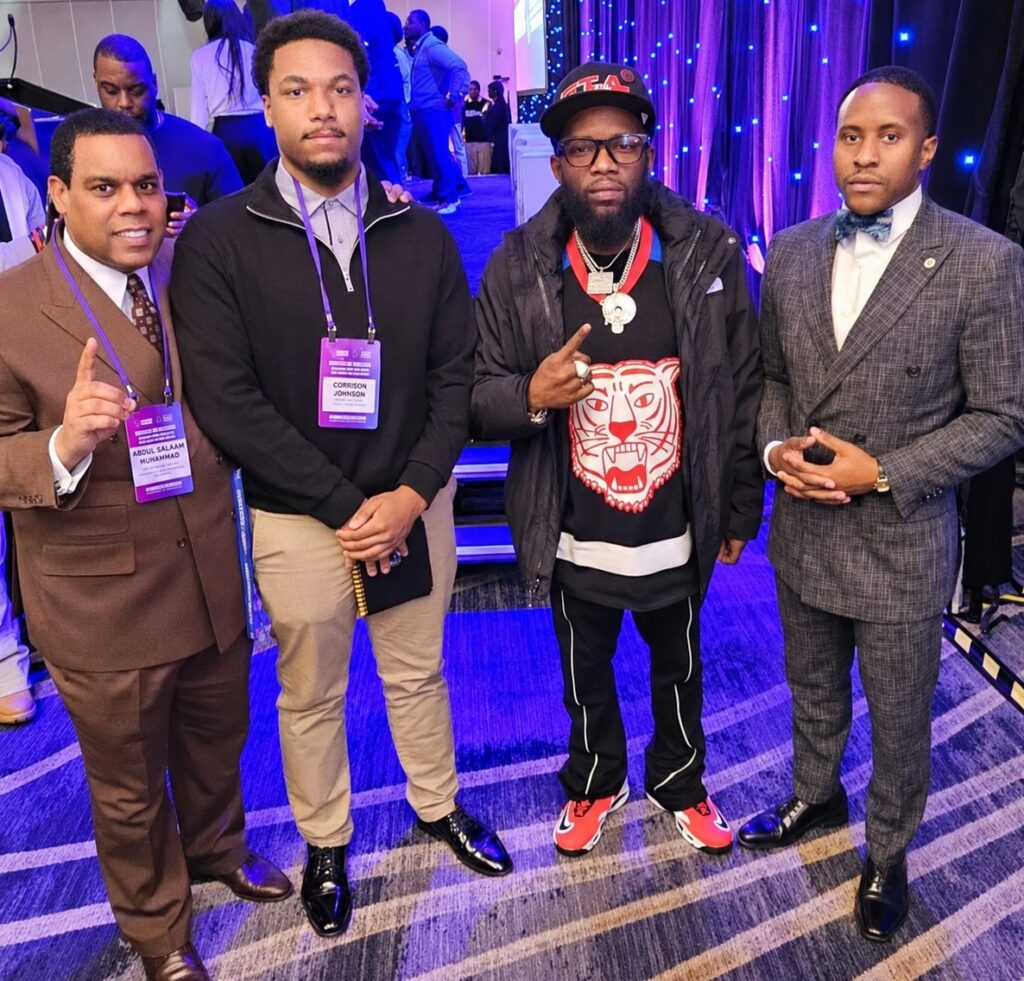
Among those attending the convening was Student Minister and Student Imam Abdul Salaam Muhammad of Mosque No. 6 in Baltimore.
He was attending as part of Baltimore’s Connexions: A Community Based Arts School, and he connected the efforts of the convening to a longer tradition of Black educational self-determination.
In the 1930s, the Most Honorable Elijah Muhammad, Eternal Leader of the Nation of Islam and the early Muslims, removed their children from the public schools to educate them in their own school.
“The Teachings of the Honorable Elijah Muhammad and the Honorable Minister Louis Farrakhan called for us to establish an independent school, Muhammad University of Islam, as a model of what we could do as a people,” Student Min. Abdul Salaam Muhammad said.
For Student Minister Abdul Salaam Muhammad, independence remains central to improving educational outcomes. “When we control and own our own situations, the outcomes are much better for us,” he said.
Reflecting on the conference, he described it as one of the most impactful educational gatherings he has attended. “You can come to a gathering of Black educators across every department and be unapologetically Black,” he said.
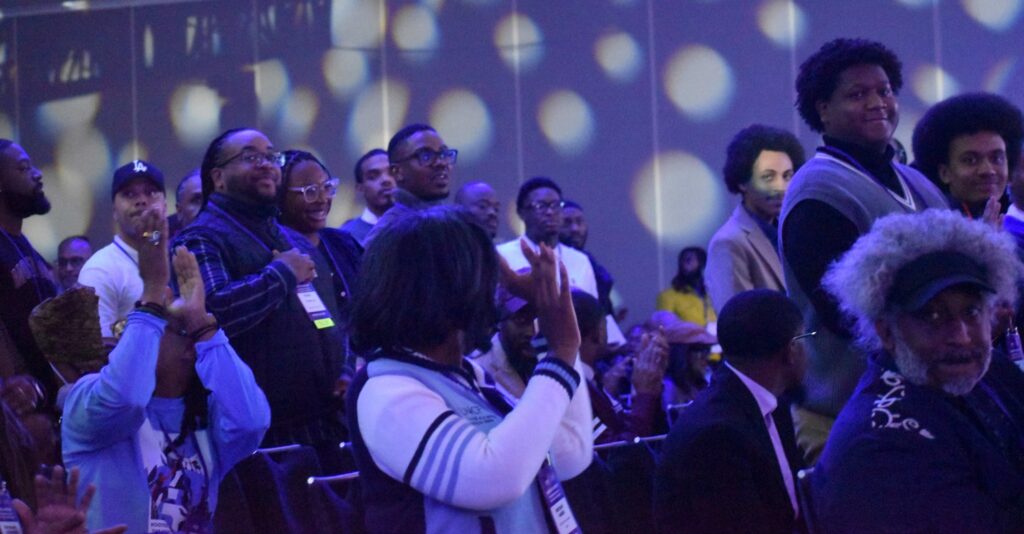
As the conference concluded, participants returned repeatedly to themes of recruitment, retention, accountability and community. The debate was no longer whether Black male educators matter. Increasingly, research and lived experience suggest they do.
The larger question is whether enough investment will be made to recruit, develop and retain them so they can transform educational outcomes for Black children nationwide.
Nearly a century after Carter G. Woodson challenged the exclusion of Black history from American classrooms, attendees argued that many of the same structural barriers remain. Yet they also pointed to a growing network of educators, schools and organizations committed to changing those outcomes.
The challenge ahead is ensuring that more Black boys encounter educators who recognize their potential, affirm their humanity and expand their vision of what is possible before society defines them first.
The post Beyond Representation: Black male educators are changing outcomes for Black students appeared first on Final Call News.