Barrow vows new constitution with term limits if re-elected
As Gambians prepare to go to the polls on 5 December to elect a new president, incumbent President Adama Barrow yesterday submitted his nomination documents to the Independent Electoral Commission (IEC) ahead of the presidential election. Accompanied by thousands of supporters and party loyalists, President Barrow, together with the First Lady and the Second Lady, travelled to the IEC headquarters along Bertil Harding Highway, where jubilant supporters lined the route, chanting slogans in a show of solidarity and confidence in his bid for another term in office. Before IEC officials, President Barrow formally submitted all the required nomination documents, which are now subject to verification and scrutiny by the electoral body before his candidature is officially confirmed. Speaking to journalists at the IEC headquarters shortly after submitting his nomination papers, President Barrow called on Gambians to continue upholding the peace and stability for which the country is renowned. “The next five years of my government will see the continuation of my Yiriwa Agenda,” he said. “We will further expand our road and electricity networks and strengthen connectivity across communities to improve access to essential social services, including healthcare and education.” The President also pledged to continue modernising the agricultural sector and improving farmers’ access to markets in a bid to enhance food security and create employment opportunities for young people. “My government will continue to modernise agriculture and facilitate greater access to markets to ensure food security, while enabling young people to create self-employment opportunities and actively contribute to the growth of our economy,” he added. President Barrow further stated that his administration would continue to strengthen national institutions through sound policies, effective legislation, and unwavering respect for the rule of law within a democratic framework. He urged Gambians to remain law-abiding and preserve the country’s social cohesion and unity. “We have one Gambia and one nation. Let us continue to live together in peace and work collectively for the development of our country,” he said. When asked by journalists whether he would commit to serving only a third and final term if re-elected, and whether he would usher in a new Constitution with presidential term limits, President Barrow reiterated his belief in term limits while emphasising the democratic right of Gambians to choose their leaders. “I have always made myself very clear on this matter. I believe in term limits. However, that does not necessarily mean that term limits are the only measure of a good democratic system,” he said. He noted that some established democracies, including the United Kingdom and Germany, do not impose presidential term limits, yet continue to operate under strong democratic principles. “Ultimately, it is the Gambian people who elect their President, and it is they who decide the future of the Presidency. Therefore, it is up to Gambians to determine who they wish to lead them,” he stated. President Barrow further pledged to deliver a new Constitution if his government secures sufficient support in the National Assembly to meet the constitutional threshold required for its passage. “Should I obtain the necessary majority in the National Assembly and meet the required threshold for the adoption of a new Constitution, I will ensure that Gambians have a new Constitution, and that Constitution will contain provisions on term limits,” he assured. On the issue of corruption, the President clarified that the National Anti-Corruption Commission has already been established. He explained that the delay in making the institution fully operational stemmed from issues raised concerning one of the nominated commissioners. According to him, the concerns required due process and careful consideration to ensure that the Commission is constituted in a transparent and credible manner. Despite the setback, President Barrow reaffirmed his administration’s commitment to strengthening accountability, transparency and good governance through the operationalisation of the anti-corruption body.
 Black News
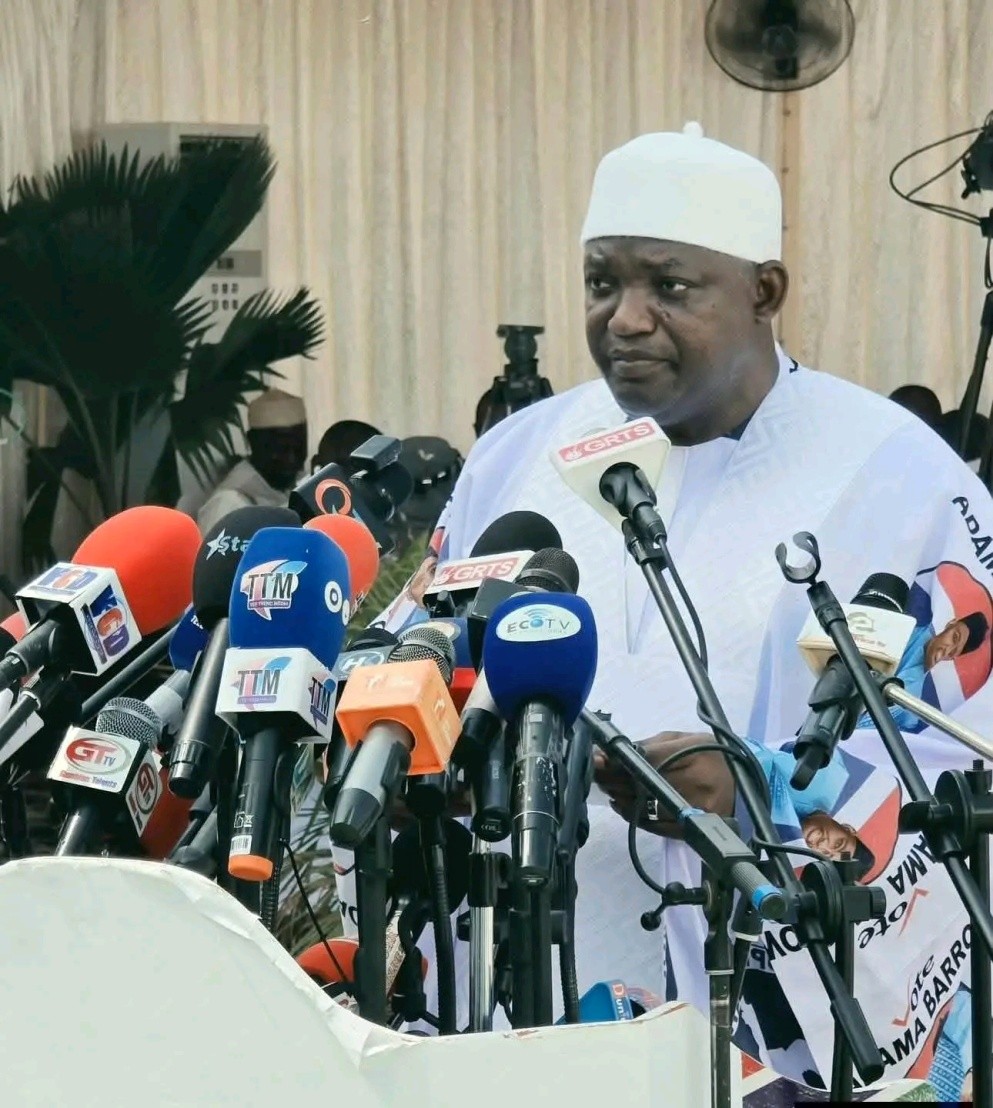
As Gambians prepare to go to the polls on 5 December to elect a new president, incumbent President Adama Barrow yesterday submitted his nomination documents to the Independent Electoral Commission (IEC) ahead of the presidential election.
Accompanied by thousands of supporters and party loyalists, President Barrow, together with the First Lady and the Second Lady, travelled to the IEC headquarters along Bertil Harding Highway, where jubilant supporters lined the route, chanting slogans in a show of solidarity and confidence in his bid for another term in office.
Before IEC officials, President Barrow formally submitted all the required nomination documents, which are now subject to verification and scrutiny by the electoral body before his candidature is officially confirmed.
Speaking to journalists at the IEC headquarters shortly after submitting his nomination papers, President Barrow called on Gambians to continue upholding the peace and stability for which the country is renowned.
“The next five years of my government will see the continuation of my Yiriwa Agenda,” he said. “We will further expand our road and electricity networks and strengthen connectivity across communities to improve access to essential social services, including healthcare and education.”
The President also pledged to continue modernising the agricultural sector and improving farmers’ access to markets in a bid to enhance food security and create employment opportunities for young people.
“My government will continue to modernise agriculture and facilitate greater access to markets to ensure food security, while enabling young people to create self-employment opportunities and actively contribute to the growth of our economy,” he added.
President Barrow further stated that his administration would continue to strengthen national institutions through sound policies, effective legislation, and unwavering respect for the rule of law within a democratic framework.
He urged Gambians to remain law-abiding and preserve the country’s social cohesion and unity. “We have one Gambia and one nation. Let us continue to live together in peace and work collectively for the development of our country,” he said.
When asked by journalists whether he would commit to serving only a third and final term if re-elected, and whether he would usher in a new Constitution with presidential term limits, President Barrow reiterated his belief in term limits while emphasising the democratic right of Gambians to choose their leaders.
“I have always made myself very clear on this matter. I believe in term limits. However, that does not necessarily mean that term limits are the only measure of a good democratic system,” he said.
He noted that some established democracies, including the United Kingdom and Germany, do not impose presidential term limits, yet continue to operate under strong democratic principles. “Ultimately, it is the Gambian people who elect their President, and it is they who decide the future of the Presidency. Therefore, it is up to Gambians to determine who they wish to lead them,” he stated.
President Barrow further pledged to deliver a new Constitution if his government secures sufficient support in the National Assembly to meet the constitutional threshold required for its passage.
“Should I obtain the necessary majority in the National Assembly and meet the required threshold for the adoption of a new Constitution, I will ensure that Gambians have a new Constitution, and that Constitution will contain provisions on term limits,” he assured.
On the issue of corruption, the President clarified that the National Anti-Corruption Commission has already been established. He explained that the delay in making the institution fully operational stemmed from issues raised concerning one of the nominated commissioners.
According to him, the concerns required due process and careful consideration to ensure that the Commission is constituted in a transparent and credible manner.
Despite the setback, President Barrow reaffirmed his administration’s commitment to strengthening accountability, transparency and good governance through the operationalisation of the anti-corruption body.