Ansarallah ( Houthis) Vows To Block Saudi Access To Bab al-Mandab Strait After Strikes On Yemen’s Airport
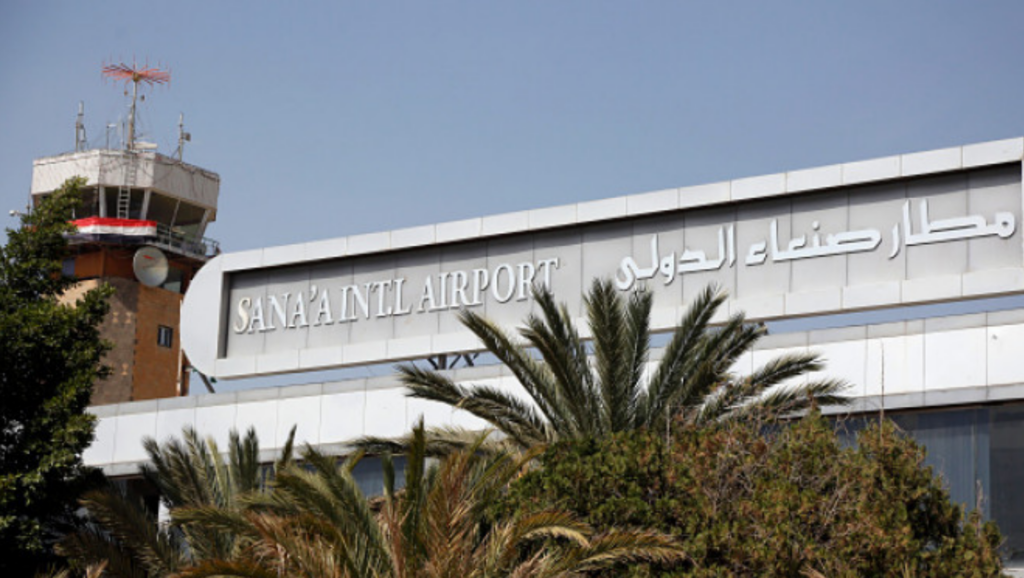
By Iona Craig|Drop Site News Photos: Wikimedia Commons A leading official from Yemen’s Ansarallah, also known as the Houthis, vowed that the group would block Saudi access to the Bab al-Mandab strait—a vital bottleneck connecting the Red Sea to the Gulf of Aden and the Indian Ocean—in response to strikes on Sana’a airport on Monday that were blamed on Saudi Arabia. The move would exacerbate the economic impact of the ongoing closure of the Strait of Hormuz, particularly on Asian markets currently relying on Saudi crude exports through the Red Sea. Ansarallah claimed on Monday night to have launched retaliatory strikes with ballistic missiles and drones hitting Abha airport in Saudi Arabia. But the Ansarallah official, Mohammed al-Bukhaiti, told Drop Site News that the strikes were “merely one of the initial steps in a broader escalation…we will focus on intensifying our military operations,” adding that “the Bab al-Mandab strait is a legitimate leverage tool.” Ansarallah leader Abdulmalek al-Houthi added to the threats in a speech on Thursday, saying that “all Saudi oil facilities and vital installations” were targets. A statement on Wednesday by Iran’s Islamic Revolutionary Guard Corps (IRGC) also supported Ansarallah’s pledge, warning that other oil and gas export routes, in addition to the Strait of Hormuz, could be closed to the U.S. and its allies. It remained unclear whether Ansarallah would in fact carry out the threat to close off the vital waterway to Saudi Arabia, yet the latest developments have ushered in a dangerous game of brinkmanship. The strikes on Sana’a airport were the first attack by Saudi Arabia against Ansarallah since 2022. The attack and retaliatory missile and drone launches by the Houthis into Saudi Arabia, along with the vows of further escalation, threaten to upend a four-year-long tenuous ceasefire just as the truce between the U.S. and Iran is crumbling over access through the Strait of Hormuz. The Saudi-backed, internationally recognized Yemeni government, largely based in Riyadh, claimed responsibility for the strikes on Sana’a airport on Monday saying they aimed to prevent the landing of an inbound Iranian flight carrying an Ansarallah delegation returning from Tehran for the funeral of Iran’s Supreme Leader Ali Khamenei who was assassinated by a U.S.-Israeli strike in March. At least four individual strikes hit the runway shortly after a UN humanitarian air service flight departed from Sana’a. The Iranian Mahan Air passenger plane diverted and later landed safely at Ansarallah-controlled Hodeidah airport on Yemen’s Red Sea coast. In response, Ansarallah’s military spokesman Yahya Saree accused Saudi Arabia of being behind the strikes and declared that the attack “ended the de-escalation phase,” threatening “consequences.” The reported strikes claimed by Ansarallah on Abha airport in Saudi Arabia, around 100 kilometers from Yemen’s northern border, soon followed. Flights to and from Abha were cancelled late Monday and Tuesday morning. The initial strikes on Sana’a airport came amid mounting tension and warnings from the Yemeni government after the first Mahan Air aircraft landed in Sana’a on July 3 to take the Ansarallah delegation to Iran. Yemen’s Presidential Leadership Council (PLC) called the flight “a clear violation” of Yemen’s sovereignty. Saudi warplanes attempted to prevent the flight from reaching Sana’a, according to a video statement by Saree who warned that Ansarallah would target Saudi “airports and vital interests on land and sea” if they violated Ansarallah airspace. No commercial flights have left Sana’a since Israeli strikes destroyed Yemenia Airways’ sole Airbus A330 and three smaller A320 passenger planes in May 2025. A further Israeli strike three-weeks later destroyed the single remaining Yemenia A320 operating from Sana’a after it had returned from Jordan. Ansarallah was accused of seizing four of the five destroyed Yemenia Airways planes in July 2024, leaving the national airline with just two aircraft in operation for the rest of the country. Rhetoric had been heating up between the two sides over the planned return of the Ansarallah officials. The Yemeni government insisted on the use of a Yemenia Airways plane rather than Iran’s Mahan Air, which they said would set a precedent for opening a Tehran-Sana’a air bridge facilitating transport of weapons, components and IRGC military officials to Ansarallah-controlled territory. The PLC claim Ansarallah rejected an initiative proposed earlier in the month to restart Yemenia Airways civilian flights from Sana’a to Jordan. In a video statement following this week’s strikes, Yemen’s President Dr. Rashad Mohammed al-Alimi affirmed, “not a single Iranian aircraft will return to our lands, starting today.” Al-Bukhaiti, who is a member of Ansarallah’s politburo, was onboard the Mahan flight along with more than 200 passengers. He told Drop Site that the
 Black News
By Iona Craig|Drop Site News
Photos: Wikimedia Commons
A leading official from Yemen’s Ansarallah, also known as the Houthis, vowed that the group would block Saudi access to the Bab al-Mandab strait—a vital bottleneck connecting the Red Sea to the Gulf of Aden and the Indian Ocean—in response to strikes on Sana’a airport on Monday that were blamed on Saudi Arabia. The move would exacerbate the economic impact of the ongoing closure of the Strait of Hormuz, particularly on Asian markets currently relying on Saudi crude exports through the Red Sea.
Ansarallah claimed on Monday night to have launched retaliatory strikes with ballistic missiles and drones hitting Abha airport in Saudi Arabia. But the Ansarallah official, Mohammed al-Bukhaiti, told Drop Site News that the strikes were “merely one of the initial steps in a broader escalation…we will focus on intensifying our military operations,” adding that “the Bab al-Mandab strait is a legitimate leverage tool.”
Ansarallah leader Abdulmalek al-Houthi added to the threats in a speech on Thursday, saying that “all Saudi oil facilities and vital installations” were targets.
A statement on Wednesday by Iran’s Islamic Revolutionary Guard Corps (IRGC) also supported Ansarallah’s pledge, warning that other oil and gas export routes, in addition to the Strait of Hormuz, could be closed to the U.S. and its allies.
It remained unclear whether Ansarallah would in fact carry out the threat to close off the vital waterway to Saudi Arabia, yet the latest developments have ushered in a dangerous game of brinkmanship.
The strikes on Sana’a airport were the first attack by Saudi Arabia against Ansarallah since 2022. The attack and retaliatory missile and drone launches by the Houthis into Saudi Arabia, along with the vows of further escalation, threaten to upend a four-year-long tenuous ceasefire just as the truce between the U.S. and Iran is crumbling over access through the Strait of Hormuz.
The Saudi-backed, internationally recognized Yemeni government, largely based in Riyadh, claimed responsibility for the strikes on Sana’a airport on Monday saying they aimed to prevent the landing of an inbound Iranian flight carrying an Ansarallah delegation returning from Tehran for the funeral of Iran’s Supreme Leader Ali Khamenei who was assassinated by a U.S.-Israeli strike in March.
At least four individual strikes hit the runway shortly after a UN humanitarian air service flight departed from Sana’a. The Iranian Mahan Air passenger plane diverted and later landed safely at Ansarallah-controlled Hodeidah airport on Yemen’s Red Sea coast.
In response, Ansarallah’s military spokesman Yahya Saree accused Saudi Arabia of being behind the strikes and declared that the attack “ended the de-escalation phase,” threatening “consequences.” The reported strikes claimed by Ansarallah on Abha airport in Saudi Arabia, around 100 kilometers from Yemen’s northern border, soon followed. Flights to and from Abha were cancelled late Monday and Tuesday morning.


The initial strikes on Sana’a airport came amid mounting tension and warnings from the Yemeni government after the first Mahan Air aircraft landed in Sana’a on July 3 to take the Ansarallah delegation to Iran. Yemen’s Presidential Leadership Council (PLC) called the flight “a clear violation” of Yemen’s sovereignty. Saudi warplanes attempted to prevent the flight from reaching Sana’a, according to a video statement by Saree who warned that Ansarallah would target Saudi “airports and vital interests on land and sea” if they violated Ansarallah airspace.
No commercial flights have left Sana’a since Israeli strikes destroyed Yemenia Airways’ sole Airbus A330 and three smaller A320 passenger planes in May 2025. A further Israeli strike three-weeks later destroyed the single remaining Yemenia A320 operating from Sana’a after it had returned from Jordan. Ansarallah was accused of seizing four of the five destroyed Yemenia Airways planes in July 2024, leaving the national airline with just two aircraft in operation for the rest of the country.
Rhetoric had been heating up between the two sides over the planned return of the Ansarallah officials. The Yemeni government insisted on the use of a Yemenia Airways plane rather than Iran’s Mahan Air, which they said would set a precedent for opening a Tehran-Sana’a air bridge facilitating transport of weapons, components and IRGC military officials to Ansarallah-controlled territory.
The PLC claim Ansarallah rejected an initiative proposed earlier in the month to restart Yemenia Airways civilian flights from Sana’a to Jordan. In a video statement following this week’s strikes, Yemen’s President Dr. Rashad Mohammed al-Alimi affirmed, “not a single Iranian aircraft will return to our lands, starting today.”
Al-Bukhaiti, who is a member of Ansarallah’s politburo, was onboard the Mahan flight along with more than 200 passengers. He told Drop Site that the continued Saudi blockade and resulting humanitarian impact meant the Bab al-Mandab strait is “a legitimate leverage tool to enforce a ‘blockade-for-blockade’ equation.” A measure, he said, that would only target countries participating “in the aggression against Yemen.”
“We will focus on intensifying our military operations to enforce a ‘blockade-for-blockade’ equation, compelling Saudi Arabia to stop intercepting civilian flights to and from Yemen—since it understands only the language of force,” al-Bukhaiti warned, underscoring the pledge to block the maritime choke point between Yemen and the Horn of Africa to Saudi traffic.
Around 25% of global container trade usually passes through the Bab al-Mandab strait and north to the Suez Canal. The alternative route around South Africa’s Cape of Good Hope adds between 10-14 days onto the voyage from Asia to Europe and approximately $1 million in extra fuel costs per round-trip.
The impact of any Red Sea obstruction in response to this week’s strikes would be far more acute than before the U.S. and Israel launched their war against Iran. Since March, Saudi Arabia has become reliant on its East-West oil pipeline to circumvent the Strait of Hormuz and export crude heading to Asia via its west coast terminal at Yanbu and south through the Bab al-Mandab strait. More than 80% of crude oil and LNG normally transiting through the Strait of Hormuz is bound for Asian countries including India, China, and Japan.
Yemen’s war began in 2014 when Ansarallah fought their way south from their northern homeland of Sa’ada, seizing control of the capital in September of that year. Six months later, in March 2015, as Ansarallah continued to push south, then-President Abdrabbuh Mansour Hadi escaped Ansarallah house arrest and fled to Riyadh. Soon afterwards, Saudi Arabia launched an air war backed by the U.S. with the United Arab Emirates as its main partner against Ansarallah.
The seven years of bombing that followed killed over 8,900 civilians, while a Saudi blockade, combined with Ansarallah siege tactics and aid appropriation, resulted in an estimated 85,000 children under the age of five dying from hunger in less than four years, and airstrikes contributing to the world’s worst cholera outbreak in modern history. A ceasefire was reached in March 2022 and has largely held since. Monday’s strikes marked the first significant escalation in more than four years.
President Donald Trump and the U.S. State Department reportedly gave their support for the Saudi strikes on Monday. Although the kingdom has not publicly claimed responsibility, the Yemeni military lacks the capability to carry out airstrikes and lost its air force and aging fighter jets to Ansarallah more than a decade ago. The fighter jets were subsequently destroyed by Saudi airstrikes in 2015.
Ansarallah has played an increasingly important role in the Iran-led Axis of Resistance in recent years. In response to Israel’s genocide in Gaza, Ansarallah hijacked an Israeli-owned car carrier in the Red Sea in November 2023 and launched multiple attacks on commercial vessels, effectively shuttering the southern Red Sea and Bab al-Mandab strait from November 2023 to late 2024. Numerous rounds of Ansarallah ballistic missiles and drones also targeted Israel.
The attacks on commercial shipping were countered by regular U.S. and U.K strikes against Ansarallah for more than a year while U.S., U.K. and European warships came under heavy attack from Ansarallah drone swarms and anti-ship ballistic missiles. Israel joined the fight in July 2024 with their own air and naval strikes.
Two months into his second term in office Trump launched Operation Rough Rider,a new, much more intensive daily bombing campaign supported by the U.K that killed at least 238 civilians in 340 strikes over 53 days. Saudi Arabia is now the fourth nation to bomb Ansarallah in the past 18 months.
But Ansarallah involvement in the ongoing conflict between the U.S. and Iran has been more muted with missiles and drones launched at Israel on just two occasions, in April and June. A June 8 announcement by Saree declaring the closing of the Bab al-Mandab strait to Israel has not resulted in attacks on commercial vessels as seen in 2024.
While escalation against Saudi Arabia in the Red Sea or a return to all-out war is possible, Mohammed al-Basha, a longtime Yemen analyst and founder of the U.S.-based risk advisory Basha Report, said it’s unlikely.
“At this stage, the exchange appears to have been a calculated tit-for-tat operation designed to send political and military messages,” al-Basha told Drop Site. “An important indicator is that Saudi Arabia still allowed the Iranian Mahan Air flight to land at Hodeidah airport. That decision suggests Riyadh deliberately left room for negotiations rather than choosing full escalation,” he added.
A Red Sea blockade on Saudi Arabia that Al-Bukhaiti warned of would put considerable strain on such measured responses. As the U.S.-Iran ceasefire continues to unravel, Tehran has now reportedly called on Ansarallah to be prepared to close the strait in the event the U.S. carries out strikes targeting Iran’s power infrastructure.