
Africa’s Next Growth Story Will Be Written Across Its Own Borders
As more than 140 business leaders, policymakers, investors and entrepreneurs gather in Cape Town on 9 and 10 July for Standard Bank’s Africa Unlocked 2026, the conversations taking place inside the Norval Foundation will extend far beyond banking or corporate strategy. They will centre on one of the most consequential questions facing the continent today: […] The post Africa’s Next Growth Story Will Be Written Across Its Own Borders appeared first on Time Africa.
 Black News
As more than 140 business leaders, policymakers, investors and entrepreneurs gather in Cape Town on 9 and 10 July for Standard Bank’s Africa Unlocked 2026, the conversations taking place inside the Norval Foundation will extend far beyond banking or corporate strategy. They will centre on one of the most consequential questions facing the continent today: how Africa transforms itself from a collection of neighbouring economies into a truly integrated economic market.
The timing could not be more significant.
As global supply chains continue to shift, geopolitical uncertainty reshapes international trade and the implementation of the African Continental Free Trade Area (AfCFTA) continues to gather momentum, Africa stands before one of the greatest economic opportunities in its modern history. The continent has the potential to unlock one of the world’s largest single markets – driven increasingly not by external demand, but by African businesses, African capital and African innovation.
A Continent Looking Inward to Grow Outward
For decades, African economies have often found it easier to trade with Europe, Asia and North America than with one another. Fragmented regulations, infrastructure gaps and inefficient border systems have constrained regional commerce despite the continent’s extraordinary productive capacity. While Africa is rich in resources, talent and entrepreneurial ambition, too much of its economic value has historically been created elsewhere.
That reality is beginning to change.
The implementation of AfCFTA is encouraging governments, investors and businesses alike to rethink what continental integration can look like—not simply as a political aspiration, but as a practical economic strategy capable of creating jobs, strengthening regional value chains, attracting productive investment and building long-term resilience.
The Rise of African Economic Citizenship
More importantly, it is beginning to reshape the way Africa sees itself.
Perhaps one of the most important ideas emerging from this new era is the concept of African economic citizenship – the recognition that while political borders will always remain, the continent’s economic future depends on businesses, entrepreneurs and investors increasingly thinking beyond them.
African economic citizenship is not about replacing national identity. Rather, it is about recognising that Africa’s prosperity will increasingly be shared. A manufacturer in Kenya should see opportunity in Ghana. A technology company in Rwanda should view Nigeria as naturally as its domestic market. South African capital should find its way into industrial projects in Zambia, Côte d’Ivoire or Egypt with the same confidence that it invests elsewhere in the world. Success in one market should strengthen opportunities across the continent.
That shift in mindset may ultimately prove just as important as the policies themselves.
Building an Economy Without Borders
Hosted under the theme “Built in Africa: Amplifying Continental Growth,” Africa Unlocked 2026 reflects precisely this evolution. Now in its third edition, the conference has grown into one of Standard Bank’s flagship thought leadership platforms, bringing together leaders from business, government, development finance institutions and academia to examine how Africa can strengthen regional integration, mobilise capital and build globally competitive businesses.
The programme reflects many of the defining questions shaping Africa’s next decade. Discussions will explore commercial diplomacy and borderless trade, financing infrastructure and industrialisation, energy security, artificial intelligence, scaling African businesses across regional markets and preserving wealth for future generations. Together, these conversations point towards a common objective: creating an Africa that competes globally by collaborating more effectively internally.
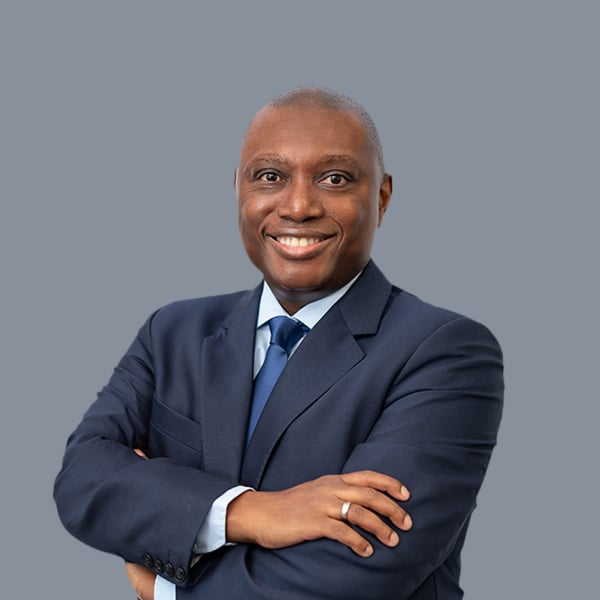
Sim Tshabalala, Chief Executive of Standard Bank Group, believes the continent is already building that momentum.
“Across the continent we are seeing businesses expanding into new markets, entrepreneurs scaling with confidence and investment supporting infrastructure, industrialisation and innovation. The next phase of growth will depend on how effectively we build on this momentum through stronger partnerships, greater regional integration and continued investment in Africa’s productive economy.”
Prosperity Has No Borders
His comments speak to a broader reality.
At a time when many parts of the world are becoming more inward-looking, Africa’s long-term competitive advantage may lie in becoming more connected. The continent’s demographic growth, expanding middle class and rapidly evolving entrepreneurial ecosystem present immense opportunity – but only if markets become increasingly accessible to one another.
That conversation feels particularly relevant today.
Across parts of South Africa, recent debates surrounding migration, economic opportunity and social cohesion have once again highlighted the challenges of balancing domestic pressures with continental aspirations. Yet the promise of AfCFTA points in a different direction – one built not on economic isolation, but on greater cooperation.
Economic integration is not simply about lowering tariffs or streamlining customs procedures. It is about cultivating a mindset that sees prosperity as something shared rather than competed for. Every new trade corridor, every cross-border investment and every regional partnership strengthens not just individual economies, but the continent as a whole.
A stronger Africa will ultimately require stronger Africans working together.
Greater intra-African trade is not simply about increasing export volumes. It is about creating integrated value chains that allow more products to be designed, manufactured, processed and consumed within the continent. It is about retaining more economic value in Africa, creating skilled employment, strengthening industrial capacity and reducing dependence on external markets. Above all, it is about recognising that the success of one African economy increasingly contributes to the resilience of many others.
In many respects, this is what African economic citizenship looks like in practice: businesses investing across borders, entrepreneurs building for continental markets, and governments creating the conditions for African capital, ideas and talent to move more freely. It is a vision in which opportunity is defined not by the limits of national borders, but by the scale of the continent itself.
Turning Opportunity into Growth
Bill Blackie, Chief Executive of Business and Commercial Banking at Standard Bank Group, believes practical collaboration will determine whether this opportunity can be realised.
“Africa’s growth story is increasingly being written by businesses that are scaling across borders, attracting investment and embracing innovation. Africa Unlocked is about discussing Africa’s future by bringing together decision-makers who can unlock investment, enable trade and build the partnerships required to turn opportunity into measurable economic growth.”
Those partnerships are becoming increasingly important as Africa seeks to position itself within a rapidly changing global economy. As international supply chains diversify and investment increasingly searches for resilient, high-growth markets, the continent has an opportunity not merely to participate in global trade, but to redefine its place within it.
That future, however, will not be built by any one nation alone.
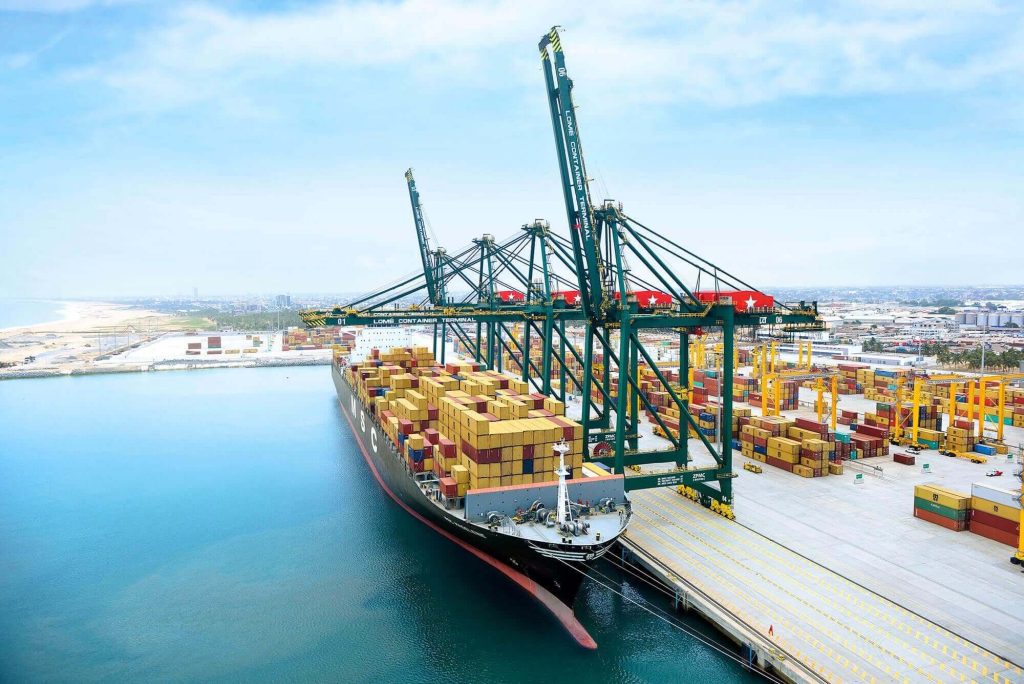
It will be built through stronger regional trade, deeper investment, shared infrastructure, coordinated industrial strategies and a generation of businesses that see Africa not as 54 separate markets, but as one interconnected economic opportunity.
The Next Chapter
That is the broader significance of Africa Unlocked 2026.
As leaders gather in Cape Town this week, the conversations will be about far more than financing growth. They will be about shaping a continent that is increasingly confident in its own capabilities, increasingly connected through trade and investment, and increasingly united by the understanding that Africa’s greatest opportunity lies not beyond its borders, but across them.
The success of AfCFTA will ultimately be measured not only in trade volumes, but in whether it helps foster a generation of African businesses and citizens who increasingly see the continent as a shared economic home.
For Africa, the next chapter of growth will not simply be written within nations.
It will be written across them.
The post Africa’s Next Growth Story Will Be Written Across Its Own Borders appeared first on Time Africa.