Africa’s most powerful military unveils secret Russian missile system from $3.5 billion arms package after earlier denials
Egypt has publicly displayed its Russian-made S-300VM air-defence system for the first time, more than a decade after reports emerged that Cairo had acquired the equipment under a contract worth more than $1 billion as part of a wider $3.5 billion arms package signed with Russia in 2014.
 Black News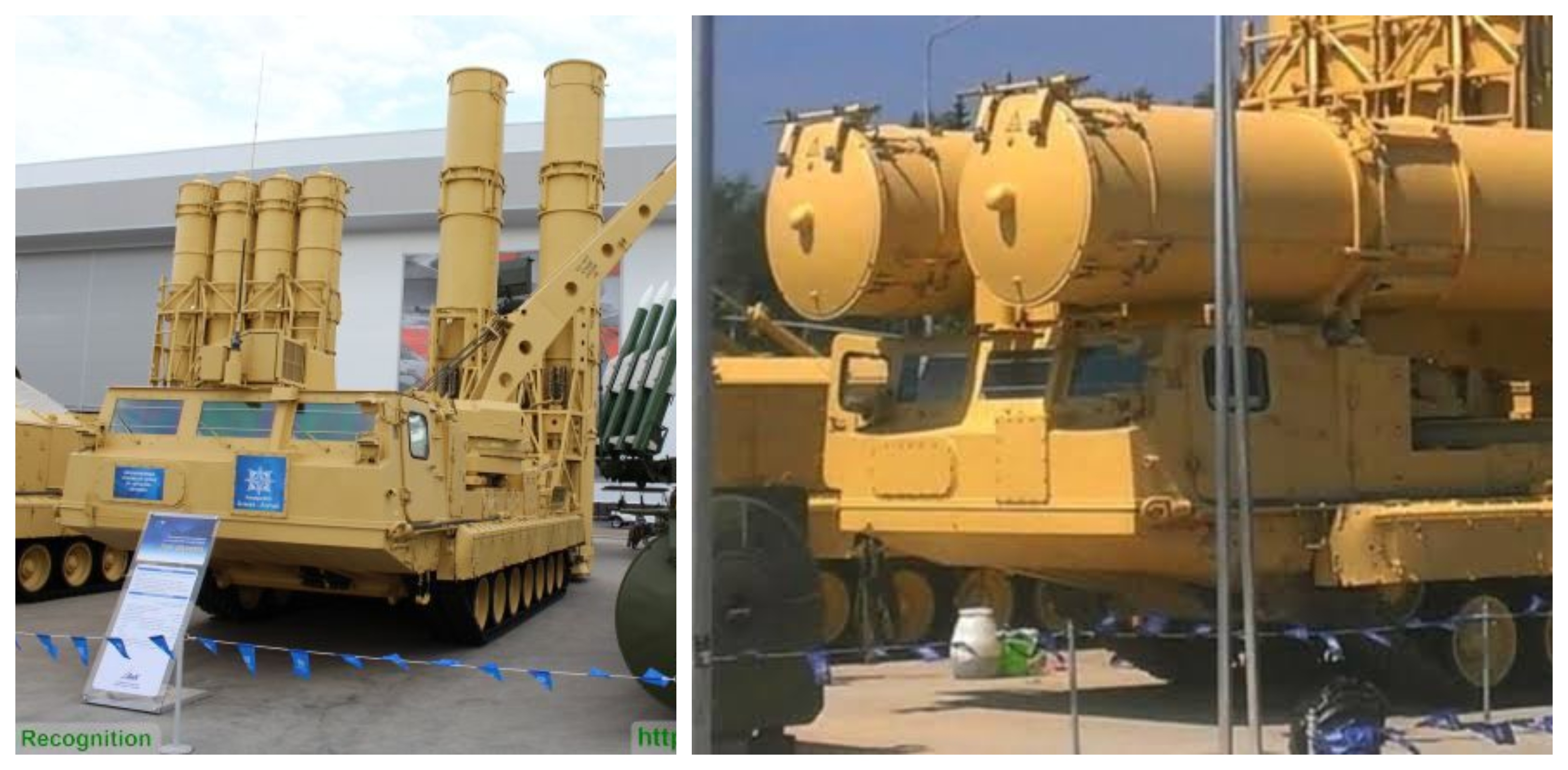

Egypt has publicly displayed its Russian-made S-300VM air-defence system for the first time, more than a decade after reports emerged that Cairo had acquired the equipment under a contract worth more than $1 billion as part of a wider $3.5 billion arms package signed with Russia in 2014.
- Egypt has publicly displayed its Russian-made S-300VM air-defence system for the first time, confirming its operational status after years of speculation.
- The S-300VM, part of a $1 billion deal within a larger $3.5 billion Russian arms package in 2014, can engage multiple types of threats at ranges up to 250 km.
- Delivery evidence emerged in 2017, strengthening Egypt's Russian-equipped air-defence network, which also includes Tor, Buk, Pantsir systems, and advanced radars.
- Egypt's diversified mix of American, Russian, and French military hardware demonstrates its strategy to avoid dependence on a single arms supplier and maintain regional military strength.
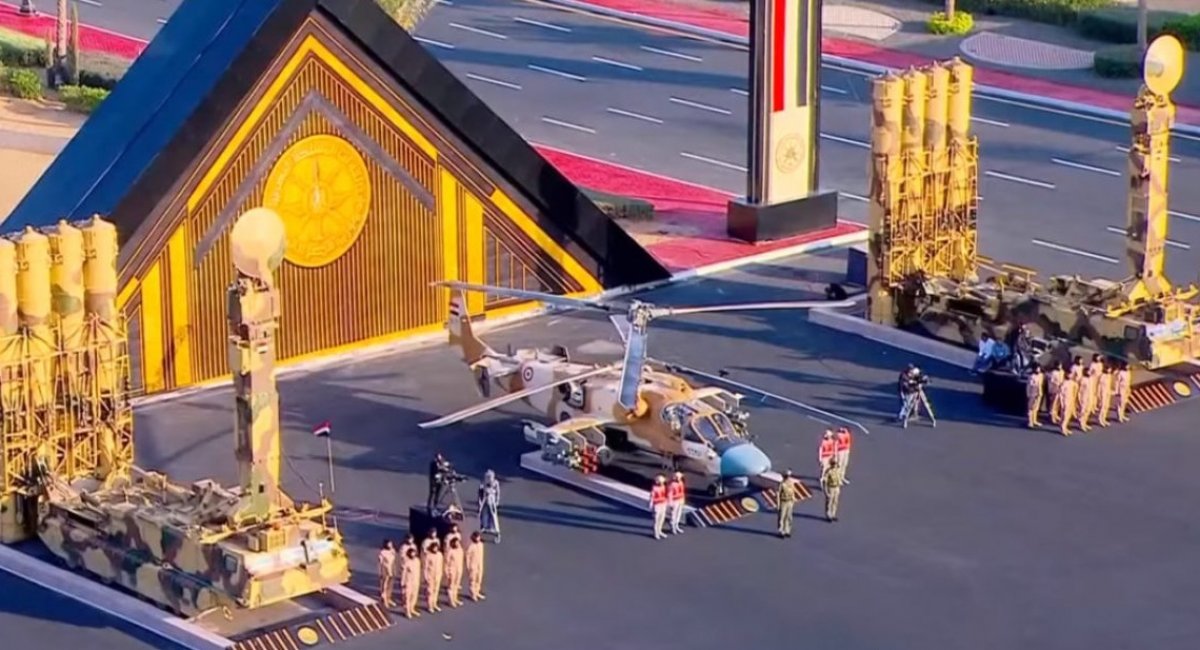
The Egyptian Armed Forces publicly displayed a 9A83ME transporter erector launcher and its fire-control radar during the inauguration of the State Strategic Command Headquarters, known as the Octagon, in the New Administrative Capital.
President Abdel Fattah el-Sisi opened the military complex on July 4, 2026, during a ceremony that also featured Apache and Ka-52 helicopters alongside MiG-29M, F-16 and Rafale fighter jets.
Significantly, the appearance marked Egypt’s first public exhibition of the S-300VM and offered the clearest confirmation that the long-range system forms part of the country’s air-defence network.
A $1 billion Russian missile deal
The S-300VM, also known as the Antey-2500 and designated by NATO as the SA-23 Gladiator/Giant, is manufactured by Russia’s Almaz-Antey Aerospace Defence Concern and ranks among the country’s most advanced long-range surface-to-air missile systems offered for export.
The mobile platform was developed to intercept short- and medium-range ballistic missiles, aeroballistic and cruise missiles, fixed-wing aircraft, loitering electronic warfare platforms and precision-guided munitions.
According to defence reports, it can engage aircraft at ranges of up to 200 kilometres and ballistic missiles at up to 250 kilometres, reach targets at altitudes of up to 30 kilometres and track multiple threats simultaneously.
From denial to delivery
Reports of Egypt’s purchase first emerged in 2014, as Cairo sought to revive military ties with Moscow and diversify its weapons suppliers.
Initially, Russian agencies denied that a contract had been completed. However, reports published in 2015 said Moscow had begun implementing the agreement.
The contract reportedly covered four batteries, command posts, launchers, spare parts and supporting equipment, and formed part of a wider preliminary Russian-Egyptian arms package valued at about $3.5 billion in 2014, according to Reuters.
At the time, Rosoboronexport, Russia’s state arms exporter, said its order book remained strong despite Western sanctions imposed on Moscow over Ukraine.
DON'T MISS: Africa's most powerful military inaugurates a new military HQ with a US-inspired twist
Evidence of delivery emerges
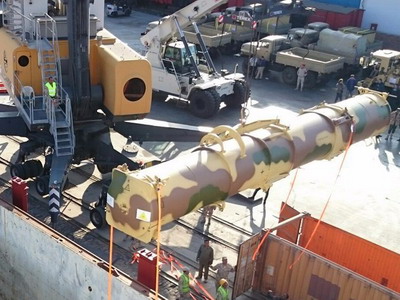
Subsequently, reports said Russia began deliveries in 2015, while photographs taken in June 2017 showed S-300VM equipment being unloaded at Alexandria Port.
The system strengthened Egypt’s Russian-built air-defence network, which already included shorter-range Tor systems, medium-range Buk missiles and Protivnik-GE surveillance radars, and has since expanded to include Pantsir systems.
Although later reports claimed Western pressure kept the S-300VM in storage, Cairo never confirmed this.
Its public display at the Octagon now challenges claims that the system never entered Egypt’s military inventory.
DON'T MISS: The world’s 2nd most powerful military nation just sent new military gear to Africa's newest junta
Israeli officials questioned the purchase
Meanwhile, the acquisition drew scrutiny in Israel, where security officials questioned which threat Egypt intended the system to counter.
An Egyptian official sought to calm those concerns in 2015 and told Reuters: “If we are getting such a thing, it’s because we’re looking east, not north.”
The remark appeared to point to Iran rather than Israel as the perceived threat, but an Israeli intelligence official remained unconvinced and said: “I don’t know what kind of threat Egypt looks at when they decide to buy it.”
The concern also reflected the sensitivity surrounding Egypt’s deployment of major weapons in the Sinai Peninsula, where military arrangements remain governed by the country’s 1979 peace treaty with Israel.
Egypt balances rival suppliers
Beyond the missile system, the Octagon spans about 22,000 acres and includes eight main buildings and 13 strategic and logistical zones.
Egypt designed the complex to centralise military operations, crisis management and coordination among state institutions.
Cairo’s mix of Russian, American and French aircraft gives Egypt one of Africa’s most diversified military inventories, while Global Firepower ranked it the continent’s strongest military and 19th globally in 2026.
Ultimately, the S-300VM’s unveiling highlights Russia’s continuing influence in African defence markets, Egypt’s strategy of balancing competing global suppliers and Cairo’s determination to avoid dependence on any single arms provider.