

$1.5 trillion global textile market offers Africa massive wealth creation opportunities
The global textile and apparel market is worth over $ 1.5 trillion annually and employs over 90m people. For Africa, with its very high unemployment rates, especially for youth and women, even a sizeable share of this market would be a godsend. Africa does produce around 8% of the world’s cotton supply, but its share […] The post $1.5 trillion global textile market offers Africa massive wealth creation opportunities appeared first on New African Magazine.
 Black News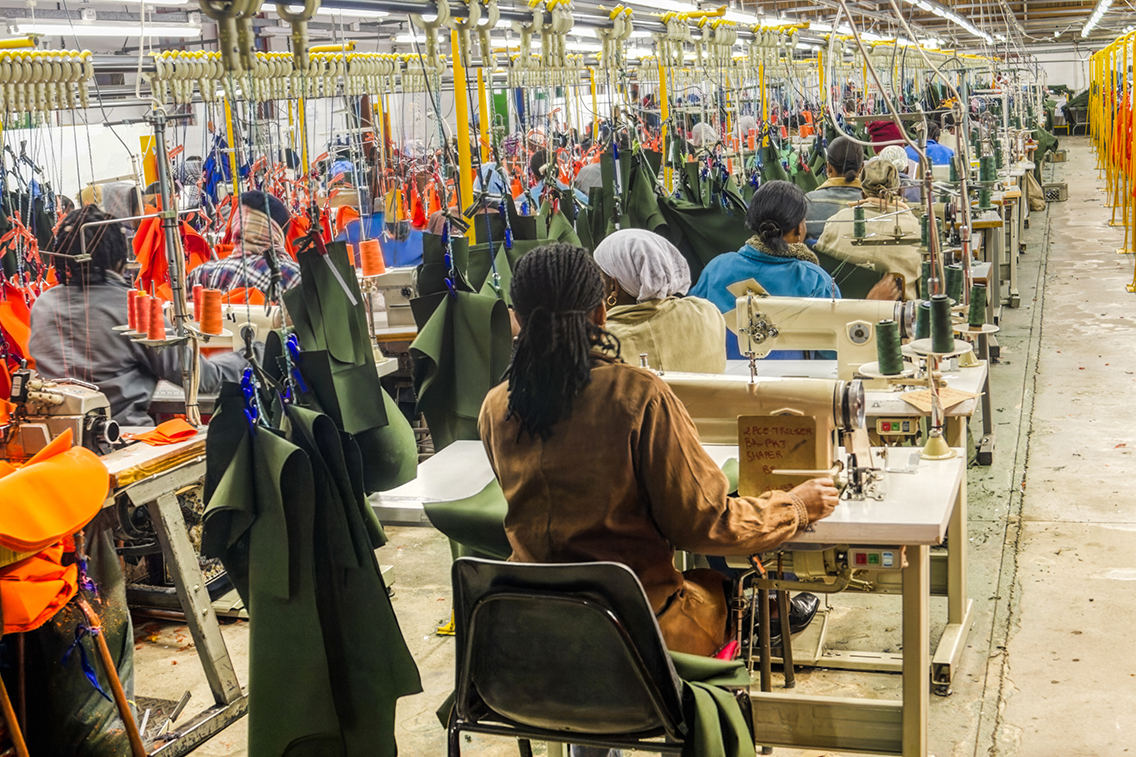
The global textile and apparel market is worth over $ 1.5 trillion annually and employs over 90m people. For Africa, with its very high unemployment rates, especially for youth and women, even a sizeable share of this market would be a godsend. Africa does produce around 8% of the world’s cotton supply, but its share of the market for finished products is tiny by comparison. Yet the growth potential is great, as Kwame Ofori Appiah reports.
Africa needs jobs—millions of them. More importantly, it needs productive, decent and sustainable jobs for the two groups that will largely determine the continent’s economic future – its rapidly growing youth population and its women, who remain disproportionately excluded from formal employment despite their well-documented entrepreneurial dynamism.
The scale of the challenge is immense. According to the International Labour Organisation, young Africans are significantly more likely than adults to be unemployed or trapped in vulnerable and informal work, while the World Bank Group estimates that it will need to create about 25m jobs every year between now and 2050 to absorb its rapidly growing working-age population. However, only about 3m formal jobs are currently being created annually.
Women face a different but equally persistent set of barriers. Although they account for a large share of Africa’s agricultural workforce and own an estimated 26% of businesses, one of the highest rates of female entrepreneurship globally, according to the Global Entrepreneurship Monitor, they remain underrepresented in formal employment, manufacturing and higher-value industries.
Creating jobs at the scale Africa requires will therefore demand more than incremental improvements in employment policy. It will require the transformation of entire value chains capable of generating opportunities across agriculture, manufacturing and services.
Few sectors offer that potential more clearly than cotton, one of the continent’s most widely cultivated cash crops, supporting millions of smallholder farmers across western, central, eastern and southern Africa.
However, despite producing around 7-8% of the world’s cotton and accounting for a significant share of global cotton exports, Africa captures only a fraction of the value generated by the global textile and apparel industry.
Most African cotton leaves the continent as an unprocessed commodity, while the jobs, technology and industrial value associated with spinning, weaving, garment manufacturing, fashion and retail are created elsewhere.
At a time when Africa is searching for new pathways to inclusive growth, transforming the cotton value chain could be one of its clearest opportunities to create jobs in the numbers that it requires.
Beyond agriculture, it offers a pathway to expand manufacturing, deepen regional value chains under the African Continental Free Trade Area, increase exports and, crucially, create meaningful employment for women and young people.
Globally, women are heavily represented in the downstream segment of the textile and apparel industry, even though men dominate land ownership and cultivation.
Garment industry potential
Across Asia, the garment sector has historically served as one of the largest formal employers of women, helping lift millions into paid employment. Africa could replicate aspects of that experience.
Textile factories, apparel production, quality control, design, logistics, merchandising and retail all provide accessible entry points into formal employment for women with varying skill levels. These jobs are often located in urban and peri-urban areas, where growing youth populations are seeking alternatives to informal employment.
Women’s participation extends beyond factory floors. The development of domestic textile industries supports female entrepreneurs operating small dressmaking businesses, fashion houses, fabric distribution companies and export enterprises.
The continent’s rapidly expanding fashion industry already demonstrates the creativity and commercial potential that can bloom when the right factors come together.
Similarly, Africa’s youth would benefit immensely from a restructuring of the continent’s cotton trade. With millions of young people entering the labour market every year, developing the cotton value chain could help generate some of the jobs needed across the continent.
Unlike extractive industries, which often generate relatively few jobs after initial investment, labour-intensive manufacturing can absorb large numbers of workers while supporting extensive supplier networks.
Additionally, the modern textile industry also comes with opportunities for technicians, engineers, industrial designers, software specialists, logistics professionals, machine operators and supply chain managers.
Young entrepreneurs could also find opportunities in fashion brands, online retail, textile recycling, sustainable fibres and digital marketplaces connecting African producers with international buyers, tapping into the $1 trillion global textile and apparel industry.
The advent of the AfCFTA portends even better for a new approach to Africa’s cotton industry. For decades, one obstacle to textile manufacturing in Africa has been fragmented markets.
Many national markets have been too small individually to justify large-scale investment in processing facilities, meaning that manufacturers have struggled to achieve economies of scale.
By progressively reducing tariffs and addressing non-tariff barriers across 54 countries, the AfCFTA creates the prospect of a continental market exceeding 1.4bn people with a combined GDP of more than $3 trillion.
This larger market could support integrated regional cotton value chains. Cotton grown in Mali, for example, could be spun into yarn in Côte d’Ivoire, woven into fabric in Ghana and transformed into garments in Kenya or Ethiopia before being sold throughout Africa.
Such regional specialisation would allow countries to build competitive advantages without requiring every stage of production to exist within national borders.

Challenges to be overcome
Other structural challenges will need to be addressed if Africa is to be able to capture more value and with it, the jobs and prosperity that its women and youth are entitled to.
Electricity remains one of the biggest challenges. Textile manufacturing is energy-intensive, and unreliable power substantially raises production costs. Transport and logistics also remain expensive. According to the African Development Bank, moving goods within Africa often costs more than shipping them to Europe or Asia.
Access to finance presents another obstacle. Small and medium-sized textile enterprises frequently struggle to obtain affordable long-term capital for machinery and factory expansion.
Skills shortages also constrain growth. Modern textile production increasingly depends on specialised technical expertise, requiring stronger vocational education and industry partnerships.
Competition from imported second-hand clothing and inexpensive new garments has further weakened domestic textile industries in many African countries, reducing demand for locally produced fabrics.
Addressing these constraints requires coordinated industrial policy rather than isolated interventions. Fortunately, governments and development finance institutions are responding as the recognition of the crop’s potential grows.
Afreximbank has made textile and garment manufacturing a priority within its broader industrialisation strategy, supporting value-added manufacturing and regional supply chains under the AfCFTA.
Meanwhile, the World Bank, African Development Bank and other development partners continue supporting cotton value chain development through infrastructure investment, SME financing, skills programmes and trade facilitation.
The World Trade Organization and partner organisations have also expanded support for West Africa’s top producers – Benin, Burkina Faso, Chad, and Mali – referred to as the Cotton-4, through initiatives linking cotton production to industrial development rather than focusing solely on agricultural exports.
All of which means that the continent may be ready to move from debating how to move beyond exporting raw cotton to actually grasping a bit more of the plentiful opportunities in the wider value chain.
The continent already has the agricultural base, growing domestic consumer markets, expanding regional trade architecture and abundant labour force needed to support competitive textile and apparel industries. The remaining challenge is to build the industrial ecosystems that connect farms to factories and factories to consumers.
If African countries can process a greater proportion of the cotton they already produce, the benefits would extend far beyond higher export revenues. Millions of jobs could be created across farming, logistics, manufacturing, design, retail and services. Women would gain greater access to formal employment and entrepreneurship, while young people would find new pathways into productive work.
In that sense, cotton is far more than an agricultural commodity. Properly leveraged, it could become one of the continent’s most effective engines for creating the decent jobs that Africa’s women and youth urgently need, while helping transform its longstanding role in global trade from exporter of raw materials to producer of high-value manufactured goods.
The post $1.5 trillion global textile market offers Africa massive wealth creation opportunities appeared first on New African Magazine.