Uganda’s International policy posture is outdated; we must reflect
Sometimes I wonder whether we are diligent enough about our own foreign policy as a country. I ask this because in January 2024, when 120 countries gathered in Kampala under Uganda’s chairmanship, one of the most outstanding outcomes of that meeting was the Movement’s position on Palestine. The Kampala Declaration did not mince words. It […] The post Uganda’s International policy posture is outdated; we must reflect appeared first on The Observer Media Ltd.
 Black News



Sometimes I wonder whether we are diligent enough about our own foreign policy as a country.
I ask this because in January 2024, when 120 countries gathered in Kampala under Uganda’s chairmanship, one of the most outstanding outcomes of that meeting was the Movement’s position on Palestine.
The Kampala Declaration did not mince words. It condemned the Israeli military aggression on Gaza, the attacks on Palestinian civilians, and the forced displacement of Palestinians, and reaffirmed support for a sovereign Palestinian state.
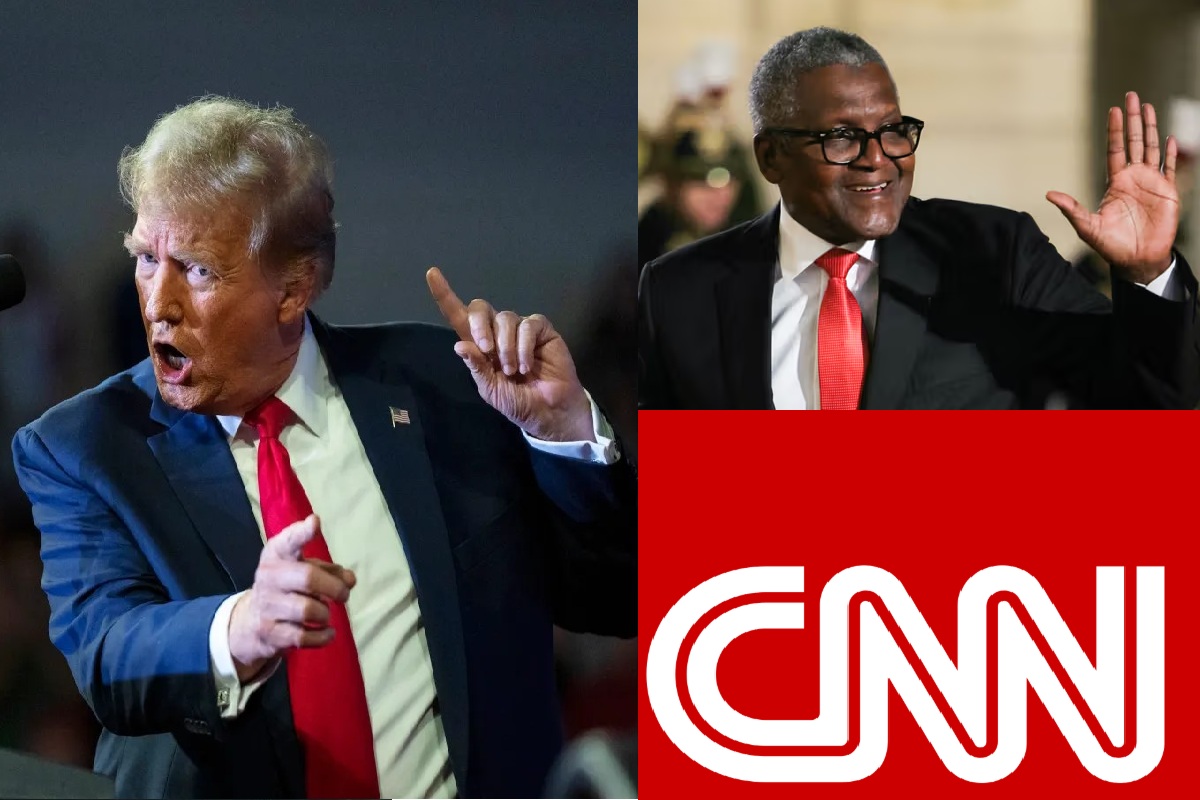
Uganda is still chairing the Non-Aligned Movement until 2027. President Museveni is its chairman. And yet, we have now decided at Trump’s request that Ugandan soldiers can be part of its proposed international force in Gaza.
The NRM majority parliament has since approved the deployment. This makes me uncomfortable. The United States is not an innocent bystander in the Israel-Palestine question. It is Israel’s most important military and diplomatic backer.
Whatever one thinks about the conflict, this is not a neutral actor. All these countries, some of whom have increasingly become powerful themselves, chose to stand united on the other side and continue to date, but somehow Uganda has decided to cross the river.
I am not arguing that Uganda should never work with America. That would be childish. Countries have interests, and Uganda must work with whoever advances those interests. But foreign policy is about understanding power.
And I worry that the people making Uganda’s foreign-policy decisions have not fully recognised that the world has changed. For a very long time, betting heavily on America made sense. America was the unquestioned centre of the international system.
Its military power was overwhelming. Its alliances were strong. Its political influence was enormous. If you wanted security, markets, diplomatic cover, or international legitimacy, Washington was the thing. But that world is changing.
America is no longer the same; it is stretched, and its power is now limited. It is being pulled between Europe, the Middle East, and, increasingly, the Indo-Pacific, where China has become its most important competitor. The recent war with Iran has only exposed some of these limits.
The United States has had to commit significant military resources, including expensive missile-defence systems and interceptors, its ATACMS stockpile and THAAD defence system nearly depleted, while Iran has demonstrated an ability to sustain missile pressure and absorb punishment without collapsing.
The point is not that America has suddenly become weak; it’s that everyone can now see that its power has limits. Look at Europe. Countries that for decades depended heavily on the American security umbrella are increasingly talking about their own defence capacity.
They are increasing defence spending, rearming, and thinking about what happens if America is unwilling or unable to come running when needed. America itself is increasingly talking about doing less elsewhere and focusing more on China.
This matters for Uganda. Because if Washington’s attention is moving towards the Indo-Pacific, why do we continue behaving as though America will greatly value Uganda’s contribution in the Middle East? It will not.
And perhaps the Gaza arrangement itself tells us something. America wants countries like Uganda and others to carry parts of the burden in places where it does not necessarily want to commit itself directly.
With the rise of the anti-Israel support narrative in the mid-term polls, AIPAC increasingly becoming unpopular, it is likely that Trump just wants to pull out of the Middle East and concentrate efforts in the Indo-Pacific, where China is gaining more ground.
That is how great powers increasingly operate when they are stretched. They use partners. And Uganda needs to understand the difference between being a strategic partner and being strategically useful. Those are not always the same thing.
This is what happened in Somalia: after Uganda did the hard work, the benefits are going to be ripped by Turkey, a more valuable and strategic ally that can guarantee larger interests in the now contentious region.
But even if the US were still as powerful as it was 10 years ago, we should ask ourselves what we would gain from this desperate closeness to Washington. Because even our relevance appears to be changing. The United States currently has Uganda under a Level 4 “Do Not Travel” advisory, citing crime, health, terrorism, and unrest.
That is significant because Uganda has for years loudly marketed itself as a stable destination in a troubled neighbourhood. We have built part of our international identity around being the country where refugees can find safety, where peacekeeping forces can operate, and where international actors can do business.
But if our own citizens increasingly feel insecure and move into exile, if investors begin questioning the credibility of our courts of law, even the US wouldn’t value us the same way, not even this deployment can compensate for it.
For example, how can the deployment assure their commercial interests in our economy? We need to clean our dirt internally, and then also recognise that the world is becoming more competitive.
There are more players. More centres of power. We are still operating with the foreign-policy assumptions of 10 or 20 years ago. Perhaps because many of the people shaping our foreign policy were educated in the old order.
The great diplomatic schools of the West, like Harvard and Oxford. Even when evidence suggests that there’s a shift, these institutions will refuse to accept the reality, so even the products have not sufficiently adjusted to the world as it is becoming. The truth is that the world is moving.
China is rising. Europe is trying to build greater strategic autonomy. Russia remains disruptive. The Gulf states are becoming more assertive. Some of the Global South countries are becoming more confident.
And yet Uganda continues to place almost all its eggs in one basket, turning its back on the rest. I am not being anti-American or pro-China. Let us simply remain strategically or ambiguously non-aligned, and also that the world is increasingly multipolar, and our diplomacy should reflect that.
There is a certain short-termism in the way we are acting, both at home and abroad. Everything feels urgent. There’s this ‘it must be done now’ vibe. It’s easy to spot in how we conduct parliamentary business, including how the deployment approval request was handled, but it’s everywhere. We should slow down and reassess.
The post Uganda’s International policy posture is outdated; we must reflect appeared first on The Observer Media Ltd.