
Two sentenced to death, 7 to life over kidnap and murder of Susan Magara
The High court in Kampala has sentenced two people to death and seven others to life imprisonment for the 2018 kidnap and murder of businesswoman Susan Magara, bringing to a close one of Uganda’s most high-profile criminal cases. In a judgment delivered today, Wednesday, Justice Alex Mackay Ajiji sentenced Hajjarah Nakandi and Abbas Musa Buvumbo […] The post Two sentenced to death, 7 to life over kidnap and murder of Susan Magara appeared first on The Observer Media Ltd.
 Black News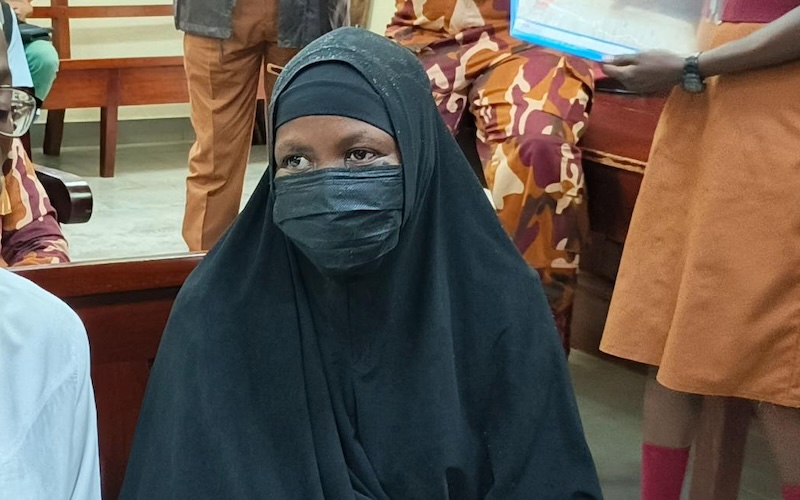


The High court in Kampala has sentenced two people to death and seven others to life imprisonment for the 2018 kidnap and murder of businesswoman Susan Magara, bringing to a close one of Uganda’s most high-profile criminal cases.
In a judgment delivered today, Wednesday, Justice Alex Mackay Ajiji sentenced Hajjarah Nakandi and Abbas Musa Buvumbo to death after finding that they played the most direct roles in Magara’s abduction, prolonged captivity, torture and eventual murder.
The judge sentenced Yusuf Lubega, twin brothers Hussein Wasswa and Hassan Kato Miiro, Muzamir Ssali, Muhammad Kisalita, Abubakar Kyewolya and Ismail Bukenya to life imprisonment for their participation in what he described as a meticulously planned criminal enterprise.
Bukenya, an imam at a makeshift mosque in Usafi, was found to have coordinated meetings where the kidnapping was planned and later oversaw the distribution of the ransom money.
Justice Ajiji ruled that the offences fell within the category of the “rarest of the rare” cases under Uganda’s sentencing guidelines, warranting the maximum penalty.
“The offences were horrific, brutal, callous, premeditated, calculated and preplanned. At most, it was a senseless killing because they had already obtained the ransom,” the judge said.
The court heard that Magara, 28, a cashier at Bwendero Dairy Farm, was abducted on the evening of February 7, 2018, while driving home in Kampala. At the time of her abduction, she was speaking on the phone with her friend, Yusuf Muhindo, who heard a violent struggle and her screams before the call was abruptly disconnected. Her vehicle was later recovered in Lungujja with its engine still running.
The kidnappers initially demanded between $1 million and $1.5 million before reducing the ransom to $200,000 (about Shs 700 million), which Magara’s family eventually paid.

Despite receiving the money, the kidnappers severed two of Magara’s fingers and sent them to her family together with a video in which she pleaded with her father to pay the ransom.
Her body was recovered on February 27, 2018, in Kitiko-Birongo village along the Entebbe Expressway. A postmortem examination found that she died from manual strangulation leading to asphyxia.
Justice Ajiji said the evidence showed that Magara endured nearly three weeks of physical and psychological torture. The court heard that she remained blindfolded throughout her captivity before she was eventually suffocated and strangled after her captors concluded she could identify them.
According to the judge, the brutality inflicted on the victim demonstrated that the convicts acted with a common intention motivated solely by financial gain.
The judge found that Nakandi ensured Magara remained blindfolded throughout her captivity, while Buvumbo carried out the most violent acts, including amputating her fingers, administering ketamine, suffocating her and manually strangling her.
The remaining convicts were found to have participated in planning the kidnapping, transporting the victim, guarding her during captivity, procuring food, collecting the ransom and organising meetings to distribute the proceeds.
Justice Ajiji said the offences targeted a young woman and underscored the need for deterrent sentences against organised kidnapping syndicates.
“It is important to deliver a sentence that shall deter other people from targeting women,” the judge said, adding that life imprisonment for the remaining convicts would protect society from organised criminals motivated by ransom and reinforce public confidence in the administration of justice.
During mitigation, defence lawyers led by Richard Kambuga urged the court to impose lighter sentences, arguing that the convicts had families and children who depended on them.
Kambuga further argued that imposing the death penalty would amount to revenge rather than justice and cited Biblical teachings in support of his submissions.
The prosecution, led by chief state attorney Joseph Kyomuhendo alongside Irene Nakimbugwe and Sharifah Nalwanga, opposed the request, maintaining that the case met the threshold for capital punishment under the “rarest of the rare” principle.
The prosecution also relied on Biblical principles in its submissions. Justice Ajiji remarked on the unusual exchange, observing that a Christian defence lawyer had relied on Biblical teachings while representing Muslim accused persons, while a Muslim prosecutor had similarly cited the Bible in arguing for the death penalty.
The judge also relied on the Supreme court decision in Ramathan Magara v Uganda (2014), which held that in exceptionally grave offences, the personal circumstances of offenders should carry less weight than the seriousness of the crime.
“I agree that the death sentence is appropriate. These offences were callous, cruel, premeditated and committed in pursuit of money with a common purpose,” Justice Ajiji ruled.
The court found that the prosecution had proved beyond reasonable doubt that the nine convicts jointly planned and executed Magara’s kidnapping, held her captive for nearly three weeks, demanded ransom, severed two of her fingers to force payment and ultimately murdered her to eliminate a witness who could identify them.
The conviction was based on evidence from 46 prosecution witnesses, including telecommunications forensic experts, DNA analysts, pathologists and investigators, as well as more than 80 exhibits comprising phone records, forensic reports, bank statements, land transaction documents, motor vehicle ownership records and crime scene reconstruction evidence.
The court further found that several of the convicts acquired expensive assets, including land, commercial trucks and motor vehicles, shortly after receiving the ransom money but failed to provide credible explanations for the source of the funds.
Justice Ajiji consequently ordered the forfeiture of 11 motor vehicles, parcels of land, certificates of title, logbooks and other assets acquired using the ransom proceeds.
He directed that the recovered assets, or their monetary value, be transferred to Magara’s family as compensation, saying the orders were intended to ensure that none of the convicts benefited from the proceeds of crime.
The judge also dismissed defence objections to the prosecution’s telecommunications evidence, holding that the phone records, forensic findings, financial transactions, witness testimony and the conduct of the accused formed an unbroken chain of evidence proving their common intention and participation in the offences.
Before concluding the proceedings, Justice Ajiji commended the security agencies for conducting extensive investigations into what he described as a sophisticated criminal enterprise.
Emotions briefly surfaced in the packed courtroom after the sentences were read. Nakandi’s husband broke down in tears and walked out moments after his wife was sentenced to death.
The nine convicts, however, showed little visible emotion. Most remained composed as the court imposed two death sentences and seven terms of life imprisonment, bringing to a close a trial that has lasted more than eight years since Magara’s abduction and killing.
The post Two sentenced to death, 7 to life over kidnap and murder of Susan Magara appeared first on The Observer Media Ltd.