
The World Cup Reminded Us What America Can Be
By George Cassidy Payne Photos: Wikimedia Commons The most powerful moments of the World Cup did not happen only inside stadiums. They happened in restaurants, city streets, neighborhood bars, national parks, and conversations between strangers who realized the person standing across from them was not a stereotype. They were a human being. Millions of people came to North America expecting to find a country they had seen through television screens, political debates, and international headlines. Instead, they discovered something far more complicated and far more meaningful: actual people. They found families cheering in stadiums. Volunteers helping visitors navigate unfamiliar cities. Small business owners welcoming new customers. Strangers sharing recommendations about their favorite restaurants, parks, and neighborhoods. For a few weeks, the world did not experience America as an argument. It experienced America as a place. And perhaps that is one of the most important things that could have happened. The World Cup has always been about more than soccer. It is a celebration of national identity, but it is also one of the largest human gatherings on earth. It creates moments where cultures meet, curiosity replaces suspicion, and people discover that the differences they imagined are often smaller than the similarities they share. During this tournament, millions of visitors encountered the United States not through political narratives or social media conflicts, but through direct experience. They walked our streets. They explored our cities. They visited our natural landscapes. They tasted our food. They encountered our contradictions. And yes, they encountered some very American forms of excess. International visitors were fascinated by our enormous grocery stores, massive restaurant portions, and the sheer scale of places like Bass Pro Shops and Buc-ee’s. They photographed hotel ice machines. They debated the cultural importance of ranch dressing. They laughed at our tendency to make everything bigger. Some of it was funny because, honestly, some of it is a little ridiculous. But beneath the humor was something more important. They were experiencing a culture that is creative, diverse, and constantly evolving. Every country has traditions that seem unusual from the outside. Every society has things that make visitors pause and ask, “Why do you do that?” Curiosity is often the beginning of understanding. And the World Cup gave the world a reason to be curious about America. Some of the most memorable moments of the tournament had little to do with what happened on the field. Scottish fans transformed Boston into a celebration of music, friendship, and national pride, filling pubs and neighborhoods with such enthusiasm that locals joked they had nearly emptied the city’s supply of beer. Norwegian supporters brought their famous row-bow celebration to Times Square, turning one of the world’s most recognizable public spaces into a spontaneous display of joy and cultural pride. In Atlanta, more than 500,000 visitors arrived for matches and the FIFA Fan Festival. Fans embraced local traditions, documenting their love for American staples like Waffle House and Carolina barbecue. Local businesses became international gathering places where conversations began over shared meals. In Philadelphia, Brazilian supporters transformed the famous Rocky Steps into a massive celebration of music, dancing, and national pride. Local bars and restaurants experienced crowds comparable to some of the biggest sporting events in America. Across the country, visitors traveled between host cities and encountered an America that rarely appears in political debates. They found roadside attractions, family restaurants, neighborhood gathering places, and landscapes that inspire awe. They did not simply attend matches. They experienced a country. And perhaps most importantly, they met Americans. One of the great dangers of modern life is that we increasingly believe we know people we have never met. We learn about entire countries through headlines. We form opinions about communities through viral videos. We reduce millions of individuals into political categories and cultural stereotypes. The World Cup offered a powerful reminder that human beings cannot be understood from a distance. The visitor from another country is not simply a representative of a nation. They are a person with a family, a history, a sense of humor, struggles, hopes, and dreams. The same is true of Americans. For many people around the world, America is often encountered through images of political division, economic power, and cultural conflict. Those things are real. We should not ignore our challenges. But America is also the volunteer helping a visitor find their seat at a stadium. It is the stranger explaining which hiking trail to visit. It is the f
 Black News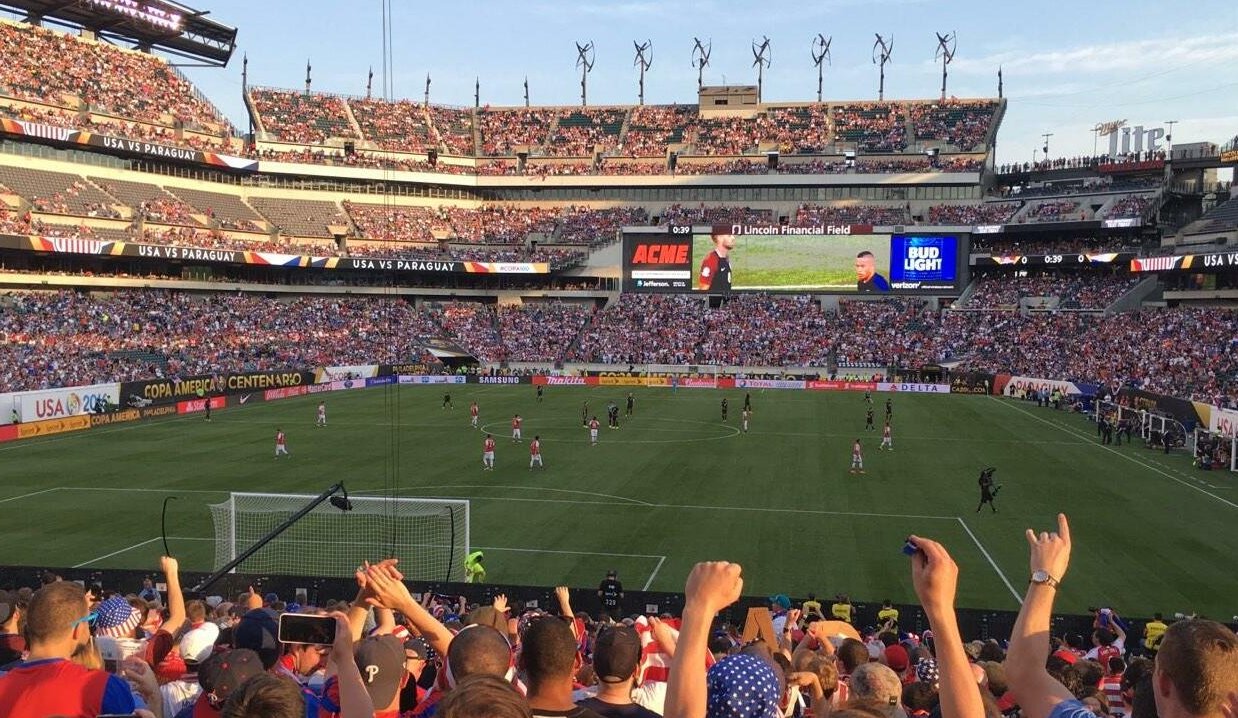
By George Cassidy Payne
Photos: Wikimedia Commons
The most powerful moments of the World Cup did not happen only inside stadiums. They happened in restaurants, city streets, neighborhood bars, national parks, and conversations between strangers who realized the person standing across from them was not a stereotype. They were a human being.

Millions of people came to North America expecting to find a country they had seen through television screens, political debates, and international headlines. Instead, they discovered something far more complicated and far more meaningful: actual people.
They found families cheering in stadiums. Volunteers helping visitors navigate unfamiliar cities. Small business owners welcoming new customers. Strangers sharing recommendations about their favorite restaurants, parks, and neighborhoods.
For a few weeks, the world did not experience America as an argument.
It experienced America as a place.
And perhaps that is one of the most important things that could have happened.
The World Cup has always been about more than soccer. It is a celebration of national identity, but it is also one of the largest human gatherings on earth. It creates moments where cultures meet, curiosity replaces suspicion, and people discover that the differences they imagined are often smaller than the similarities they share.
During this tournament, millions of visitors encountered the United States not through political narratives or social media conflicts, but through direct experience.
They walked our streets. They explored our cities. They visited our natural landscapes. They tasted our food. They encountered our contradictions.
And yes, they encountered some very American forms of excess.
International visitors were fascinated by our enormous grocery stores, massive restaurant portions, and the sheer scale of places like Bass Pro Shops and Buc-ee’s. They photographed hotel ice machines. They debated the cultural importance of ranch dressing. They laughed at our tendency to make everything bigger.
Some of it was funny because, honestly, some of it is a little ridiculous.
But beneath the humor was something more important. They were experiencing a culture that is creative, diverse, and constantly evolving.
Every country has traditions that seem unusual from the outside. Every society has things that make visitors pause and ask, “Why do you do that?”
Curiosity is often the beginning of understanding.
And the World Cup gave the world a reason to be curious about America.
Some of the most memorable moments of the tournament had little to do with what happened on the field.
Scottish fans transformed Boston into a celebration of music, friendship, and national pride, filling pubs and neighborhoods with such enthusiasm that locals joked they had nearly emptied the city’s supply of beer.
Norwegian supporters brought their famous row-bow celebration to Times Square, turning one of the world’s most recognizable public spaces into a spontaneous display of joy and cultural pride.
In Atlanta, more than 500,000 visitors arrived for matches and the FIFA Fan Festival. Fans embraced local traditions, documenting their love for American staples like Waffle House and Carolina barbecue. Local businesses became international gathering places where conversations began over shared meals.
In Philadelphia, Brazilian supporters transformed the famous Rocky Steps into a massive celebration of music, dancing, and national pride. Local bars and restaurants experienced crowds comparable to some of the biggest sporting events in America.
Across the country, visitors traveled between host cities and encountered an America that rarely appears in political debates. They found roadside attractions, family restaurants, neighborhood gathering places, and landscapes that inspire awe.
They did not simply attend matches.
They experienced a country.
And perhaps most importantly, they met Americans.
One of the great dangers of modern life is that we increasingly believe we know people we have never met.
We learn about entire countries through headlines. We form opinions about communities through viral videos. We reduce millions of individuals into political categories and cultural stereotypes.
The World Cup offered a powerful reminder that human beings cannot be understood from a distance.
The visitor from another country is not simply a representative of a nation. They are a person with a family, a history, a sense of humor, struggles, hopes, and dreams.
The same is true of Americans.
For many people around the world, America is often encountered through images of political division, economic power, and cultural conflict. Those things are real. We should not ignore our challenges.
But America is also the volunteer helping a visitor find their seat at a stadium.
It is the stranger explaining which hiking trail to visit.
It is the family recommending their favorite local restaurant.
It is the immigrant helping a traveler navigate an unfamiliar city.
In Seattle and Houston, immigrant volunteers played an important role helping international visitors navigate stadiums, training facilities, and local communities. Their presence reflected something fundamental about the American experience: newcomers do not simply arrive in America. They help create America.

This lesson became personal for me through the experience of a close friend.
One of my best friends traveled with his brother from Denver, Colorado, to Guadalajara, Mexico, to attend the Colombia versus DR Congo World Cup match.
When he told me about the trip, I was thrilled for him. Watching a World Cup match in another country is the kind of experience many sports fans dream about. To witness the passion, culture, and energy surrounding a global event firsthand is something truly special.
I was also a little jealous.
I have to confess that.
But his trip forced me to ask myself an important question: Would I have done the same thing?
And if not, why not?
The honest answer is that, like many Americans, I have absorbed certain messages about Mexico for much of my life. We are often presented with images of cartel violence, danger, and instability. We are sometimes encouraged to see Mexico primarily as a place to fear rather than a place filled with millions of people living ordinary, meaningful lives.
Of course, every country has real challenges. But how much of our fear is based on reality, and how much comes from a constant stream of images that prevent us from seeing the full picture?
My friend chose not to let fear make the decision for him.
He followed his passion for soccer. He followed his curiosity. He followed his desire to experience something beyond his own familiar surroundings.
And what did he discover?
Not a stereotype.
A country.
He found hospitality, culture, history, food, music, and people eager to share their home with visitors.
His experience expanded his understanding because he was willing to step beyond the boundaries created by fear.
That is one of the great gifts of travel. It challenges assumptions. It complicates the stories we inherit. It reminds us that no country can be reduced to its worst moments.
Fear can protect us.
But fear can also limit us.
When we allow fear to determine where we go, who we meet, and what we believe, we shrink our world.
When we choose curiosity instead, the world becomes larger.
This is where the ideas of philosopher Karl Popper remain profoundly relevant.
In The Open Society and Its Enemies, Popper argued that free societies are strengthened by openness: openness to new ideas, criticism, diversity, and human exchange.
“We are social creatures to the inmost center of our being,” Popper wrote.
Human beings do not flourish in isolation. We develop through relationships, conversations, friendships, and encounters with people whose experiences differ from our own.
Popper warned about the dangers of the “closed society,” a world built around rigid identities, unquestioned beliefs, and suspicion toward outsiders.
Closed societies seek comfort through separation.
Open societies discover strength through exchange.
A closed society fears difference.
An open society learns from it.
Popper also understood that openness requires responsibility. A free society must defend the conditions that allow freedom to exist. As he famously wrote, “Unlimited tolerance must lead to the disappearance of tolerance.”
A healthy democracy can maintain borders, uphold laws, and protect its citizens while still embracing the diversity and exchange that make societies stronger.
The choice is not between chaos and isolation.
The choice is between fear and confidence.
Few issues reveal this tension more clearly than immigration.

Immigrants have always helped shape America. They have built businesses, advanced science, enriched the arts, strengthened communities, served in our military, taught in our schools, and cared for our families.
Immigration is not a footnote in American history.
It is American history.
The United States has never been powerful because it kept the world away. It has been powerful because it invited people from around the world to contribute to something larger than themselves.
That is not weakness.
That is our strength.
The World Cup demonstrated this in a way that no political campaign could manufacture.
People did not develop a deeper appreciation for America because of a speech or a slogan.
They experienced America through relationships.
They met us.
And being met changed everything.
We often think international relations happen only in government buildings, conference rooms, and diplomatic meetings.
But some of the most important diplomacy happens in ordinary places.
It happens over shared meals.
It happens on city streets.
It happens when someone from another country visits an American landscape and understands why we protect our public lands.
It happens when fans from different nations celebrate together.
The World Cup may have done more to improve America’s image around the world than any carefully designed public relations effort because it allowed people to experience the country without a filter.
Not the America of stereotypes.
Not the America of political advertisements.
The America of everyday life.
A country that is loud, complicated, imperfect, creative, generous, and always becoming.
The greatest lesson of the World Cup is not about soccer.
It is about humanity.
It is about remembering that democracy is not sustained by people who all look alike, think alike, or come from the same places. It is sustained by people willing to build something together despite their differences.
America’s greatest strength has never come from closing itself off from the world.
It has come from engaging with the world.
The World Cup gave us a glimpse of America at its best: a place where strangers become neighbors, where cultures meet and create something new, and where diversity becomes not a source of fear but a foundation for belonging.
The open society is not simply a philosophical idea.
It is a daily practice.
And for a few unforgettable weeks, the world came here and reminded us why it still matters.

George Cassidy Payne, syndicated by PeaceVoice, is a Rochester-based writer whose work sits at the intersection of politics, ethics, and lived experience. A poet, philosopher, and 988 crisis counselor, he covers issues of democracy, justice, and community resilience.