South Africa insists that it is still friends with most of Africa, as it denies being isolated
South Africa is looking to ensure that its relationship with fellow African countries remains untainted following an ugly episode of xenophobia and anti-immigration demonstrations that swept the country over the last few months.
 Black News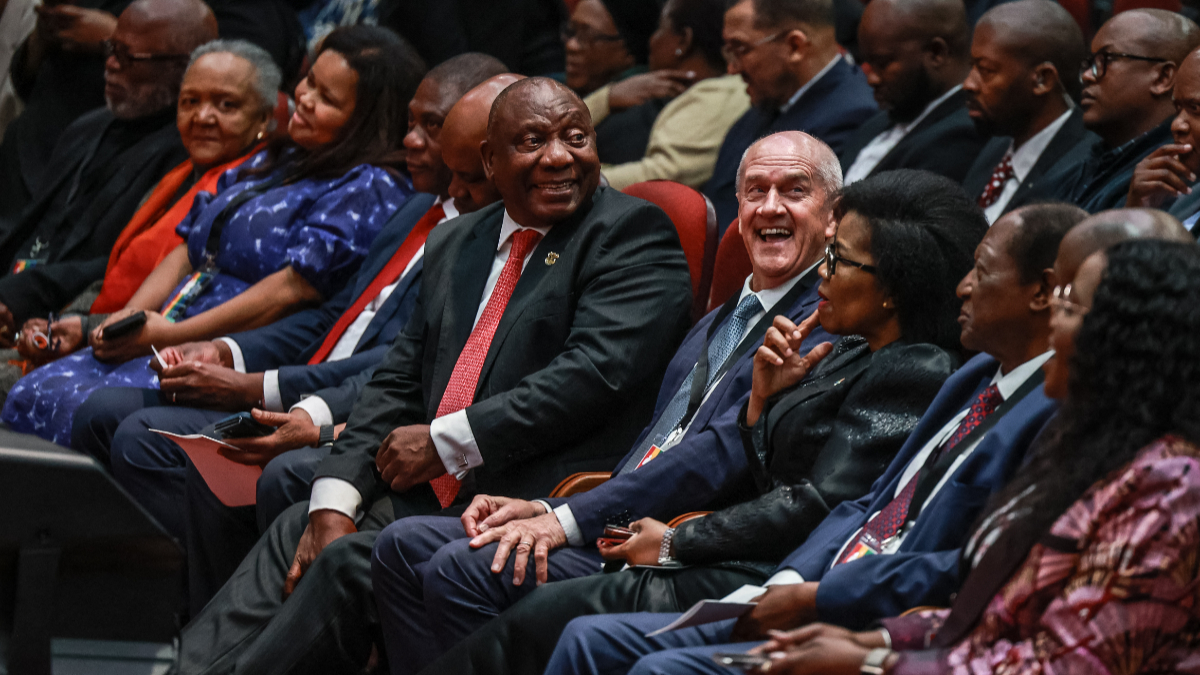
![South African President Cyril Ramaphosa (CL) and Former Minister and constitutional negotiator Roelf Meyer (CR) looks at attendees during the first National Convention at the University of South Africa (UNISA) in Pretoria on August 15, 2025. [Photo by Phill Magakoe/AFP via Getty Images]](https://ocdn.eu/pulscms/MDA_/9c6103cfc74e4b59be73ec193a24adf9.jpg)
South Africa is looking to ensure that its relationship with fellow African countries remains untainted following an ugly episode of xenophobia and anti-immigration demonstrations that swept the country over the last few months.
- South Africa has faced backlash from other African countries due to recent xenophobic and anti-immigration protests targeting African nationals.
- Some countries, including Nigeria and Ghana, reported that innocent citizens were harmed or killed during these incidents.
- The tensions led Ghana to postpone a scheduled visit from South African President Cyril Ramaphosa, fearing possible violent protests.
- South Africa's government has begun damage control, denying claims that the country is being isolated on the continent.
South African citizens, for over 3 months, have embarked on an aggressive campaign to deport African nationals tagged as illegal migrants from its borders.
This has led to some complications with some African countries, including Nigeria and Ghana, which alleged that some of their innocent citizens were harmed or killed during the protests.
The pushback against the protests in the Southern African country has been swift, as Africans across the continent consider South Africa’s actions very hostile.
A notable instance of this sentiment occurred when Ghana deferred the scheduled official visit of South African President Cyril Ramaphosa.
The country noted that a visit by the South African president at such a delicate time could lead to violent protests.
This sort of reaction captures the tension currently existing between South Africa and some African countries that felt victimized by their actions.
As a result, the South African government has been forced to step in and control the narrative before emotions flare out of control.
In the last few days, the South African administration has initiated measures characterized by observers as damage control.
DON’T MISS THIS: Nigeria promises to take action against the South African police for the murder of its citizens
South Africa denies being isolated
South Africa’s presidency, this week, issued a statement to debunk claims that South Africa is being isolated by other African countries.
During a media session at the Union Buildings on Wednesday, Presidential Spokesperson Vincent Magwenya said that the government has noticed that a campaign to paint South Africa as a "pariah state" has been ongoing.
![Vincent Magwenya [Source:X:@PresidencyZA]](https://ocdn.eu/pulscms/MDA_/a29281818412e15a8cd1f1ca265b291c.jpg)
This reaction by Africans is despite the fact that the government has detached itself from all forms of vigilantism against foreign nationals.
“Over the last two months, we have observed a sustained campaign that seeks to isolate South Africa from the rest of the African continent, under the guise of protesting against the recent wave of anti-illegal migration protests that we have recently experienced here in South Africa.
This campaign has sought to create an impression that South Africa is now a pariah state, which must be referred to international courts,” he said.
“More concerning has been the peddling of false information by a diplomatic representative of a country that has become central to this campaign. Even ordinary diplomatic exchanges over meetings have been deliberately misrepresented to create an impression that South Africa is being isolated,” he added.
Magwenya emphasized that the Presidency categorically rejects any attempts to mischaracterize the nation's international standing, as seen on the South African government News Agency.
“As the Presidency, we firmly reject and caution against the peddling of false information against South Africa, and we further assert that any campaign that seeks to misrepresent what South Africa is and represents will be rejected with the utmost contempt that it deserves,” Magwenya said.
The spokesman cited Ramaphosa's interactions with African leaders, including conversations with the presidents of Botswana, Kenya, Malawi, Mozambique, and Zimbabwe, through bilateral meetings, phone conversations, Bi-National Commissions, and Southern African Development Community (SADC) summits.
He mentioned the President's recent working visit to the Democratic Republic of the Congo, where South Africa continues to collaborate with the Africa Centers for Disease Control and Prevention (Africa CDC), and promised financial support to help the nation respond to the Ebola outbreak.