REMEMBERING THE SOUND, CELEBRATING THE LEGACY: Shelly Clark White Keeps the Honey Cone Legacy Singing
There are certain voices that do more than entertain, they become part of the soundtrack of our lives. For generations of R&B and soul fans, the unmistakable sound of Honey Cone is one of those voices. From the unforgettable “Want Ads” to “Stick Up” and “One Monkey Don’t Stop No Show,” Honey Cone helped define […] The post REMEMBERING THE SOUND, CELEBRATING THE LEGACY: Shelly Clark White Keeps the Honey Cone Legacy Singing appeared first on Perception Magazine.
 Black News

There are certain voices that do more than entertain, they become part of the soundtrack of our lives. For generations of R&B and soul fans, the unmistakable sound of Honey Cone is one of those voices. From the unforgettable “Want Ads” to “Stick Up” and “One Monkey Don’t Stop No Show,” Honey Cone helped define an era of music in the 1970s. Their songs found their way into American households, climbed the charts, and decades later, continue to resonate with audiences and influence new generations of R&B and hip-hop artists. At the heart of that enduring legacy is Shelly Clark White, the last original member still actively performing with Honey Cone.
For White, however, keeping Honey Cone alive isn’t simply about revisiting the past. It is about honoring where the group came from while giving its legacy a future. White’s connection to Honey Cone stretches back to the late 1960s. After the passing of original lead singer Edna Wright and the retirement of Carolyn Willis, White found herself as the only original member still performing. Rather than allowing the legendary group’s name and music to fade away, she decided: Honey Cone would continue.
“I have been singing with the group since 1968,” White explains. “The original lead singer was Edna Wright, who is deceased now, and Carolyn Willis has since retired. Since I was the only one left, I decided to re-imagine the group with two other singers.” chat
That decision ushered Honey Cone into a new chapter.

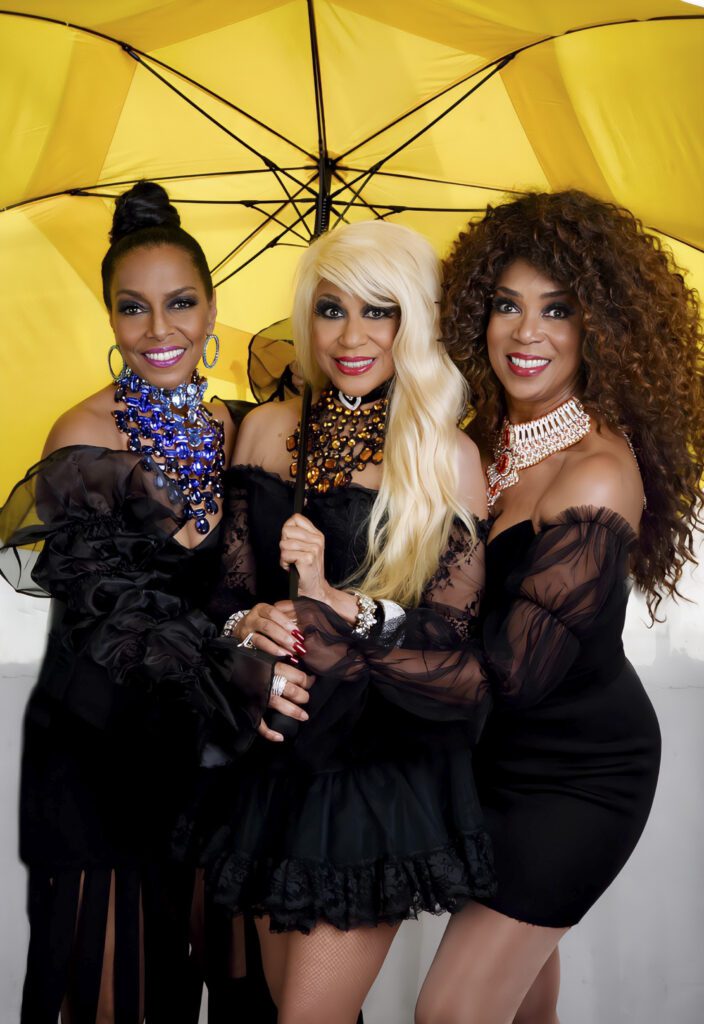
White credits her husband, Verdine White of Earth, Wind & Fire, with helping connect her to one of the singers who would eventually join the revamped group. From there, the new Honey Cone came together with Kathy Merrick and Wendy Smith-Brune. The result is a group that respects the legacy of the original Honey Cone while introducing its music to audiences who may be discovering the sound for the first time.
Success wasn’t always something White expected—or even wanted.
Before Honey Cone became a household name, White had reservations about joining a girl group. She was particularly hesitant about signing with the legendary songwriting and production team Holland-Dozier-Holland, whose names were already associated with some of Motown’s greatest successes. White had seen firsthand how demanding the music business could be. She watched fellow Honey Cone member Carolyn Willis become increasingly unhappy with the pressures of life on the road.
“Carolyn Willis, who had retired, was very unhappy during her stint in the Honey Cone,” White recalls. “She was complaining more and more about how tired and how broke she was until the point she didn’t want to do it anymore.”
The experience made White question whether a girl group was the right path for her. “This was the reason I didn’t want to sign with Holland-Dozier in the beginning,” she says. “I had no intention of being in a girl group from the beginning.”
But after appearing with the other singers on an Andy Williams television special, Edward Holland liked their look and offered them a recording contract. Shelly initially declined, encouraged the others to move forward without her, and left for Europe. However, after being repeatedly approached, she eventually agreed to sign, and the group became Honey Cone.
For women entering the entertainment industry during the 1960s and 1970s, being able to sing was only part of the equation. Performers were expected to master presentation, fashion, choreography, photography and the many elements that went into creating a complete entertainment package. Honey Cone received extensive preparation before stepping into the spotlight.
“They sent us to charm school and gave us choreographers, photographers, wardrobe designers, and all kinds of stuff,” White remembers. The preparation would soon pay off. Honey Cone’s breakthrough came with “Want Ads,” a song that went far beyond expectations and ultimately reached No. 1 on the charts.
The record’s success was so significant that it even knocked the Rolling Stones from the top spot. For White, however, the magnitude of what was happening wasn’t immediately clear.
“I didn’t think any of those records would hit even though I liked them,” she admits.
Then everything changed. Honey Cone was suddenly on the road, performing for audiences across the country and opening for major acts, including George Clinton and Parliament-Funkadelic. But life as a successful recording artist came with sacrifices. Touring meant long stretches away from family. Holidays, birthdays and family gatherings were missed, replaced by hotel rooms, buses, airplanes, rehearsals and performances.
“Being on the road wasn’t bad, it just meant you would be away from your family for a long time,” White says. “You miss holidays, birthdays, you miss all kinds of stuff, but you’re dedicated to your craft.”
For White, the sacrifices were part of the price of pursuing a dream. A successful group isn’t built on talent alone. Chemistry matters—and White says Honey Cone felt that difference when Carolyn Willis left. “When Carolyn left, the chemistry was gone,” she says. There were attempts to continue the Honey Cone name with different members, but replicating the original magic proved difficult.
“Edna put the group back together with some other girls except me,” White recalls. “Edward Holland signed some other Honey Cone that he was recording and nothing was really hitting.”
The name may have remained, but the chemistry that had helped define the original group was difficult to recreate. Years later, White would take matters into her own hands. Approximately 12 years ago, she reimaged Honey Cone with Merrick and Smith-Brune, giving the legendary name another opportunity to make music and perform before a new generation. Long before Honey Cone, White was already building a career in entertainment. Her professional journey included Broadway performances and touring with legendary entertainer Cab Calloway. Her years on the road also exposed her to a difficult reality that existed alongside America’s music industry: racism and segregation. White remembers traveling during the 1950s and 1960s and witnessing discrimination firsthand. Her mother, a Russian Jewish woman married to a Black man, experienced discrimination because of their interracial marriage. White recalls the hostility directed toward her family and the obstacles they encountered simply because they wanted to live and travel together.
“I learned a great lesson from touring as an Ikette with Ike and Tina Turner, doing the challenges of racism during that Chitlin’ Circuit era,” she says. Her experiences with her mother were equally painful.
“In the ’50s it was worse when I traveled with Cab Calloway and with my mother, who was a Russian Jew. She had to stay across town in the white hotels.”
White recalls sneaking across town to see her mother and hearing racial slurs directed toward her family. Her father was also jailed on multiple occasions because of his marriage to a white woman. Those experiences could have left lasting scars. Instead, they became part of the strength and resilience that White carried throughout her life. And in a world divided by race, music provided a rare place where people could come together. Music didn’t just shape White’s career. It also played a major role in her personal life. For 46 years, she has been married to Verdine White, the legendary bassist and founding member of Earth, Wind & Fire. Their love story began, fittingly, in a recording studio. White remembers arriving at a recording session produced by Ralph Johnson without realizing that she was about to work alongside members of Earth, Wind & Fire.
“I had no idea I was going to step into the studio and see all of Earth, Wind & Fire as the studio musicians,” she recalls.
She was especially excited to discover that Verdine was playing in her session. Yet, despite being in the same studio, the two didn’t immediately meet. “I didn’t see Verdine White until six months later,” she says. “I saw him at a car wash.”
Eventually, Verdine began producing White, and their professional relationship grew into something much deeper. Nearly five decades later, the couple continues to share a life deeply connected to music. When people ask how they have managed to remain together for so long, White answers with the kind of humor that reveals the playfulness behind their enduring relationship.
“People always ask how we do it. I always say our biggest fight is over the mirror.” And then she laughs. After six decades in entertainment, White knows that longevity requires much more than talent. It requires discipline, determination and taking care of yourself. Now in their 70s, White and Verdine have become increasingly mindful of hydration, rest, health and maintaining the energy required to continue performing. White says her husband remains someone she admires.

“I have my husband to look up to. He never did drugs, alcohol or anything else. He was always about entertaining.”
While Honey Cone experienced its own success before Earth, Wind & Fire became a global phenomenon, White says Verdine’s dedication to his career continues to inspire her. “We have six decades of being in the industry that we can fall back on looking at him being his best.”
The road, however, hasn’t always been easy. White recalls a period when health challenges temporarily prevented Verdine from touring. Six months later, he returned to the stage at the Hollywood Bowl. His comeback reminded White that even when life forces performers to step away, the stage can still be waiting for them. She also points to other beloved entertainers who have faced health challenges while continuing to perform. Her message to performers in their 70s is straightforward: take care of yourself and keep moving. For Shelly Clark White, the story of Honey Cone isn’t finished. She isn’t interested in simply looking backward at the group’s glory days. She is still performing, still creating and still introducing Honey Cone’s music to audiences old and new.
Shelly Clark White has lived several musical lifetimes. She has performed on Broadway, toured with legendary entertainers, experienced the thrill of a No. 1 hit and endured the challenges of the music business. She has witnessed racism and segregation, built a 47-year marriage with one of music’s most respected musicians and continued performing well into her 70s. Through it all, one thing has remained constant: Honey Cone’s songs may have first captured America’s attention decades ago, but their sound continues to travel across generations.
And when Shelly Clark White steps onto the stage today, she carries much more than a catalog of hit records. She carries history. She carries resilience. She carries the memories of those who came before her. And most importantly, she continues to carry the sound. The Honey Cone legacy isn’t simply something to remember. It is something to hear, feel and celebrate live and in person.
The legacy lives on.
The post REMEMBERING THE SOUND, CELEBRATING THE LEGACY: Shelly Clark White Keeps the Honey Cone Legacy Singing appeared first on Perception Magazine.