One of the world’s last DC-8 jets runs off Congo runway after 56 years in service
One of the world’s last operational Douglas DC-8 jets has suffered a runway accident in the Democratic Republic of Congo, potentially ending the working life of an aircraft built approximately 56 years ago.
 Black News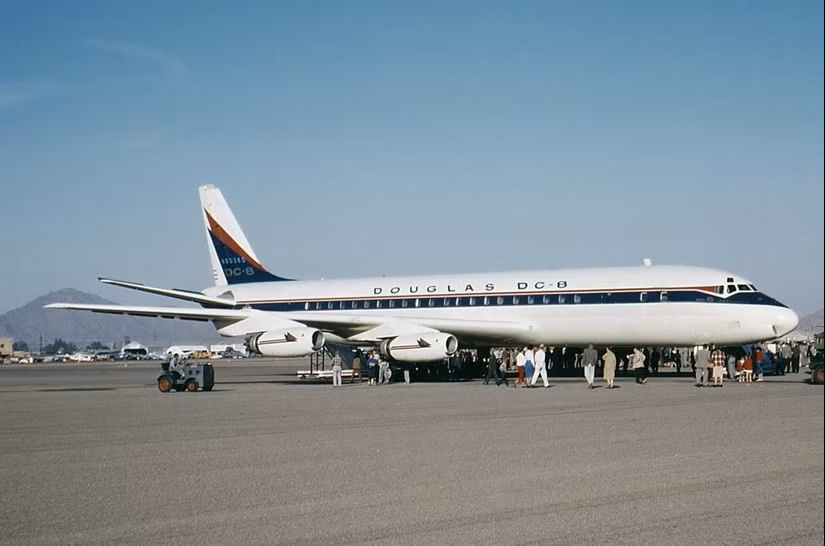
![douglas-dc-8-in-company-livery-at-phoenix-sky-harbor-int-l-airport-kphx-usa-arizona [simpleflying]](https://ocdn.eu/pulscms/MDA_/807618553db14e49e155df1795b776e7.jpg)
One of the world’s last operational Douglas DC-8 jets has suffered a runway accident in the Democratic Republic of Congo, potentially ending the working life of an aircraft built approximately 56 years ago.
- A rare Douglas DC-8 cargo aircraft ran off the runway at Kinshasa’s N’Djili International Airport.
- The approximately 56-year-old jet stopped on soft ground after its nose landing gear collapsed.
- No fatalities were reported, but the extent of the damage and the aircraft’s prospects of flying again remain unknown.
- Congo’s aviation-accident authority has opened an investigation and ordered the evidence at the scene to be preserved.
The four-engine cargo aircraft, registered 9S-AJO, left the runway at N’Djili International Airport in Kinshasa on September 8, according to Congo’s aviation-accident investigation authority.
The country’s Bureau Permanent d’Enquêtes d’Accidents et Incidents d’Aviation, or BPEA, identified the aircraft as a DC-8 operated by Trans Air Cargo Service. It dispatched investigators and called for the aircraft and evidence surrounding the accident to be protected pending examination.
The freighter reportedly veered to the left after landing on Runway 24 and stopped on soft ground outside the paved surface. Its nose landing gear collapsed, leaving the front section of the aircraft resting on the ground.
Images and videos from the airport show the long four-engine jet sitting nose-down beside the runway as emergency personnel inspect the scene.
No fatalities were reported, according to AeroTime’s account of the accident. A separate aviation-accident database lists four crew members and no passengers aboard, but BPEA has not publicly confirmed the number of occupants.
DON'T MISS THIS: Africa’s biggest airline crosses $9 billion in revenue despite Middle East conflict and Ebola disruptions
The authority has classified the occurrence as an accident. However, it has not established what caused the aircraft to leave the runway or disclosed the extent of the damage.
Weather reports indicated mist and reduced visibility around Kinshasa, but investigators have not determined whether conditions at the airport contributed to the accident.
The aircraft’s age and rarity have attracted particular attention.
9S-AJO was manufactured around 1970 and delivered to the American charter airline World Airways in March 1971. It was originally built as a DC-8-63CF before being converted into the DC-8-73CF configuration with more efficient and quieter CFM56 engines.
It eventually joined Kinshasa-based Trans Air Cargo Service, which has used ageing Western aircraft to transport freight within Congo and to other African destinations.
The aircraft was among only a handful of DC-8s believed to remain capable of commercial operations worldwide.
Fleet databases indicated that it was Trans Air Cargo Service’s only active aircraft immediately before the accident, although the airline has previously operated other DC-8s and several older cargo types.
It is not yet known whether 9S-AJO can be repaired. The collapsed landing gear and the stress generated when a large aircraft enters soft ground can cause structural damage that is not immediately visible.
The accident could therefore permanently reduce an already tiny worldwide fleet of working DC-8s.
Douglas developed the aircraft as a competitor to Boeing’s 707 during the first generation of commercial jet travel. The DC-8 first flew in 1958 and entered passenger service with Delta Air Lines and United Airlines in 1959.
Douglas and its successor, McDonnell Douglas, built 556 DC-8s before production ended in 1972.
Most disappeared from passenger service decades ago, but re-engined aircraft continued operating as freighters because of their cargo capacity and relatively durable airframes.
NASA retired its specially modified DC-8 research laboratory in 2024, while the American humanitarian organisation Samaritan’s Purse retired its aircraft in 2025.
The Kinshasa aircraft was therefore not merely an old freighter. It represented one of the final working examples of a jet whose service history stretched from the earliest years of commercial aviation into the modern era.
BPEA’s investigation is expected to examine the aircraft’s condition, its landing performance, runway conditions, visibility and the actions taken by the crew.
Until the authority releases its findings, the reason the aircraft left the runway and its ability to return to service remain uncertain.