Leave Love Here – making a monument for the unnamed psychiatric dead
Paula Reavey, whom I’ve known for years, has appreciated my work and I have talked to her psychology students a few times. She is currently Deputy Director of the Centre for the Sciences of Place and Memory at the University of Stirling. The Centre is a dynamic, collaborative, interdisciplinary research project advancing knowledge in relations ... Leave Love Here – making a monument for the unnamed psychiatric dead
 Black News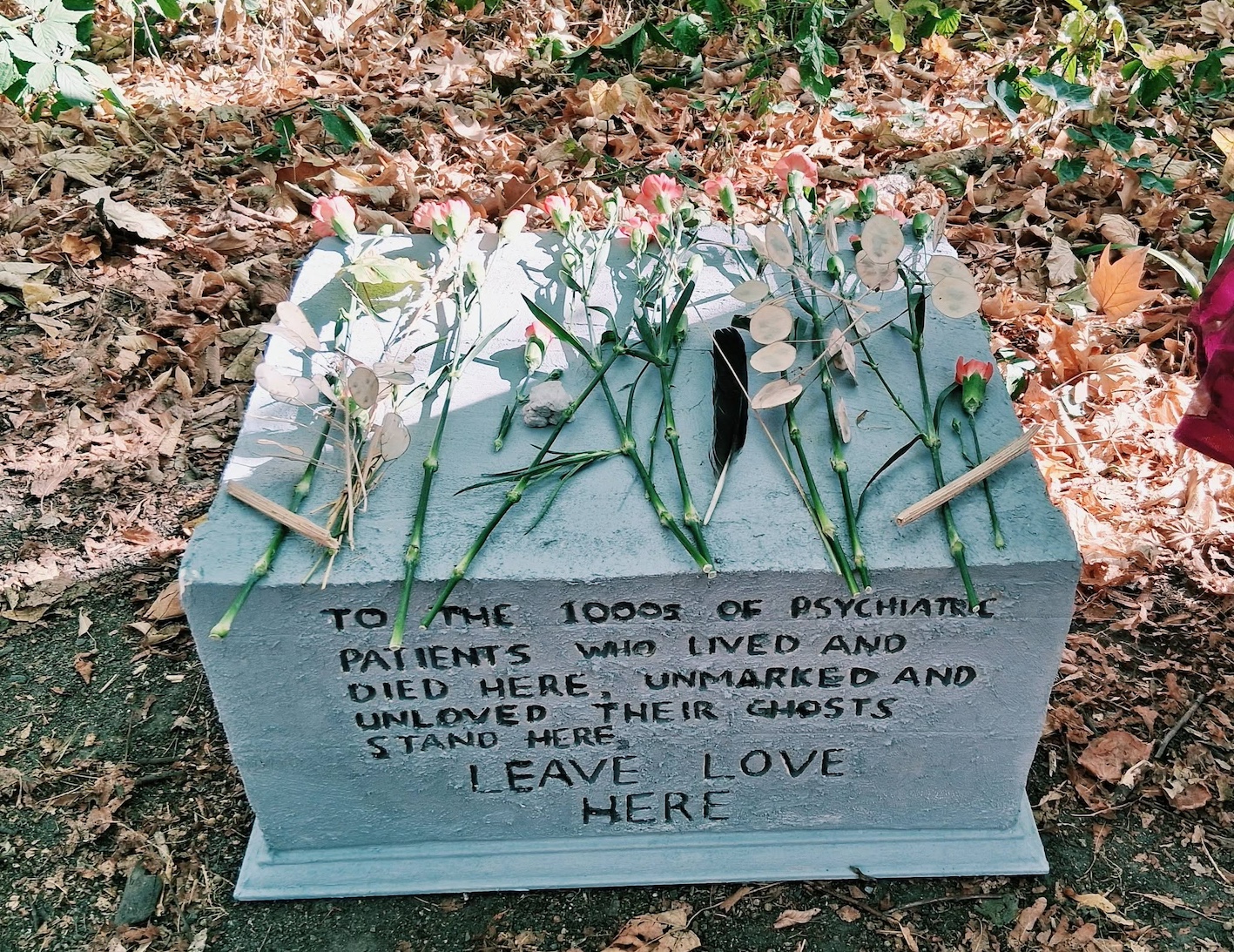
Paula Reavey, whom I’ve known for years, has appreciated my work and I have talked to her psychology students a few times. She is currently Deputy Director of the Centre for the Sciences of Place and Memory at the University of Stirling. The Centre is a dynamic, collaborative, interdisciplinary research project advancing knowledge in relations between place and memory. Along with Whitechapel Gallery, the Centre organised a St Clements Hospital Commemoration walking tour event for the 5th September 2026. St Clements was once a large psychiatric hospital in the East End of London until it closed its doors in 2006. The lives and experiences of those who lived there have left no trace. She asked me if I wanted to do an artistic response as part of the walking tour. I said yes.
I actually have a link to the area. Just down the road is Mile End Hospital, where I was born in 1970. I moved to South London when I was six months old. Growing up in Streatham in 1970s, I remember patients from Tooting Bec Mental Hospital walking around my neighbourhood, people moving out of their way as if they had the plague. That hospital closed down too. Those people have disappeared too.
One of my previous projects was Birdsong from Inobservable Worlds, a combined arts project, spanning literature, performance and film which explored and challenged the narrative in mental health. Part of my project was looking through the Wellcome mental health archives. Most of was of it was the professional voice, demeaning, pathologising, silencing. In a strange way this is a good thing. It is evidence of inhumanity. You do not know people’s life stories from their patient notes. I have also written about Lorina Bulwer, a needleworker and inmate of the lunatic ward of Great Yarmouth workhouse. She was lucky enough to have a brother who paid to have her buried in a marked plot. Most of the other patients didn’t, lying in unmarked graves. Many other asylums buried their dead, without the dignity of their names. At St Clements, there is a cemetery where many of its patients are buried, without acknowledgement of either their life or death. So I decided to create a plinth to hold no statues but ghosts, a gravestone to remember the purposefully forgotten. The process of making it was quite hard. Although, I am beginning to love sculpture, I am not used to it. I live near an industrial park where a kitchen fitting business leaves leftover materials outside for people to take away. I found some wood to create the basic shape. Another factory down the road had some insulation foamboard outside its premises and a local friend has some spare too, which I put around the wooden box to be able to carve into it. In the end, the only thing I had to pay for was the wooden moulding and the concrete craft paste. I didn’t have the right cutting equipment so my friend Nik dealt with the wood.
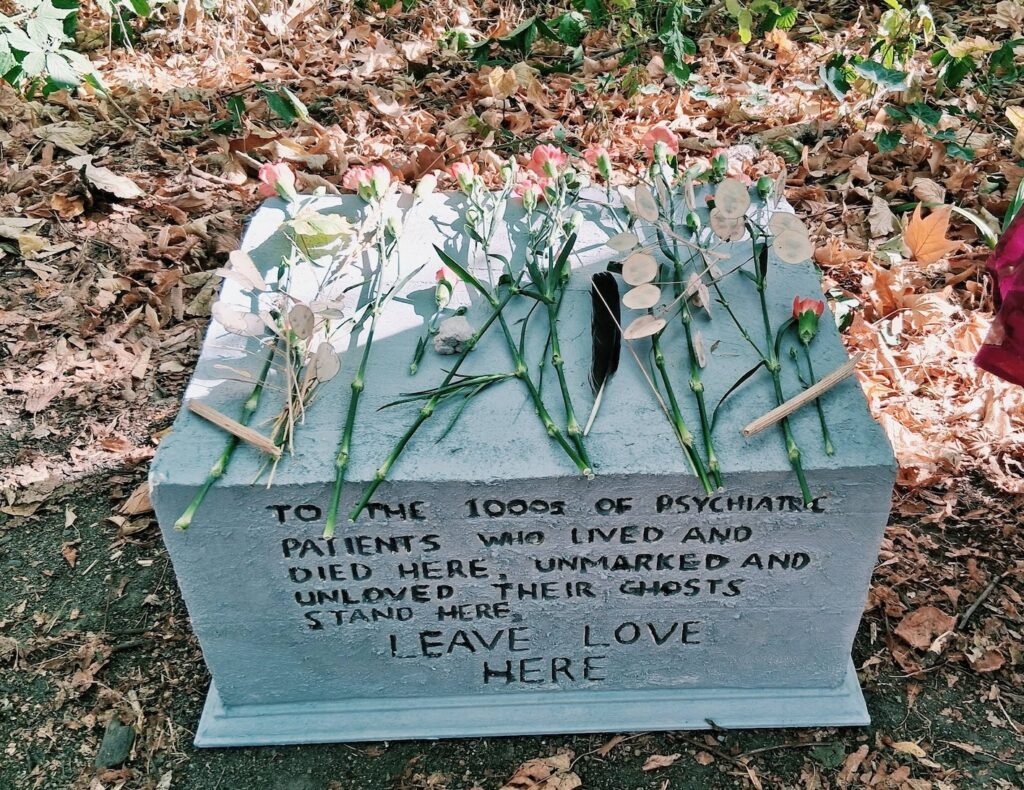
I placed it in the cemetery off the St Clements site where some patients were buried, their graves unmarked. Then I read a poem called YOU WERE HERE.
YOU WERE HERE
You were here
Hidden from view
But you were here
You were here
made into empty space
But you were here
You were here
rendered an unmade token
but you were here
You were here
deaths and dreams unmarked
But you were here
You were here,
patient notes don’t tell your story
But you were here.
You were here,
everything you said was not sickness
but you were here
You were here
the world hated you for your pain
but you were here
You were here
the rain hiding your tears
but you were here
You were here
holding a broken heart continually breaking
but you were here
You were here
a thousand hurt children
without the warm arms of love
But you were here
You were here
were you ever told
your life was precious
when you were here?
You were here
You were here
you were here
People were touched enough by it to leave flowers, stones, leaves, feather and sticks to show their love too.