Lagos Through Memory
Lagos’s identity begins with water. In 1472, the Portuguese navigator Ruy de Sequeira reached the coast and recorded the wetland area as Lago de Curamo. The name pointed to the lagoon network, creeks, barrier islands, and wetlands that shaped the coastline. But the place already had a name long before any European ship came near […] The post Lagos Through Memory appeared first on Nomad Africa Travel & Magazine.
 Black News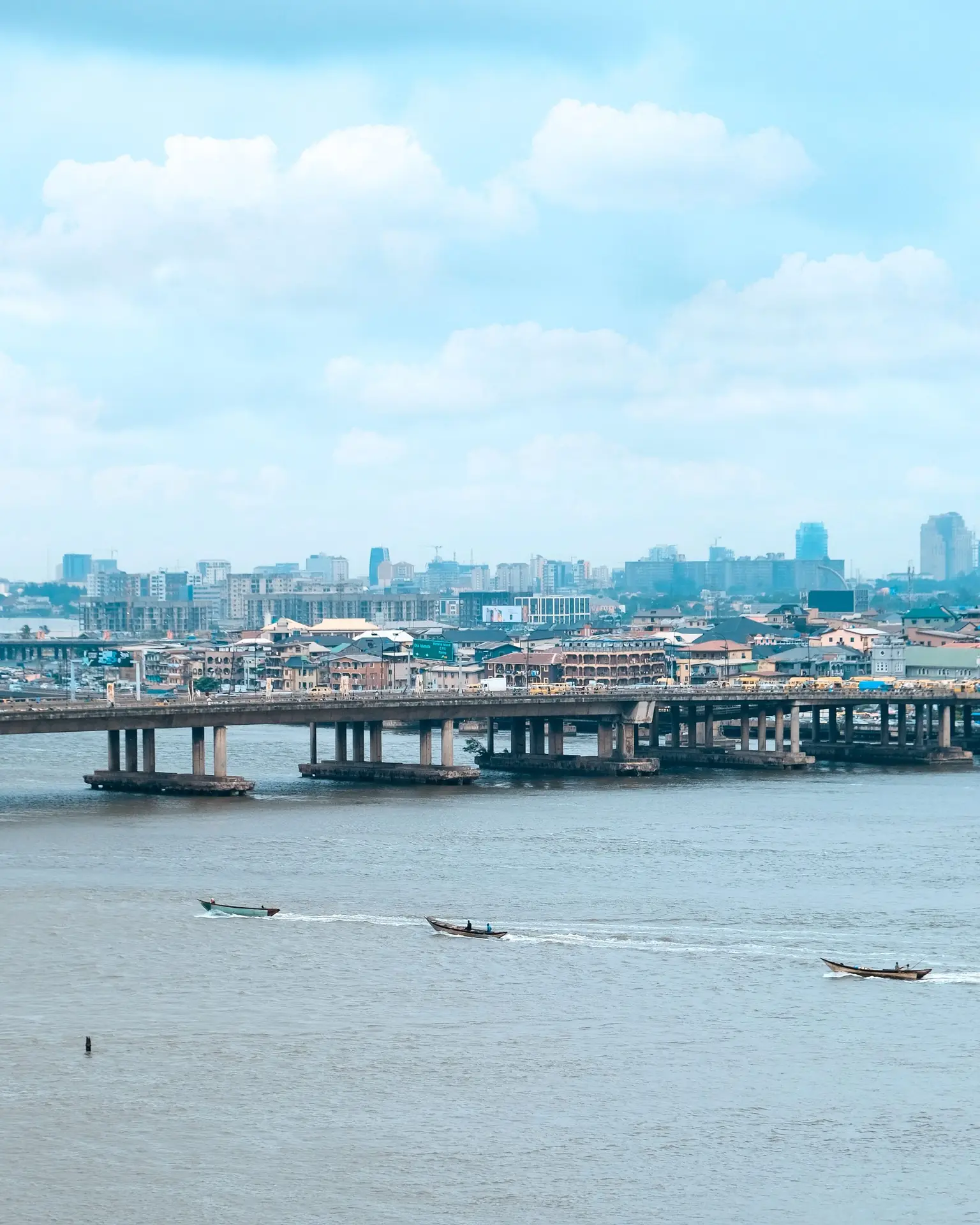
Lagos’s identity begins with water. In 1472, the Portuguese navigator Ruy de Sequeira reached the coast and recorded the wetland area as Lago de Curamo. The name pointed to the lagoon network, creeks, barrier islands, and wetlands that shaped the coastline. But the place already had a name long before any European ship came near the Bight of Benin: it was Eko, settled and governed by the Awori, a Yoruba subgroup who fished the creeks and farmed the land there. Historians note that the Portuguese name Lagos also echoed Lagos in the Algarve, a maritime town that served as a launch base for Atlantic expeditions. Whichever interpretation one follows, the core truth is clear: Lagos was named through its waterways.

The Lagos State Government records that about 22% of the state’s 3,577-square-kilometre area is water — a geography shaped by the Lagos and Lekki lagoons, creeks, rivers, wetlands and the barrier islands along its Atlantic coast. This watery landscape continues to shape Lagos’s culture, economy, and imagination. From fishing communities to ferry routes, from Tarkwa Bay weekends to the skyline rising over the lagoon, Lagos remains a city that moves with the tide.
I was born in Lagos, at a hospital in the Trinity neighbourhood, spent a few months in Ajegunle, and later moved to my grandmother’s home in another part of Lagos State. I left the city in 2009, at the age of 29, but Lagos still shapes how I think, create, and understand the world. Growing up across different parts of Lagos State gave me a layered sense of the city’s rhythms, contradictions, and relentless drive. Lagos is often described as a city that never sleeps, but that phrase barely captures its emotional temperature. In his 1968 study Urbanization in Nigeria, urban scholar Akin L. Mabogunje examined Lagos’s emergence as a modern metropolis, exploring its neighbourhoods, economic activity and changing urban structure. His work illuminates the complexity of a city where different ways of living, working and moving overlap — a tension that continues to fuel Lagos’s energy, adaptability and cultural force.
The act of celebration is a powerful cultural engine in Lagos. The city’s social calendar seems to reset every Friday afternoon, when work gives way to club nights, street gatherings, and the weekend owambe parties that have become a defining feature of Yoruba social life in Lagos. As Adwoa Owusuaa Bobie records in her 2020 study of Lagos fashion and social life, one participant, Rhoda, put it simply: “every weekend we have parties … every weekend is for parties, owambe.” Today, owambe has travelled into diaspora communities from Peckham to the Bronx, becoming a regenerative thread that keeps Lagos alive far from home.
Another engine is Nollywood. My early career unfolded inside Lagos’s entertainment ecosystem, where I worked as a correspondent covering film and culture. In the 2000s, Winis Hotel in Surulere was our informal newsroom — a place where actors gathered before the era of Instagram and online casting platforms. I interviewed stars like Mike Ezuruonye, Ashley Nwosu, Robert Peters and Mr Ibu, among many others, in its corridors.
Film scholar Jonathan Haynes has written extensively about the relationship between Lagos and Nollywood, examining how the city’s social, economic and cultural realities became intertwined with its film industry. Winis embodied that improvisational world: careers were built through presence, persistence and community.
By 2010, Lagos-born Nollywood creativity was already entering international conversations. In Berlin that year, Kunle Afolayan joined filmmakers and industry figures to discuss the future of African cinema at the Berlinale Talents event. Years later, I found myself in Frankfurt, Germany, at the Nollywood Film Festival Germany, where I officially spoke on the red carpet and contributed to the intellectual conversations around Nollywood and its global reach. More recently, at Nollywood Week Paris, I again encountered the expanding international conversation around a cinema whose creative pulse remains deeply connected to Lagos.
These experiences reinforced something I had understood in Lagos years earlier: the city is both a backdrop to Nollywood and part of its creative engine. The improvisation, ambition, networks and restless energy that shape Lagos travel with its stories, its filmmakers and its audiences. Even in Europe, I can feel Lagos in the room.
Travel through Memory
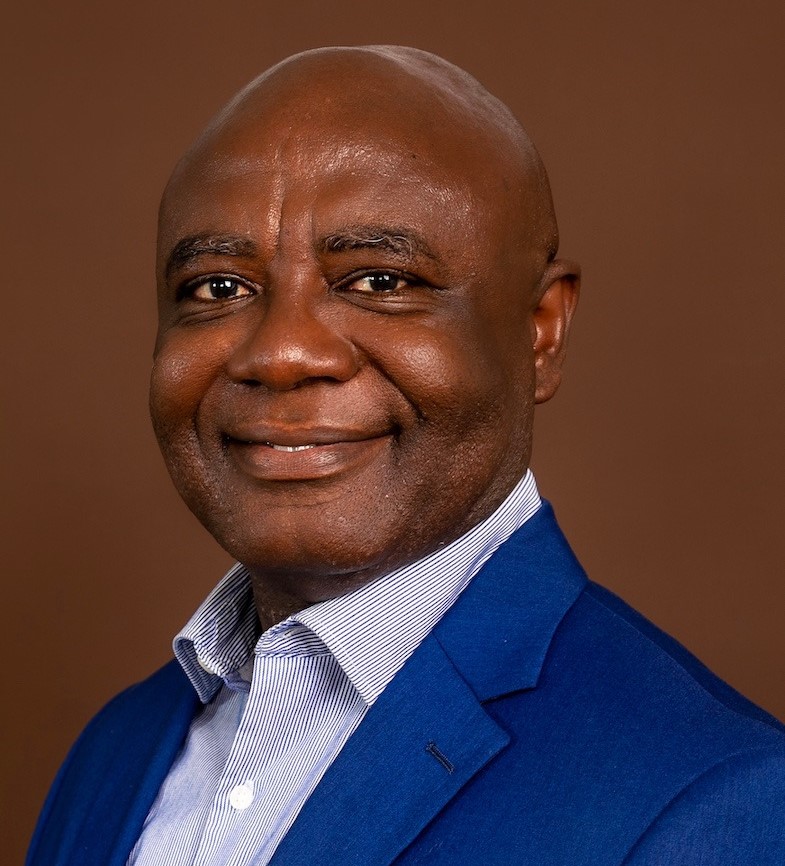
The photographs I carry from those years form a visual arc: birth in Trinity, early months in Ajegunle, Lagos birthdays, owambe ceremonies, journalism business cards, Nollywood interviews, and diaspora film festivals. The images allow me to return to Lagos without boarding a plane. They remind me that you don’t need to return to a place to reconnect with it. You can return through heritage, through storytelling, and through the cultural ecosystems that shaped you. Lagos has taught me that a city can be revisited through memory as powerfully as through a real, in-person trip. It’s also taught me that revisiting and reliving my culture, even far from home, can be a powerful form of healing. Perhaps the most regenerative journey we can take is the one that leads us back to ourselves.
Lagos is a city that never dies. Its immortality is nourished by the newcomers who arrive with ambition – and it has little patience for idleness. It asks something of you: to participate, adapt, find your way, and keep moving.
Perhaps that is why its official motto, “Centre of Excellence,” feels less like a slogan than a lived philosophy. Lagos welcomes you, but it also challenges you. For those who have called it home — and for those who arrive in pursuit of its opportunities — the city leaves something behind: a way of seeing, a way of striving, and a sense that there is always another horizon to reach.
Cities change. People leave. Generations move on. Yet Lagos lingers – in photographs, in memories, and in the lives of those it has touched.
The post Lagos Through Memory appeared first on Nomad Africa Travel & Magazine.