Inside the Dangote vs NNPC Power Struggle: Who Controls Nigeria’s Fuel Future?????????
By James Gbadamosi For decades, Nigeria’s fuel industry operated under a familiar structure. Crude oil was produced locally, exported abroad, refined elsewhere, and then imported back into the country for consumption. Today, that structure is facing its biggest disruption in modern history. At the centre of the disruption is Aliko Dangote. The billionaire businessman invested […]
 Black News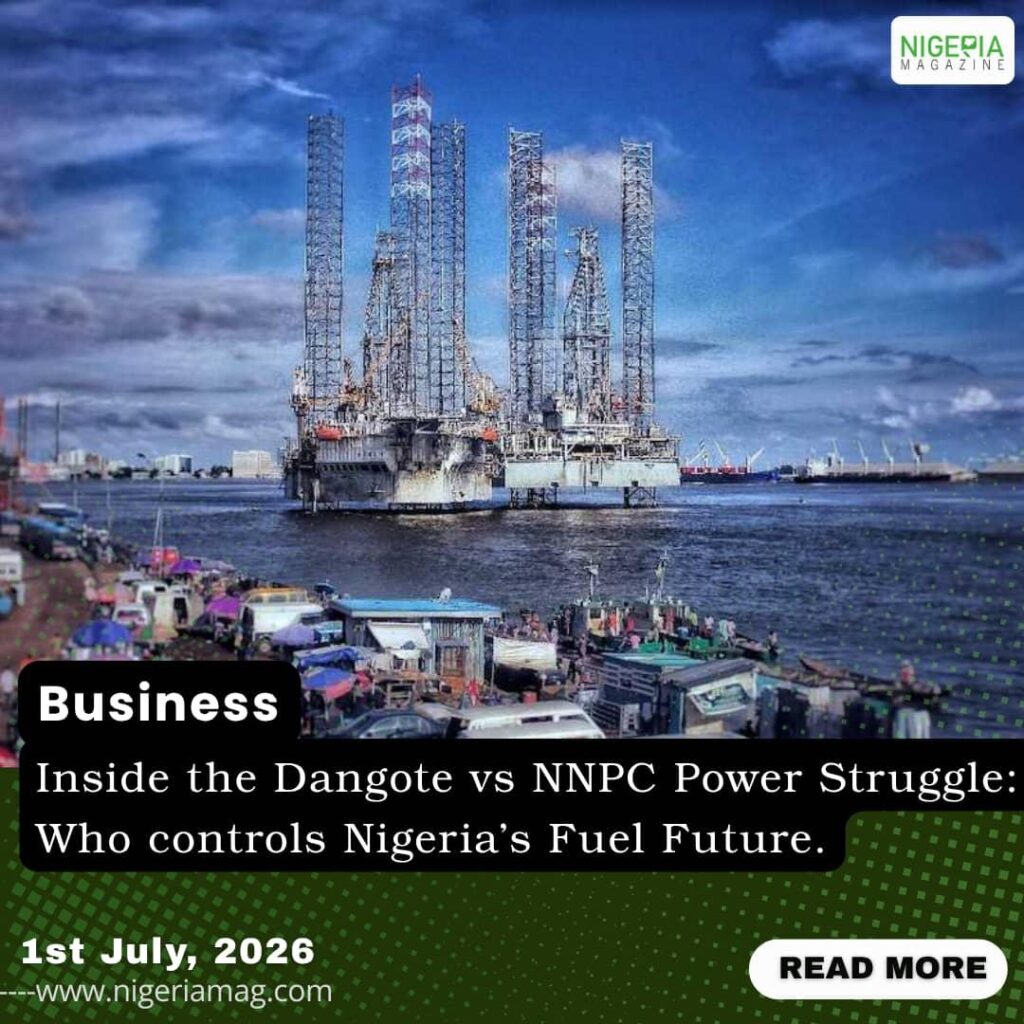
By James Gbadamosi
For decades, Nigeria’s fuel industry operated under a familiar structure. Crude oil was produced locally, exported abroad, refined elsewhere, and then imported back into the country for consumption.
Today, that structure is facing its biggest disruption in modern history.
At the centre of the disruption is Aliko Dangote.
The billionaire businessman invested billions of dollars to build the Dangote Refinery, now the largest single-train refinery in the world. The project was designed to solve one of Nigeria’s biggest economic contradictions: being Africa’s largest oil producer while relying heavily on imported refined petroleum products.
However, as the refinery scales operations, a new battle has emerged.
Dangote believes that Nigeria should drastically reduce fuel imports and prioritise locally refined products. His argument is straightforward. If the country now has the capacity to refine fuel domestically, continued large-scale imports undermine local production and discourage future investment.
On the other side are regulators, fuel marketers, and stakeholders who argue that market competition remains necessary to ensure stable supply and prevent monopolistic control.
This disagreement has escalated into legal disputes and public exchanges that have captured national attention.
But beneath the headlines lies a much bigger question.
Is Nigeria witnessing the birth of true energy independence, or the rise of a private monopoly?
Supporters of Dangote argue that protecting local refining is standard practice around the world. Countries often create policies that encourage domestic production, especially after making significant investments in strategic industries.
Critics argue that allowing a single refinery to dominate supply could reduce competition and ultimately place too much influence in the hands of one private entity.
Regardless of where one stands, one thing is certain: the outcome of this battle will shape Nigeria’s fuel market for years to come.
What happens next will determine whether Nigeria becomes a refining powerhouse—or continues to rely on imports despite having one of the world’s most ambitious refinery projects.