Forget the AI hype
Artificial intelligence is rapidly becoming part of day-to-day business for UK SMEs, but successful adoption isn't about chasing the latest technology The post Forget the AI hype appeared first on Elite Business Magazine.
 Black News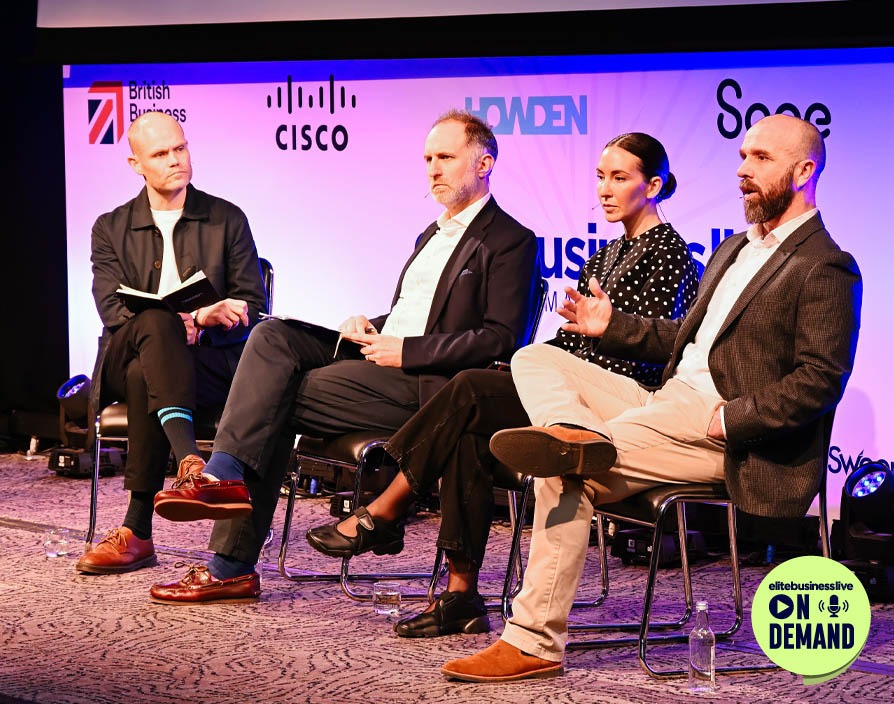
Artificial intelligence is no longer the future of business.
For thousands of UK small businesses, it’s already becoming part of everyday operations.
But despite the headlines, the biggest challenge isn’t deciding whether to adopt AI. It’s knowing where to begin.
That was the central theme of the first Interactive Live Session on day two of Elite Business Live 2026, where Rich Moloney, Senior Director of Global Integrated Campaigns at Sage, was joined by Stephen James and Stephen Morgan, founders of British Veterans Owned and Hermes Digital, alongside Sophia Adhami, Senior Director in Sage’s Product Office.
Rather than focusing on futuristic predictions, the panel delivered something far more valuable: practical advice for business owners looking to use AI to save time, improve productivity and make better decisions without losing sight of the human element.
The discussion quickly moved beyond the technology itself and centred on a simple but often overlooked principle.
Successful AI adoption doesn’t begin with AI.
It begins with identifying the right problem to solve.
Don’t start with AI. Start with your biggest frustration
For many small business owners, the temptation is to experiment with the latest AI tool simply because everyone else is talking about it.
Sophia Adhami challenged that mindset from the outset. “That’s where we always start. Then we work backwards and think, ‘How can technology help solve this problem?’ You don’t always need AI.”
It was one of the most important insights of the session.
Instead of asking, ‘How can we use AI?’, businesses should first ask:
- What tasks consume the most time?
- Where do repetitive processes slow us down?
- Which activities prevent us from focusing on customers or growth?
- Could automation solve the problem before AI is needed?
Adhami explained that this philosophy underpins how Sage develops its own AI capabilities. Automation comes first. AI follows only when it genuinely adds value.
For SMEs, that shift in thinking removes much of the complexity surrounding AI adoption.
The objective isn’t to become an AI business, it’s to become a better business.
AI is evolving from assistant to proactive partner
Stephen James reflected on how dramatically AI has changed in just three years.
When Hermes Digital first began exploring AI, it was largely used as an enhanced search engine. Teams asked questions and received answers.
Today, the technology is becoming far more proactive. “It’s a real journey from almost using AI as simply another search engine… to it anticipating our business needs.”
That evolution towards agentic AI, where systems begin identifying opportunities, automating workflows and supporting decision-making, is opening new possibilities for SMEs.
Rather than replacing business owners, AI is increasingly acting as an extra member of the team, removing administrative burdens and allowing leaders to spend more time on strategy, customers and growth.
James explained that his business had focused on solving one operational challenge at a time, gradually introducing automation before moving towards more advanced AI capabilities.
It wasn’t about transforming the business overnight, but more about continuous improvement.
Growth comes from solving problems, not replacing people
Whenever AI enters the conversation, concerns about job losses are never far behind.
The panel addressed that issue head-on.
Sophia Adhami shared research carried out by Sage among UK accountancy firms, comparing businesses that had embraced AI with those that remained cautious. The findings challenged a common assumption.
“The trailblazers who were adopting AI the most were actually growing their businesses and hiring more people.”
Rather than eliminating jobs, AI was enabling businesses to scale more effectively.
By reducing repetitive administrative work, teams had more capacity to focus on higher value activities, customer relationships and business development.
Adhami described Sage’s approach as “authentic intelligence”, designing technology that augments human capability rather than replacing it.
“We want AI that augments human capabilities… removes the admin and supports human flourishing.”
For SMEs often operating with lean teams and limited resources, that distinction is critical.
The greatest opportunity lies not in replacing employees, but in giving them more time to do the work that creates genuine value.
Trust still depends on people
While the panel was enthusiastic about AI’s potential, nobody suggested businesses should hand over decision-making entirely.
Stephen James drew on his military intelligence background to explain why human judgment remains essential.
“You still need the human at the start… and you need the human at the end to interpret it.”
AI can process enormous amounts of information at incredible speed. But understanding context, assessing risk and making final decisions remain uniquely human responsibilities.
This is particularly important when dealing with sensitive areas such as finance, compliance and cybersecurity.
As Rich Moloney pointed out, being “99 per cent right” isn’t good enough when managing business finances. Accuracy and trust are non-negotiable.
Stephen Morgan explained that adopting AI within Sage felt like a natural progression because trust had already been established. The technology wasn’t replacing existing systems. It was enhancing workflows that the business already relied upon. “That trust already existed. We were just adding another layer of capability.”
For many SMEs, that may prove to be the most sensible path forward.
Build trust first and then layer intelligence on top.
The biggest return on investment isn’t financial
One of the most refreshing moments came towards the end of the discussion, when the conversation moved beyond productivity metrics.
Yes, AI can save businesses time.
Yes, it can improve cash flow.
Yes, it can automate repetitive work.
But perhaps its greatest value is giving business owners something increasingly difficult to find… time!
Sophia Adhami shared an example of a small business owner in the United States who used digital workflows to reclaim hours previously spent on administration. The result wasn’t simply greater profitability. It meant spending more time with their daughter.
It’s a reminder that technology should ultimately serve people, not the other way around.
Whether that’s enabling founders to focus on strategy, helping employees develop new skills or simply allowing parents to spend more time with their families, the most meaningful outcomes often extend beyond the balance sheet.
Practical lessons for SMEs
As AI continues to evolve, the panel’s advice remains grounded in practical business realities.
For any organisation considering its next step, the key takeaways were clear:
- Start with a business problem, not a technology trend.
- Automate repetitive tasks before introducing AI.
- Keep people involved in important decisions.
- Build trust before adding more capability.
- Use AI to create capacity for higher value work, not simply to cut costs.
Ultimately, the session demonstrated that successful AI adoption isn’t about chasing the latest innovation.
It’s about making better use of the resources you already have. For UK small businesses, that’s where the real opportunity lies.
AI may be changing the way businesses operate, but the fundamentals remain exactly the same.
- Understand your customers.
- Solve meaningful problems.
- Empower your people.
Technology is simply another tool to help you do all three even better.
The post Forget the AI hype appeared first on Elite Business Magazine.