
IHRDA urges journalists: ‘Tell the story, but protect the child’
IHRDA Executive Director Musa Kika made the call on Tuesday during a two-day Training Workshop on Child Rights and Ethical Reporting for Media Practitioners, organised by IHRDA in partnership with the Gambia Press Union (GPU), with support from UNICEF. Held at the Senegambia Beach Hotel from August 11–12, the workshop forms part of a project aimed at strengthening the capacity of media practitioners to report accurately and ethically on children’s rights and develop content that promotes and protects children. Kika said the media plays a critical role in exposing violations, shaping public discourse and influencing policy, but can also unintentionally contribute to violations of children’s rights when reporting is not handled carefully. He said his previous work as a child-rights lawyer in Zimbabwe involved cases against journalists and media houses for publishing children’s identities, photographing or interviewing children without appropriate consent and exposing child victims involved in sensitive court proceedings. Kika said similar challenges exist in The Gambia, making the training necessary to help journalists understand the legal, ethical and practical standards governing child-sensitive reporting. “The main point is not to discourage reporting. We actually want to encourage reporting,” he said, stressing the need for journalists to report more on child-rights violations while doing so ethically and responsibly. He identified female genital mutilation, child exploitation in tourism, child marriage and child labour among issues requiring particularly careful media coverage. Minister for Information and Broadcasting Services, Hon. Dr Ismaila Ceesay, told journalists that the media possesses enormous power to expose failures, hold institutions accountable, educate parents, empower children and challenge harmful social norms. “But remember, with great power comes great responsibility,” he cautioned. The minister urged journalists to “tell the story, but protect the child; investigate, but do not exploit; ask difficult questions, but do not retraumatise.” He highlighted child-protection provisions in the proposed Broadcasting and Online Content Regulations 2026, including safeguards concerning children’s privacy, interviews and exposure to harmful content. According to Minister Ceesay, the proposed regulations provide strong protection for the identity of child victims of crime. He said journalists can report a crime involving a child without automatically revealing the child’s identity. “If a 14-year-old is a victim of sexual abuse, the media can report the crime, the systemic problem, the police response and the child-protection implications. But its identity should not be disclosed,” he said. GPU President Isatou Keita said journalists are often the first people to tell the public when a child has been harmed, making the manner in which such stories are reported critically important. “When a child is harmed in this country, it is often a journalist who tells that story first. How we tell it matters. Told well, it protects the child and informs the public. Told carelessly, it can cause a second harm, on top of the first,” Keita said. She noted that the rapid growth of radio, television and social media means stories can reach thousands of people within minutes, making responsible reporting more important than ever. UNICEF Gambia Country Representative Nafisa Binte Shafique said children under 15 constitute about 40 per cent of The Gambia’s population, while those below 19 accounts for nearly 54 per cent. She said many children continue to face violence, abuse, exploitation, school dropout, malnutrition, child marriage and other harmful practices. Shafique challenged journalists to change the narrative by presenting children not only as victims but also as citizens, innovators, leaders and agents of change. “Children are rights holders. They are citizens. They are not simply subjects of our stories,” she said. The two-day training covers children’s rights, legal and ethical frameworks, reporting sensitive issues, interviewing children and survivors, digital media, trauma-informed reporting and child-rights-focused programming. The organisers said the initiative seeks to ensure that journalists can expose violations and hold institutions accountable while ensuring that their reporting does not cause further harm to children.
 Black News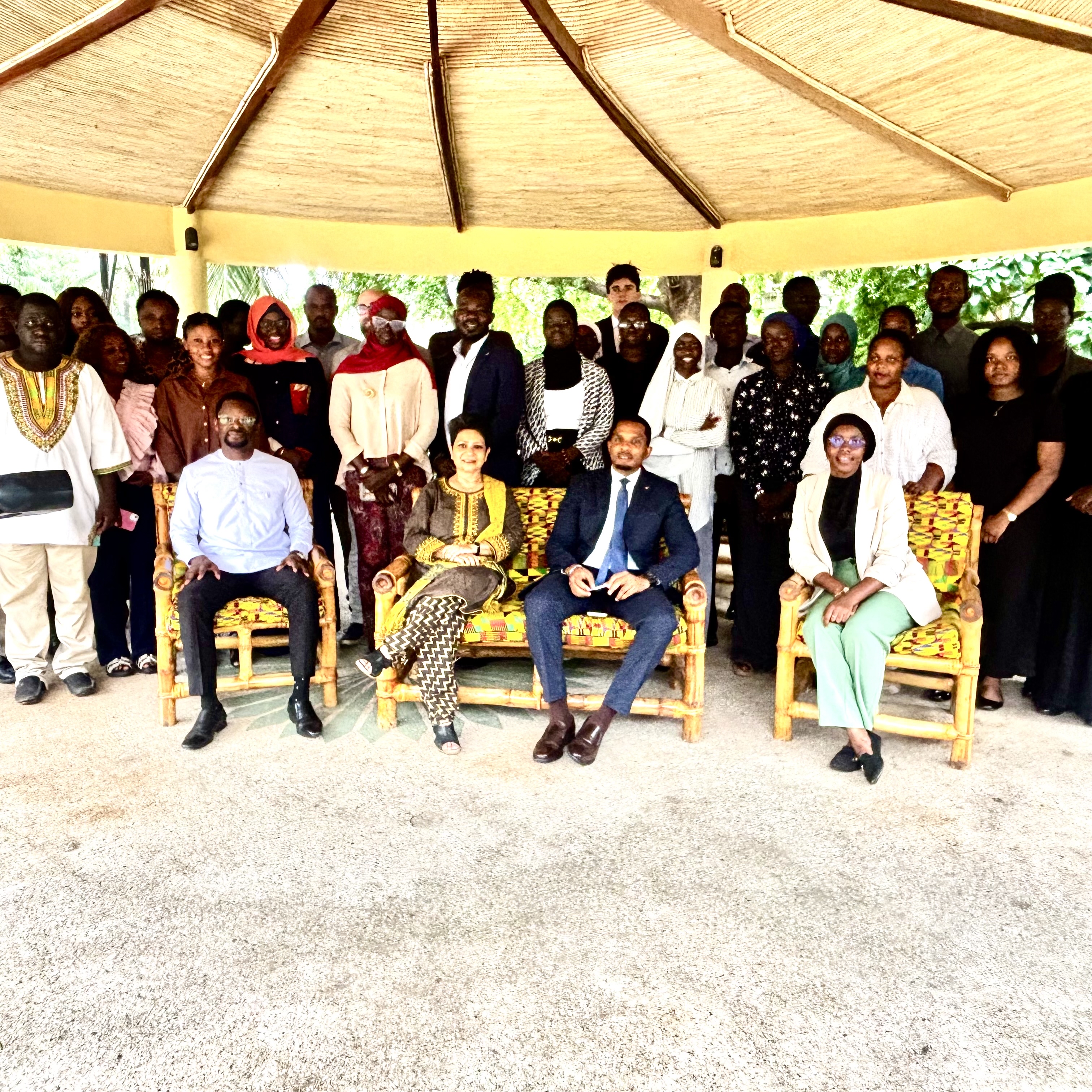

IHRDA Executive Director Musa Kika made the call on Tuesday during a two-day Training Workshop on Child Rights and Ethical Reporting for Media Practitioners, organised by IHRDA in partnership with the Gambia Press Union (GPU), with support from UNICEF.
Held at the Senegambia Beach Hotel from August 11–12, the workshop forms part of a project aimed at strengthening the capacity of media practitioners to report accurately and ethically on children’s rights and develop content that promotes and protects children.
Kika said the media plays a critical role in exposing violations, shaping public discourse and influencing policy, but can also unintentionally contribute to violations of children’s rights when reporting is not handled carefully.
He said his previous work as a child-rights lawyer in Zimbabwe involved cases against journalists and media houses for publishing children’s identities, photographing or interviewing children without appropriate consent and exposing child victims involved in sensitive court proceedings.
Kika said similar challenges exist in The Gambia, making the training necessary to help journalists understand the legal, ethical and practical standards governing child-sensitive reporting.
“The main point is not to discourage reporting. We actually want to encourage reporting,” he said, stressing the need for journalists to report more on child-rights violations while doing so ethically and responsibly.
He identified female genital mutilation, child exploitation in tourism, child marriage and child labour among issues requiring particularly careful media coverage.
Minister for Information and Broadcasting Services, Hon. Dr Ismaila Ceesay, told journalists that the media possesses enormous power to expose failures, hold institutions accountable, educate parents, empower children and challenge harmful social norms.
“But remember, with great power comes great responsibility,” he cautioned.
The minister urged journalists to “tell the story, but protect the child; investigate, but do not exploit; ask difficult questions, but do not retraumatise.”
He highlighted child-protection provisions in the proposed Broadcasting and Online Content Regulations 2026, including safeguards concerning children’s privacy, interviews and exposure to harmful content.
According to Minister Ceesay, the proposed regulations provide strong protection for the identity of child victims of crime. He said journalists can report a crime involving a child without automatically revealing the child’s identity.
“If a 14-year-old is a victim of sexual abuse, the media can report the crime, the systemic problem, the police response and the child-protection implications. But its identity should not be disclosed,” he said.
GPU President Isatou Keita said journalists are often the first people to tell the public when a child has been harmed, making the manner in which such stories are reported critically important.
“When a child is harmed in this country, it is often a journalist who tells that story first. How we tell it matters. Told well, it protects the child and informs the public. Told carelessly, it can cause a second harm, on top of the first,” Keita said.
She noted that the rapid growth of radio, television and social media means stories can reach thousands of people within minutes, making responsible reporting more important than ever.
UNICEF Gambia Country Representative Nafisa Binte Shafique said children under 15 constitute about 40 per cent of The Gambia’s population, while those below 19 accounts for nearly 54 per cent.
She said many children continue to face violence, abuse, exploitation, school dropout, malnutrition, child marriage and other harmful practices.
Shafique challenged journalists to change the narrative by presenting children not only as victims but also as citizens, innovators, leaders and agents of change.
“Children are rights holders. They are citizens. They are not simply subjects of our stories,” she said.
The two-day training covers children’s rights, legal and ethical frameworks, reporting sensitive issues, interviewing children and survivors, digital media, trauma-informed reporting and child-rights-focused programming.
The organisers said the initiative seeks to ensure that journalists can expose violations and hold institutions accountable while ensuring that their reporting does not cause further harm to children.










![Inside The Support Your Girlfriends Retreat Where Tamika Mallory, Yandy Smith & Black Women Come To Heal, Dream & Build [Exclusive]](https://madamenoire.com/wp-content/uploads/sites/9/2026/08/17865088688574.jpg?quality=80&strip=all&w=1600&crop=0,0,100,773px#)

