Houston clothing donations fuel waste crisis in Ghana
Houston's clothing donations fuel a severe, mounting environmental waste crisis for communities in Ghana.
 Black News


Every weekend across Houston, closets are cleaned out. Bags filled with shirts, jeans, dresses, and shoes make their way to neighborhood donation bins, thrift stores, and charitable organizations, fueled by the belief that someone else will get a second chance to wear them.
But many of those donations never stay in Texas, or the United States at all.
Instead, they begin a journey of more than 6,000 miles to Ghana, where millions of discarded garments from America and other Western nations have created one of the world’s largest textile waste crises.
A personal mission
For Houston retail veteran-turned-community advocate Rhonda Richardson, exposing that hidden connection has become a personal mission.
After years of working inside the retail industry, Richardson witnessed firsthand the endless cycle of overproduction, customer returns, and clothing designed to be replaced almost as quickly as it was purchased. When she learned where much of America’s unwanted clothing ultimately ended up, she says she could no longer look at a donation bin the same way.
“It just stayed with me,” Richardson says. “Doing a service project for STEM students, I thought this would be a good way for young minds to start thinking differently. Maybe they’ll come up with solutions we haven’t considered.”
Today, Richardson is bringing that conversation to Houston schools, churches, and community groups, urging residents to rethink not only what they buy, but what they donate.
A fast fashion crisis
The irony is difficult to ignore.
For many African Americans, Ghana represents far more than a country on a map. Through initiatives like the Year of Return and centuries of shared history, it has become a place of cultural connection, remembrance, and ancestral homecoming.
Yet today, that same nation has become one of the world’s largest destinations for discarded clothing from wealthier countries.
Every week, approximately 15 million pieces of secondhand clothing arrive in Ghana, shipped in tightly packed bales from the United States, the United Kingdom, and Australia. The country’s largest resale hub, Kantamanto Market in Accra, has become both an economic lifeline and an environmental disaster, as merchants struggle to manage mountains of clothing that far exceed demand.
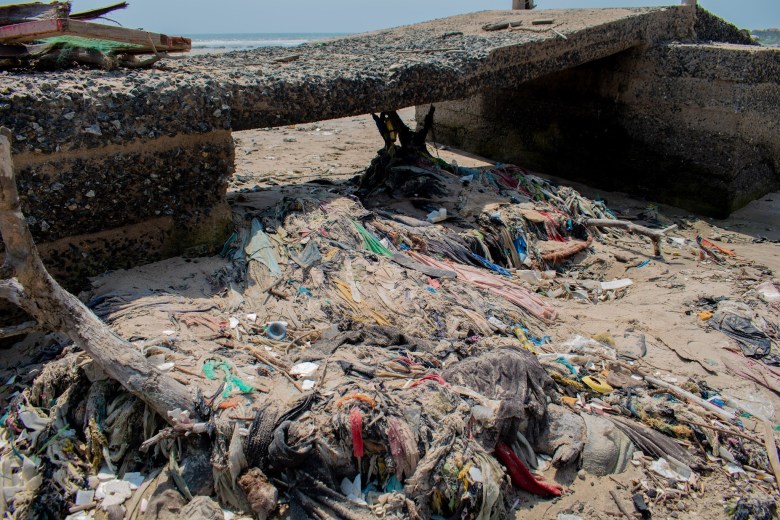
“It is simply unbelievable,” Richardson says. “There are 15 million pieces of clothing coming every week, more than they can take care of. The mountains of clothes are as tall as parking buildings. Their beaches used to be pristine, but now the clothing is so embedded in the sand that it’s like a tug-of-war trying to pull it back out.”
Along portions of Ghana’s coastline, discarded textiles clog waterways, wash onto beaches, and release synthetic fibers and dyes into the Atlantic Ocean. Fishermen report pulling clothing from their nets alongside fish, while communities shoulder the growing cost of disposing of waste they never created.
The myth of the ‘good’ donation
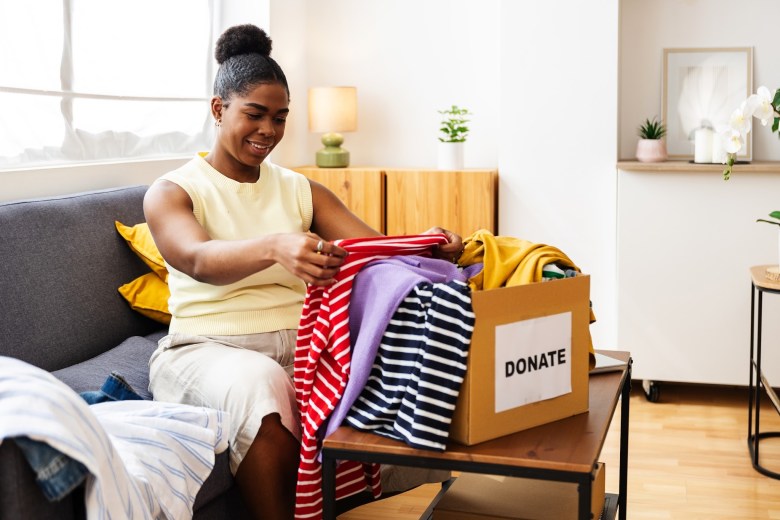
For decades, Americans have viewed donating unwanted clothing as an act of generosity. While many donations do help local families, millions of garments never make it onto thrift store racks.
Instead, the global secondhand clothing industry operates much like a supply chain.
After clothing is donated, the highest-quality items are often sold locally. Much of what remains is sorted into massive bales and sold overseas to textile importers. Those importers purchase the tightly packed bundles without knowing exactly what is inside.
That gamble is becoming increasingly expensive.
The United States exported more than $1.09 billion worth of used clothing in 2023 alone. At the same time, fast-fashion retailers have flooded the market with inexpensive garments that are designed to be worn briefly rather than repaired or passed down.
Whether it’s a $15 dress bought for one event, an online impulse purchase, or a trendy outfit worn once for social media, Richardson says today’s clothing is often made from lower-quality synthetic fabrics with little resale value.
Richardson says too many Americans unknowingly treat donation bins like garbage cans.
“We send things with stains on them, things that are torn, things that we should really be getting rid of instead of giving them to someone else,” she says. “It’s gotten to a point now where about 60% of the bale is good, and 40% is bad. The vendors just hope for the best, but more and more they’re paying for junk.”
For Ghanaian merchants, those bales represent significant financial investments. Many borrow money to purchase shipments they cannot inspect beforehand. When nearly half the clothing proves unsellable, they lose both inventory and income while also absorbing the cost of disposing of someone else’s waste.
An environmental crisis with global consequences
Richardson believes the conversation extends far beyond fashion.
She sees the textile crisis as an issue of environmental justice that disproportionately affects Black communities across the African diaspora. Synthetic fabrics such as polyester, nylon, and spandex do not biodegrade. Instead, they release microplastics into waterways while inexpensive dyes leach into rivers and the ocean.
“People think they’re helping someone when they drop off a bag of clothes. But if you wouldn’t give that item to someone you love, you shouldn’t send it halfway around the world and expect someone else’s family to deal with it.”
Rhonda Richardson, Activist
“Fast clothes are made so cheaply that the dye is bleeding into the ocean,” Richardson says. “Even though Ghana is far away from us, eventually it comes back to all of us because the Earth can’t continue to absorb this.”
The scale of the crisis is overwhelming local officials.
According to Solomon Noi, director of waste management for the Accra Metropolitan Assembly, the city simply cannot keep up with the volume of discarded clothing pouring into Kantamanto Market. Between 2010 and 2020, Accra closed 10 legal landfills after they reached capacity.
Today, only about 30% of the market’s textile waste can be transported to an official dump site. The remaining 70% ends up clogging drainage systems, covering beaches, and washing into rivers and the Atlantic Ocean.
“It is growing in the sea,” Noi said during the ChangeNOW conference. “Turtles cannot come to the beach, the coral is dying, the fishers can’t fish. It’s an environmental catastrophe.”
The clothing, known locally as Obroni W’awu, or “dead white man’s clothes,” often arrives through well-intentioned donations from Western countries. Local vendors purchase tightly packed bales hoping to find enough quality garments to turn a profit, but as much as 40% of each shipment is unsellable and immediately becomes waste.
Beyond the environmental damage, the flood of imported clothing has also undercut Ghana’s own textile and fashion industries, making it increasingly difficult for local designers and manufacturers to compete.
That reality reinforces Richardson’s message back home in Houston. She believes meaningful change begins long before a shirt reaches a donation bin. It starts with consumers buying fewer disposable garments, choosing higher-quality clothing, and recognizing that every purchase carries consequences far beyond their own closet.
What happens after you donate?
Many consumers never realize what happens after clothing leaves their hands.
Here’s how the process often works:
- Clothing is donated to a charity or collection center.
- The best-quality items remain for local resale.
- Remaining clothing is compressed into large bales.
- Those bales are sold to international textile importers.
- Vendors in countries like Ghana purchase the bales without knowing exactly what’s inside.
- As much as 40% of each shipment is unusable and becomes waste.
By the numbers
- 15 million pieces of clothing arrive in Ghana each week.
- 40% of many imported clothing bales are unsellable.
- $1.09 billion worth of used clothing was exported from the United States in 2023.
- Americans discard an estimated 80 pounds of textiles per person each year.
- The average garment is worn far fewer times today than it was just two decades ago before being discarded.
What Houstonians can do
Richardson believes solving the problem begins with changing everyday habits rather than waiting for sweeping policy changes.
Consumers can:
- Buy fewer, higher-quality garments made from natural fibers such as cotton, linen, and wool.
- Resist purchasing inexpensive clothing designed to be worn only once or twice.
- Donate only clean, wearable clothing that someone else could genuinely use.
- Repair or repurpose damaged garments instead of automatically throwing them into donation bins.
- Organize clothing swaps through churches, schools, neighborhood groups, or civic organizations.
- Ask retailers about textile recycling and take-back programs before making purchases.
Above all, Richardson encourages Houstonians to rethink what it truly means to donate.
“People think they’re helping someone when they drop off a bag of clothes,” she says. “But if you wouldn’t give that item to someone you love, you shouldn’t send it halfway around the world and expect someone else’s family to deal with it.”