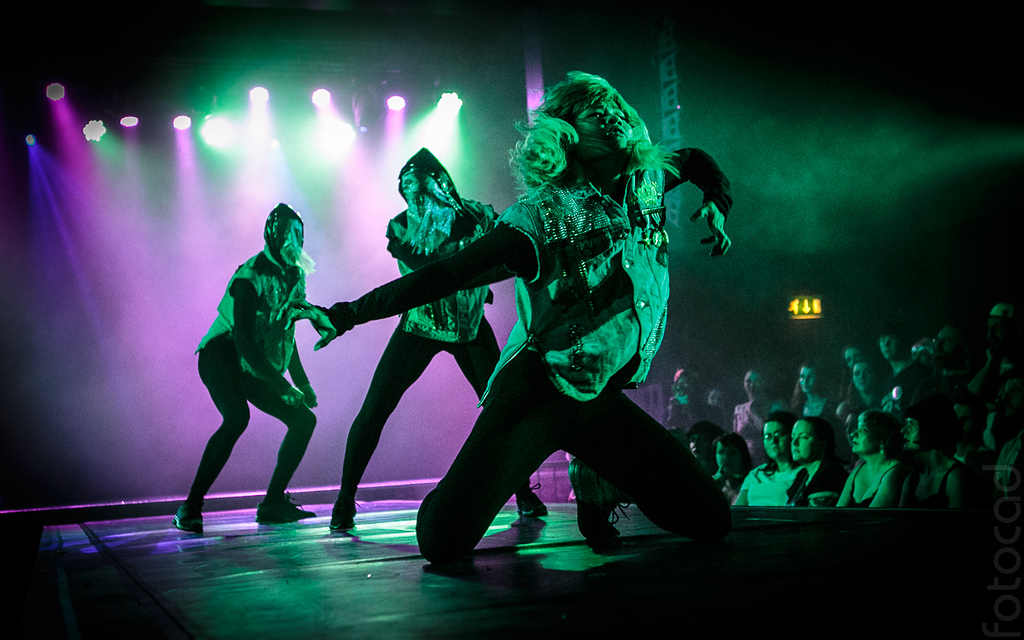
Cripping Culture: Ariel Fung’s performance as part of Unlimited’s House of Krip at the House of Suarez Vogue Ball, 2017
Here is another brilliant example of a story submitted to our Community Contributions call out. In it Ariel Fung describes the House of Krip event vividly as well as the impact of taking part in it on her personally and the wider disability arts movement. The images and link she has provided also really help ... Cripping Culture: Ariel Fung’s performance as part of Unlimited’s House of Krip at the House of Suarez Vogue Ball, 2017
 Black News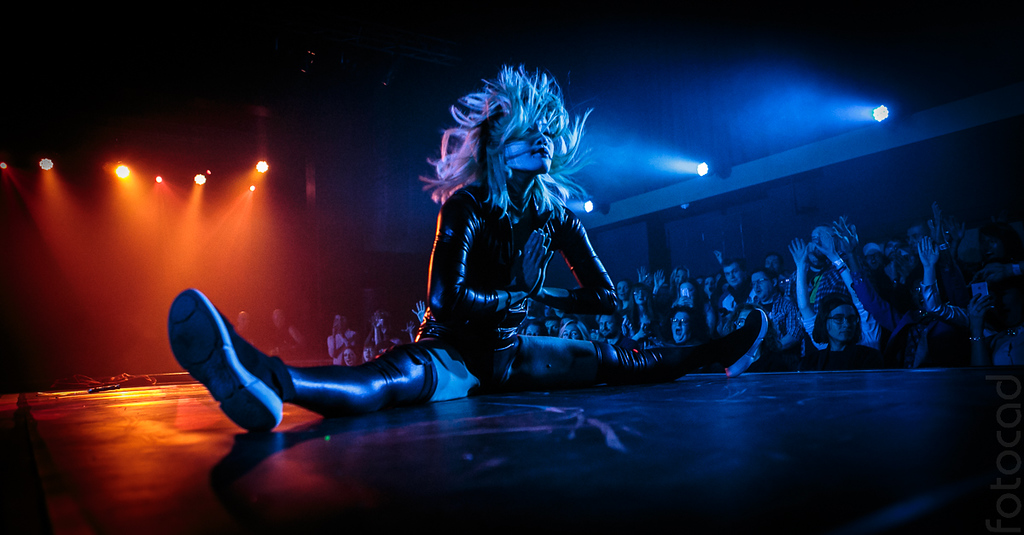

Here is another brilliant example of a story submitted to our Community Contributions call out. In it Ariel Fung describes the House of Krip event vividly as well as the impact of taking part in it on her personally and the wider disability arts movement. The images and link she has provided also really help to bring the memory to life.
I’m Ariel Fung, a profoundly deaf dancer from Hong Kong, now living in Stoke. In 2017, I got the call to join Unlimited’s House of Krip – the first House of D/deaf and disabled performers to walk in the legendary House of Suarez Vogue Ball. It happened at the Se7en Deadly Sins ball in Liverpool, and it remains one of the biggest moments of my career.
The thing is, I’d never vogued before. My background was contemporary, jazz, hip hop and street, built up over years with my all-Deaf crew Fun Forest in Hong Kong. We’d competed against hearing schools with no interpreters, always working twice as hard to be seen as equals. So when this opportunity came, I knew it would be a challenge – but I’ve never backed down from one.
The project was organised by Unlimited, in partnership with the House of Suarez. Darren Suarez, Mark Smith and Garry Robson believed in us. They didn’t want to include Deaf dancers as a token gesture; they genuinely believed we could compete at the highest level. That trust meant everything.
At the ball, we performed group choreography weaving British Sign Language into Vogue’s hand-driven vocabulary. I also did two solo pieces. Then something unexpected happened: I was pulled from the House of Krip to go one-on-one against elite hearing Vogue dancers. The bass pounded through the floorboards. I felt every beat through my feet. For a Deaf dancer, you learn to feel music through vibration, visual cues and the crowd’s energy. That night, those skills became my strength. I threw everything at it – hip hop, street, contemporary – and I held my own.
This mattered to me because growing up in Hong Kong, I was always the odd one out, always having to prove myself twice as hard. Standing in that battle circle, being chosen not despite my deafness but because of my skill, felt like a validation of every hour I’d spent in the studio. It told me that my training had prepared me for moments like this – where I could stand shoulder to shoulder with anyone, hearing or not.
For the Disability Arts movement, House of Krip was a turning point. We proved Deaf talent belongs in the mainstream – not as a novelty, but as genuine innovators. We brought sign language into ball culture’s visual grammar, showing that Deaf dancers don’t just adapt to hearing spaces – we transform them. It wasn’t just about inclusion; it was about evolution.
That project is our heritage now. It tells the next generation: we were here, we were fierce, and we cripped the culture. We didn’t just walk the ball – we changed it. If I could tell that young girl in Hong Kong she’d one day battle on that stage, she’d probably laugh. But here I am, proof it’s possible.
https://weareunlimited.org.uk/commissions-artists/commissions/vogue-unlimited-house-krip/
We want you to share the most significant disability arts projects and events that you’ve been involved in or experienced. We want to know how they contributed to both your life and the Disability Arts movement. These will play an important part in the stories told through the Cripping Culture project, saving our heritage for future generations.
We are grateful to The National Lottery Heritage Fund and National Lottery players for supporting us to undertake this landmark project.